
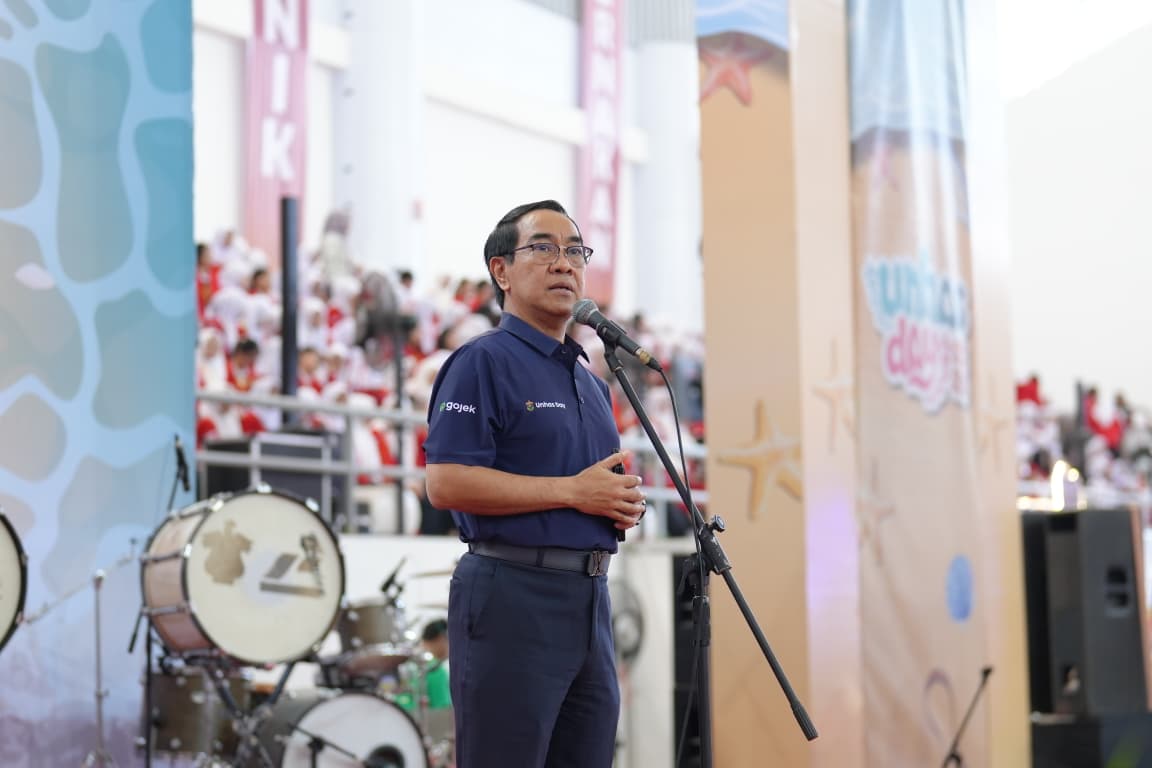
Prof. JJ: “At Unhas, we do not only learn. We meet, create, build experiences, and nurture dreams. That home needs to be cared for together so that it stays comfortable and inspiring for everyone who lives in it.”
MAKASSAR – Entering university life brings students new experiences beyond classes. They begin to get to know organizations, communities, campus services, and various spaces for developing their interests and talents. Hasanuddin University (Unhas) introduces this ecosystem through Unhas Day 2026, themed “Connect, Create, Celebrate.”
As part of the Campus Life Orientation for New Students (PKKMB) for the 2026/2027 Academic Year, Unhas Day brings new students together with the many spaces for activity on campus. A total of 60 booths presented information on Student Activity Units (UKM), institutions, and campus services, which students can get to know from the very start of their journey as Unhas students.
In remarks delivered at the event, Unhas Rector Prof. Dr. Ir. Jamaluddin Jompa, M.Sc., said that Unhas Day, as part of the PKKMB series, is meant to bring new students closer to the Unhas ecosystem. The occasion gives students a chance to find spaces that match their interests and talents, while building cross-disciplinary interaction in an Unhas spirit that knows no partitions.
“We do not limit students in developing their interests and talents. If there is a new UKM you want to form, go ahead. Unhas will provide space and support. We will keep monitoring and evaluating its development so that every UKM can run optimally,” explained Prof. JJ.
Meeting the various organizations and communities gives students a picture of learning spaces beyond the classroom. These activities can be used to develop interests, build networks, train leadership, and gain experience working collaboratively.
Prof. JJ further urged all new students to see Unhas as a home they live in together. In it, they do not only learn, but also meet, create, build experiences, and nurture dreams. That home needs to be cared for together so that it stays comfortable and inspiring for everyone who lives in it.
The message was also directed at new students to help uphold Unhas’s good name. Students have a role in creating a conducive campus atmosphere through their attitudes, activities, and interactions in the academic environment.
“You are the great residents of the Unhas home. Take good care of it, and do not let anyone try to damage our home. Do not be provoked by anything that seeks to damage Unhas,” Prof. JJ stressed.
The theme “Connect, Create, Celebrate” provides a framework for new students to get to know and take part in campus life. Connect points to building relationships with fellow students and the campus environment. Create opens space for ideas, creative work, and collaboration. Celebrate invites students to value every process and experience gained from the start of their academic journey.
Unhas Day also gives an overview of the many activities students can join during their studies. Information obtained firsthand helps students identify the spaces for participation that suit their interests and needs.
These experiences can complement the academic learning process. Organizational and community activities give students the chance to practice teamwork, communication, and managing events, and to interact with people from diverse backgrounds.
Closing the event, Prof. JJ urged new students to bring spirit and big dreams with them throughout their education at Unhas. The campus is expected to keep developing as a comfortable, high-achieving academic environment.
“Let us make Unhas a comfortable place. Get ready to take part in enhancing Unhas’s good name. We will make this campus a comfortable and increasingly high-achieving one,” Prof. JJ concluded.
Unhas Day 2026 took place at the JK Arenatorium Sports Hall, Unhas Tamalanrea Campus, Makassar, on Saturday (15 August). New students took part in two sessions, morning and afternoon. The event closed the entire PKKMB series at Unhas before students begin lectures on Tuesday (18 August). (*/mir)
Editor : Ishaq Rahman
This article is an English translation of the original Indonesian report.