
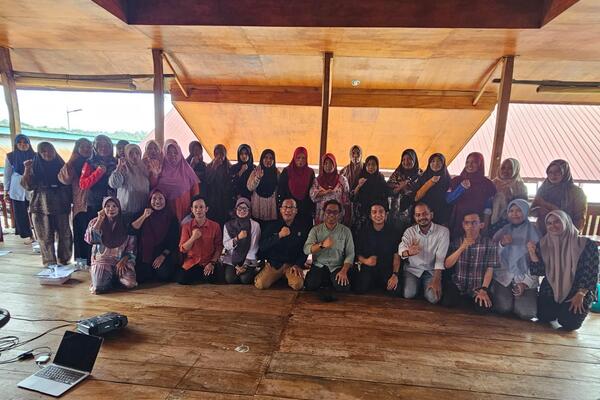
MAKASSAR – Hasanuddin University (Unhas) continues to strengthen its role as a university present among the community through the 2026 Hasanuddin University Community Service Program, Community Partnership Program (PPMU-PK-M). The service team carried out community empowerment activities in Selayar Islands Regency on Friday (13 June).
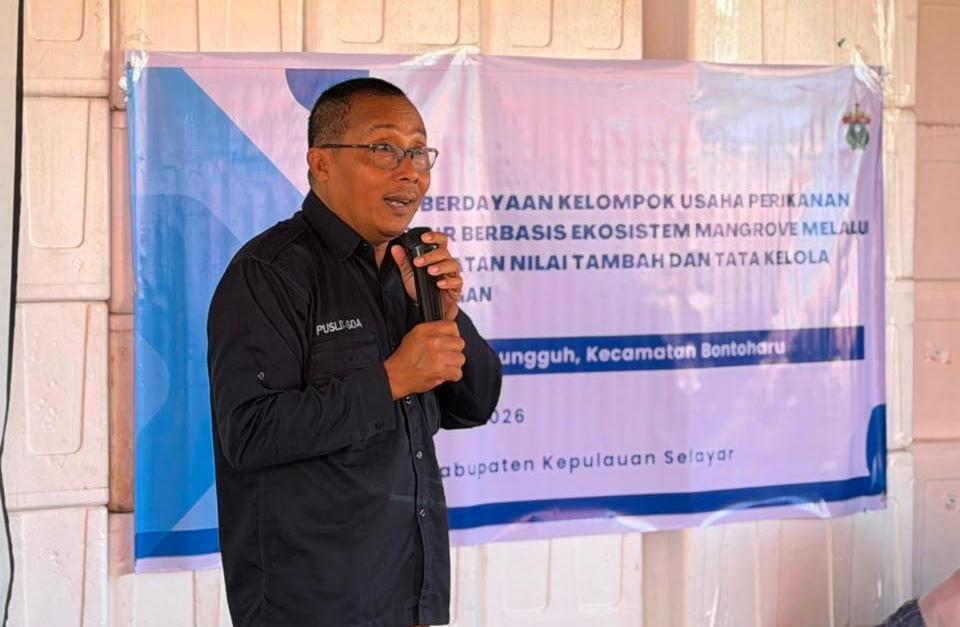
The activity, themed “Empowering Mangrove Ecosystem-Based Coastal Fisheries Business Groups Through Strengthening Added Value and Financial Management in Bontosunggu Village, Bontoharu District, Selayar Islands Regency,” is funded by the Institute for Research and Community Service (LPPM) of Hasanuddin University as part of the campus’s commitment to supporting community economic development based on local potential and environmental sustainability.
As an archipelagic regency, Selayar Islands has great marine and fisheries resource potential. However, most small-scale fisheries operators still face various challenges, from low product added value and limited access to modern business management to weak record-keeping and financial management systems. These conditions are among the factors limiting the growth and competitiveness of coastal community business groups.
Based on these conditions, the Unhas service team designed a program that focuses not only on production but also on strengthening institutional capacity, financial literacy, and environmental awareness among the community. This approach is considered important because the sustainability of fisheries businesses depends heavily on the quality of coastal ecosystems, particularly mangrove areas that serve as important habitat for many species of fish, shrimp, and other marine life.
The activity was attended by 32 participants from four community business groups. Also present were the Head of the Selayar Islands Regency Fisheries Office, a Division Head of the Selayar Islands Regency Fisheries Office, several Fisheries Office staff, and the Head of Bontosunggu Village.
The program was carried out by lecturers who involved five Unhas students. The students’ involvement is part of implementing experiential learning, allowing them to interact directly with the community and understand development issues at the local level.
The activity materials focused on three main aspects. First, strengthening the community’s understanding of the importance of the mangrove ecosystem as a pillar of coastal fisheries productivity and a natural barrier against coastal erosion. Second, increasing the added value of fishery products through strengthening group institutions, business development, and identifying opportunities for product diversification. Third, improving financial management through simple bookkeeping, cash flow recording, and more systematic calculation of business costs and profits.
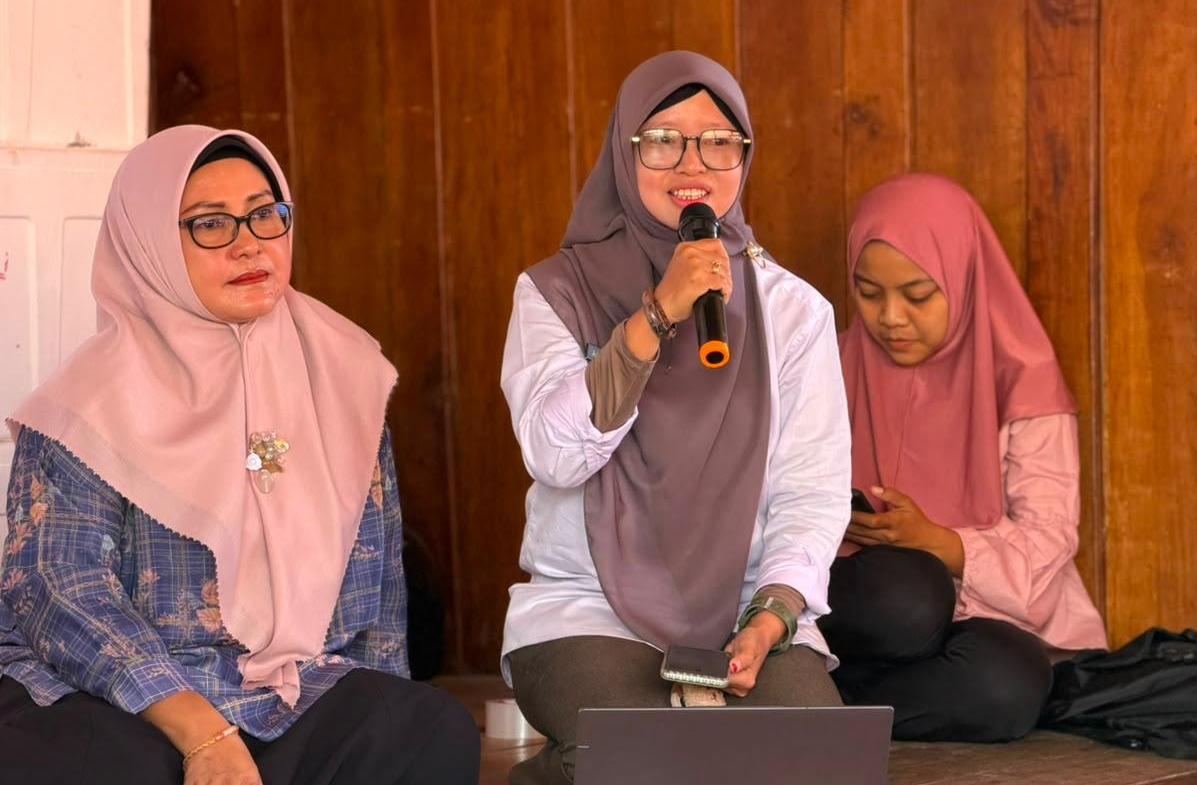
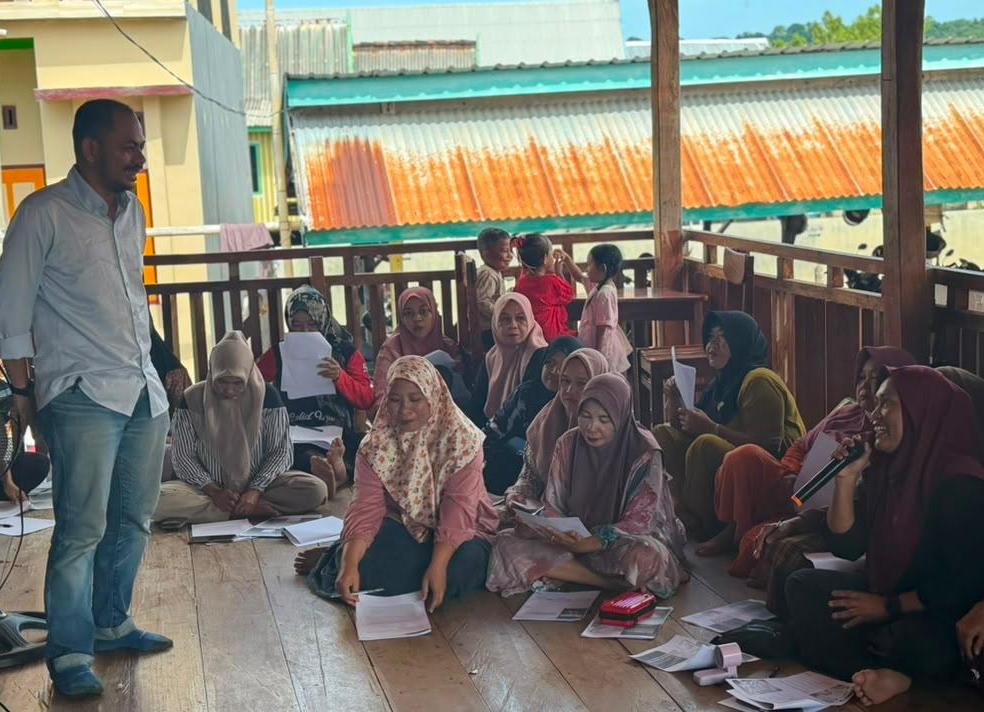
The activity was participatory and interactive. Participants not only received the material but also actively discussed the challenges they face in running their businesses. Participants’ enthusiasm was evident in the high level of participation in the question-and-answer session, particularly on strategies to increase the selling value of fishery products, business group management, and financial record-keeping practices that are easy to apply in day-to-day business.
As part of the program evaluation, the service team gave a pre-test and a post-test to all participants. This method was used to measure the improvement in participants’ understanding after the activity. In this way, the program is oriented not only toward knowledge transfer but also toward ensuring that capacity gains can be objectively measured.
Team leader Prof. Abd. Rasyid explained that strengthening the capacity of coastal communities needs to be done in an integrated way, linking environmental, economic, and business governance aspects.
“The mangrove ecosystem is important not only from a conservation standpoint but also has great economic value because it supports the sustainability of the fisheries resources that are the livelihood of coastal communities,” said Prof. Abdul Rasyid.
Through this program, Unhas hopes that fisheries business groups in Bontosunggu Village will be able to develop more productive businesses with higher added value and apply better financial management. This capacity strengthening is expected to increase the community’s economic self-reliance while strengthening the competitiveness of local fisheries businesses.
Community Service Implementation Team:
Leader: Prof. Dr. Ir. Abd. Rasyid J., M.Si. (Faculty of Marine Science and Fisheries)
Members:
Fakhrul Indra Hermansyah, S.E., M.Sc. (Faculty of Economics and Business)
Muhammad Try Dharsana, S.E., M.Sc. (Faculty of Marine Science and Fisheries).(*/fi/dhs)
Editor : Ishaq Rahman
This article is an English translation of the original Indonesian report.