
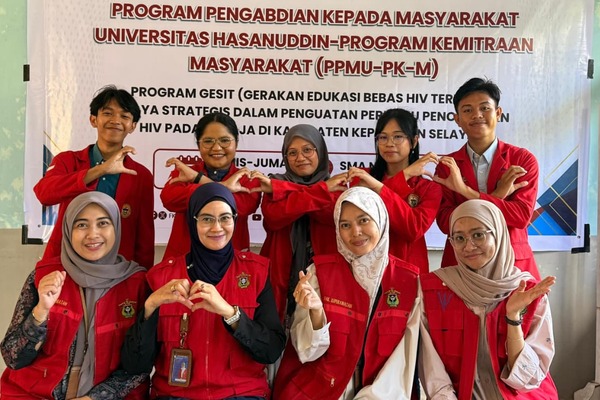
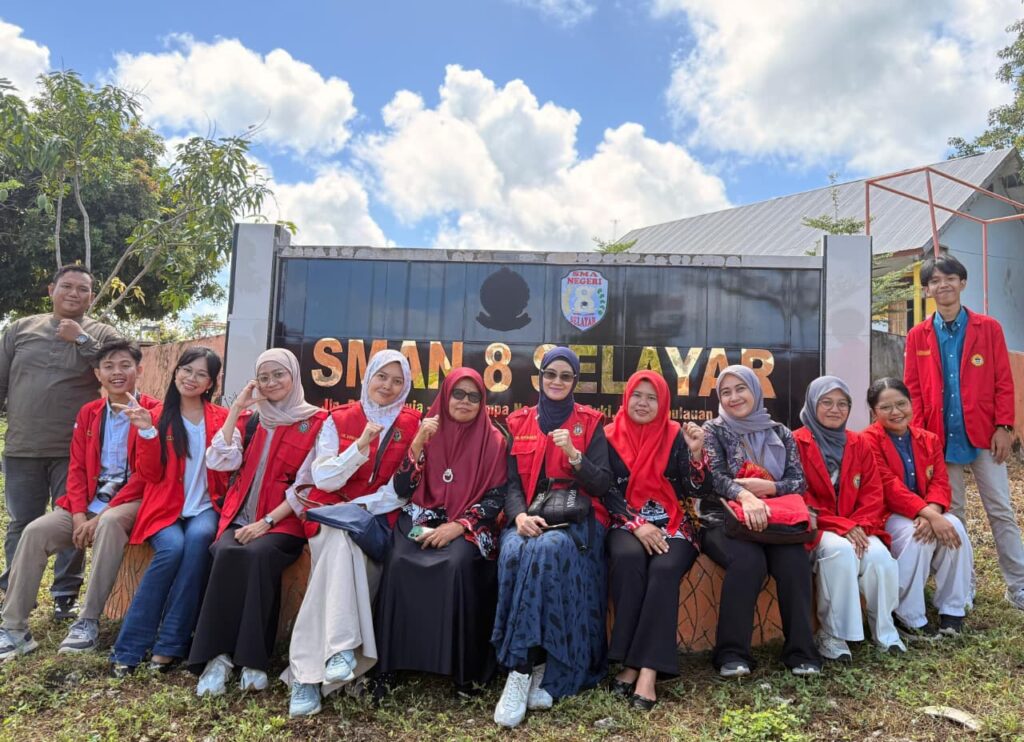
SELAYAR – The Faculty of Nursing of Hasanuddin University (FKep Unhas) continues to strengthen the role of universities in improving public health literacy. Through the Unhas Community Service Program – Community Partnership Program (PPMU-PK-M), a team of FKep Unhas lecturers carried out the GESIT PROGRAM (Integrated HIV-Free Education Movement) at SMAN 8 Selayar, Buki District, Selayar Islands Regency, South Sulawesi, on 11–12 June 2026.
About 70 male and female students took part, with the aim of improving teenagers’ knowledge, attitudes, and behavior in HIV prevention through a health education approach that is comprehensive, participatory, and based on teenagers’ needs.
The GESIT Program comes at a time when HIV prevention among young people is increasingly important. Ministry of Health data show that Indonesia still faces serious challenges in controlling HIV. In 2025, an estimated 564,000 people were living with HIV in Indonesia, some of whom do not yet know their health status. The government has also set a target of eliminating HIV and sexually transmitted infections as public health threats by 2030.
PPMU-PK-M Team Leader at FKep Unhas, Aulia Insani Latif, S.Kep., Ns., M.Kep., stressed that education starting in adolescence is one of the most effective strategies for preventing HIV transmission in the future.
“Teenagers are in a phase of searching for identity and greatly need accurate health information. Through proper education, they can understand the risks, avoid risky behavior, and become agents of change in their surroundings,” said Latif.
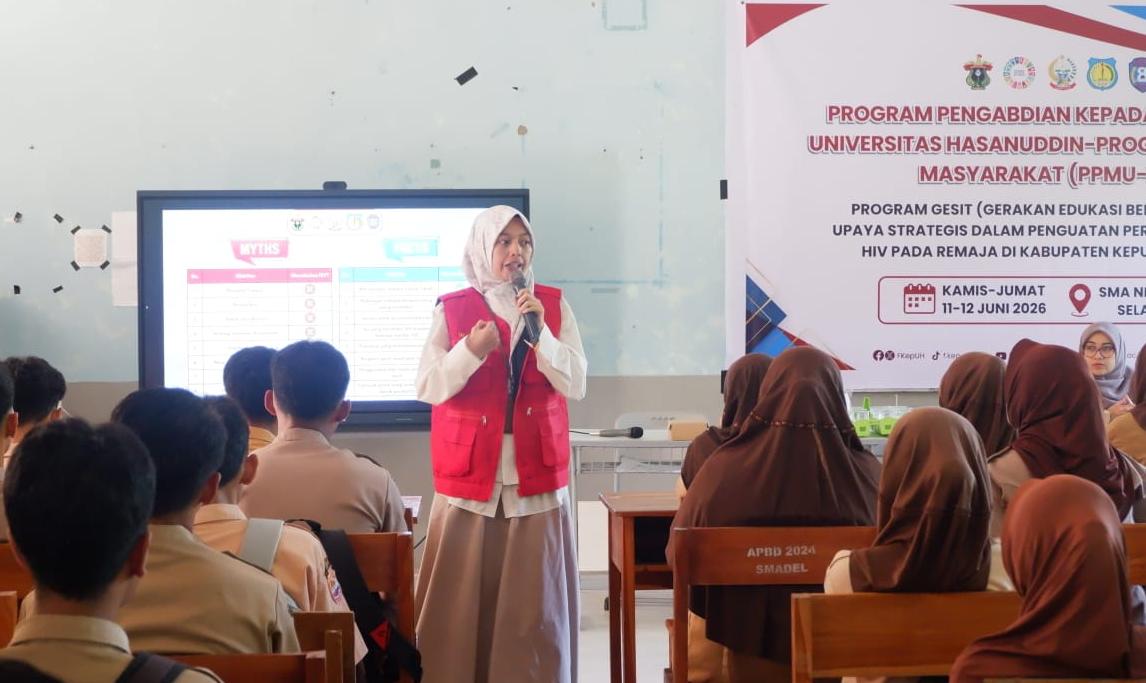
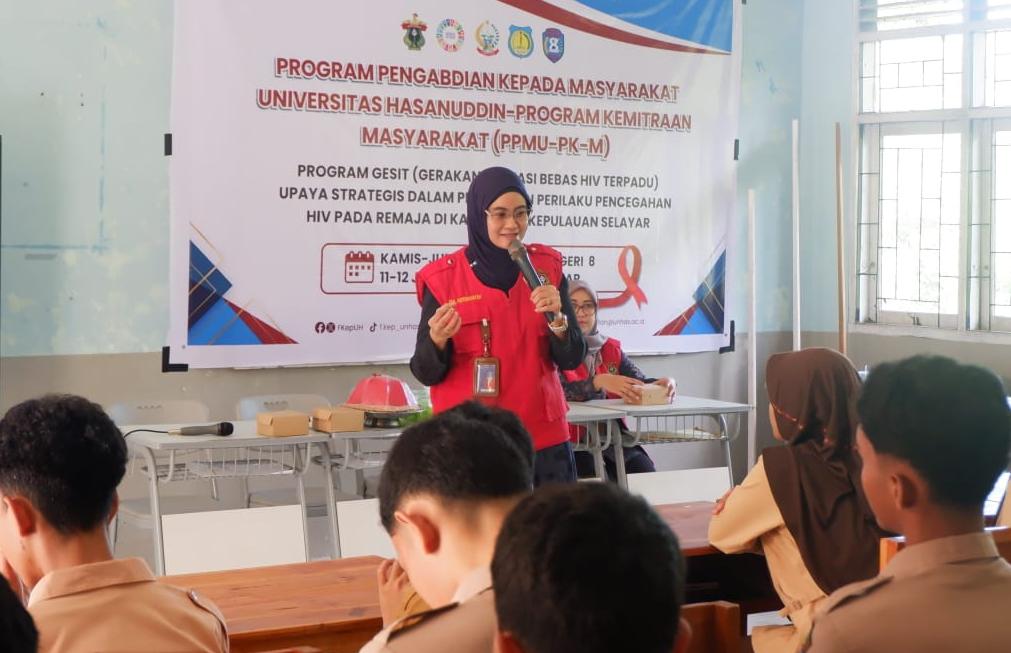
The series of activities began with a pre-test to measure participants’ initial knowledge of HIV. Students then received educational material on HIV, how it is transmitted, prevention measures, and the importance of eliminating stigma against people with HIV/AIDS. The activities continued with an interactive discussion, an educational quiz, and a post-test to evaluate the improvement in participants’ understanding.
The atmosphere was dynamic and full of enthusiasm. Students actively asked questions and took part in various discussion sessions designed to make the health material easier and more engaging to understand.
In addition to health education, the program also offered a psychological approach through a support group activity facilitated by psychology lecturer at the Unhas Faculty of Medicine, Rizky Amalia Jamil, S.Psi., M.A.. The session reinforced for the teenagers the importance of building self-confidence, decision-making skills, and personal resilience against various negative influences that can increase the risk of HIV exposure.
The educational material was delivered by Prof. Dr. Kadek Ayu Erika, S.Kep., Ns., M.Kes. and Aulia Insani Latif, S.Kep., Ns., M.Kep., with Nur Fadilah, S.Kep., Ns., M.N. as moderator. The event also received active support from Faculty of Nursing students who helped facilitate and assist participants.
Vice Principal of SMAN 8 Selayar, Nur Hayani, S.Pd., M.Pd., expressed appreciation for the activity. In the vice principal’s view, the health education provided is highly relevant to students’ needs today.
“We thank the FKep Unhas team for coming and sharing knowledge with our students. The participants’ enthusiasm during the activity shows that this theme is very important and needed by teenagers,” said Hayani.
The GESIT Program is also in line with the commitment to achieving the Sustainable Development Goals (SDGs), particularly SDG 3 (Good Health and Well-Being) and SDG 4 (Quality Education). Through promotive and preventive approaches in the school environment, the activity is expected to strengthen young people’s awareness of the importance of protecting reproductive health and preventing HIV transmission from an early age.
Through the GESIT PROGRAM, FKep Unhas hopes that teenagers in the Selayar Islands will have a better understanding of HIV, adopt healthy living behaviors, and become pioneers in spreading accurate health information in their schools, families, and communities. In this way, HIV prevention is not solely the responsibility of the health sector but a shared movement that starts in the education environment.(*/ir)
Editor : Ishaq Rahman
This article is an English translation of the original Indonesian report.