
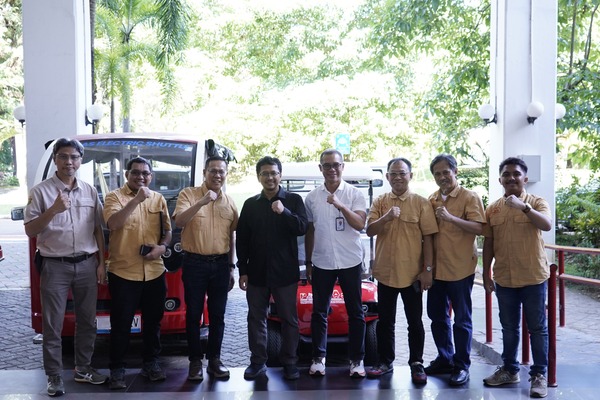
Hasanuddin University has reinforced its role in supporting national development by strengthening the downstreaming of research and technological innovation. This was marked by a visit from a team from the Nusantara Capital City Authority (IKN) to explore the implementation of campus research products, particularly electric vehicles considered relevant to IKN’s concept as a green and smart city.
The visit followed up on cooperation between the IKN Authority and Unhas that has been underway since early this year. The discussion focused on opportunities to apply campus innovations that do not stop at the research level but can be implemented in practice to support IKN’s development needs.
IKN’s Director of Basic Infrastructure, Cakra Nagara, explained that the IKN team directly inspected several Unhas innovation products, including an electric vehicle developed by a campus team. The step is important to ensure technological readiness before deployment in the IKN area.
“We are exploring the various innovations produced by Unhas, including this electric vehicle. In essence, we want to see whether this research product can be applied or not. Now we want to push for real, tangible realization, not stop at research,” Cakra Nagara explained.
IKN’s development concept, which promotes a green city and smart buildings, requires technology that is adaptive, environmentally friendly, and sustainably developed through collaboration with universities.
Meanwhile, Dean of the Unhas Faculty of Engineering, Prof. Dr. Eng. Ir. Muhammad Isran Ramli, S.T., M.T., IPM., AER., explained that developing electric vehicles is part of a strategic university program that began last year. Under the direction of the Unhas Rector, a special electric vehicle development team was formed as part of strengthening the impactful campus innovation agenda.
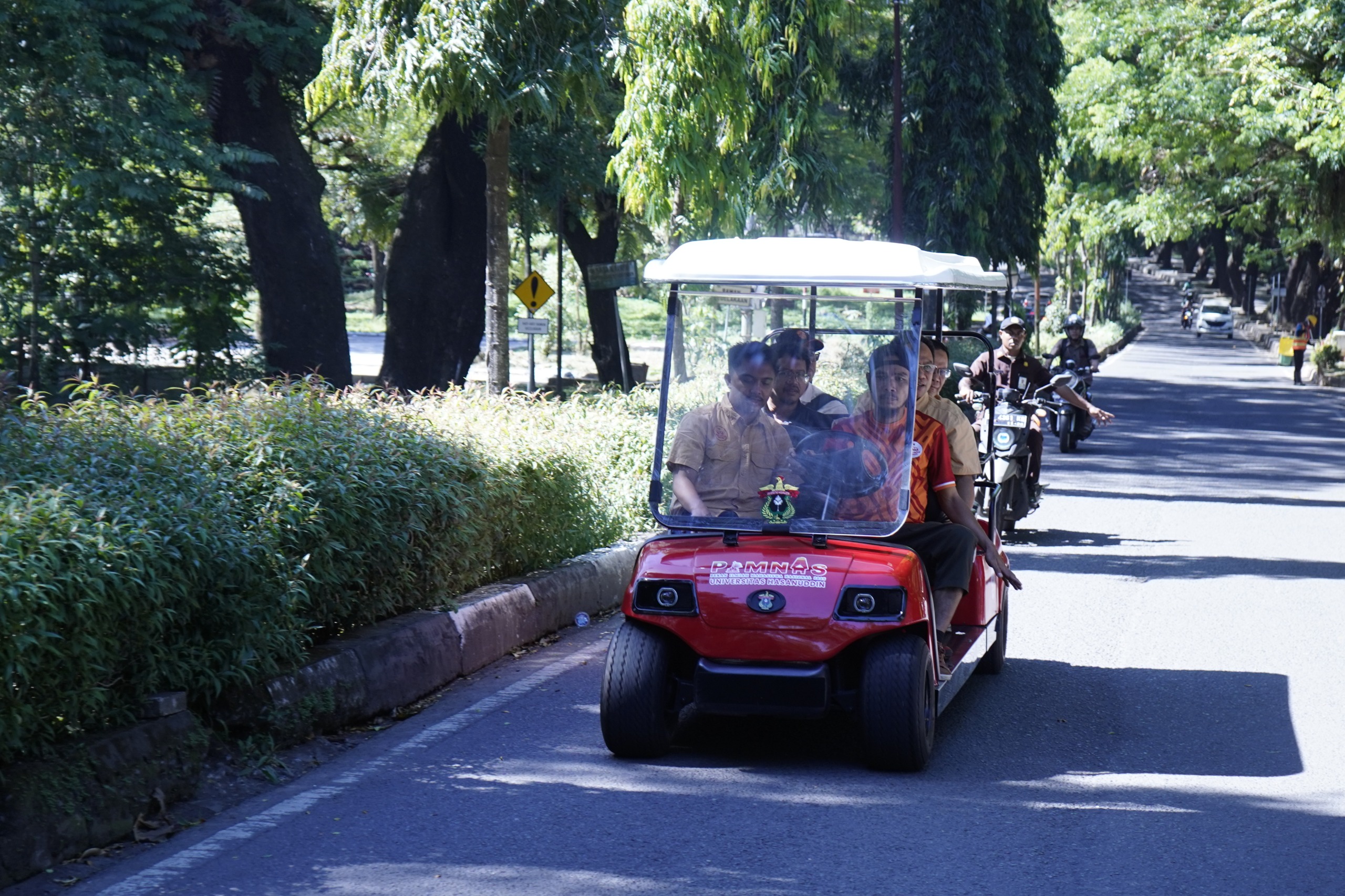
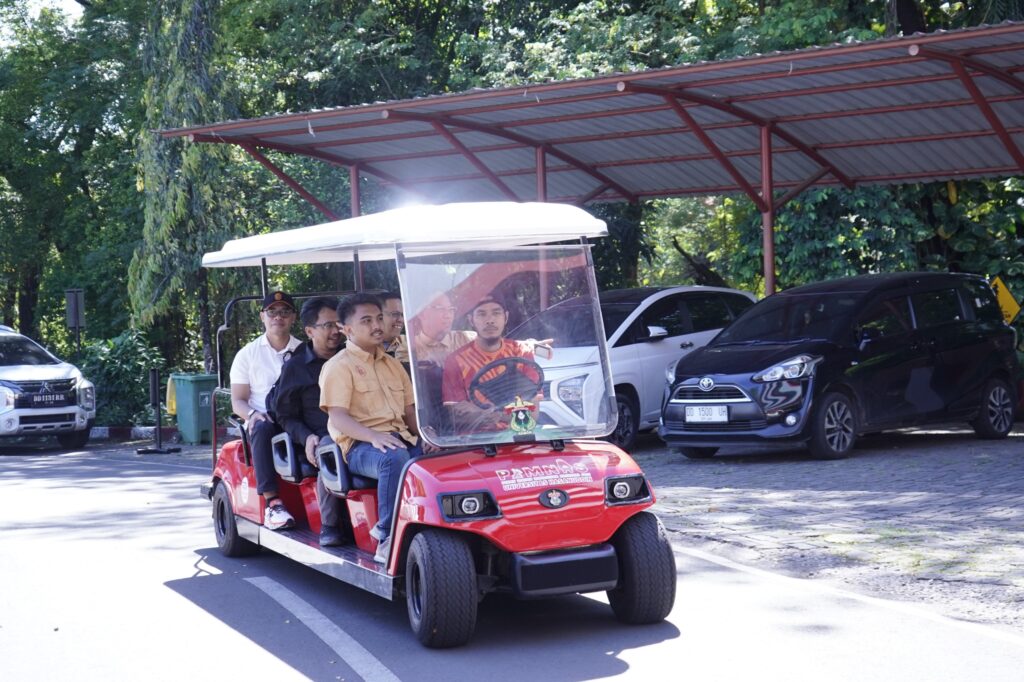
“Unhas has launched three types of electric vehicles: a shuttle car, an executive car, and a clean car for waste transport. One of the goals of the impactful campus is for the downstreamed results of Unhas research to be used by partner agencies, the government, industry, and the business sector,” Prof. Isran explained.
The cooperation built with the IKN Authority has now entered a more implementation-focused stage. Innovations previously developed in the academic environment are beginning to be directed toward meeting real needs in the field, including supporting transportation systems and clean energy-based services in the IKN area.
Earlier, the IKN Authority and Unhas signed a Memorandum of Understanding in April 2026 covering cooperation in education, research, and community service to support the development of the Nusantara Capital City.
The scope of cooperation includes human resource development, empowering expertise through education and training, conducting scientific studies and research, and various other strategic programs.
From the outset, Unhas has shown its support for IKN’s development and will continue to strengthen its contribution through applied research, technological innovation, and cross-sector collaboration. For Unhas, building IKN is not merely an infrastructure project but a moment to create a national innovation ecosystem in which universities serve as drivers of change.
The visit took place on Saturday (9 May) at the Unhas Rectorate Building and was accompanied by Unhas’s electric vehicle development team. Besides discussing the potential for technology implementation, the IKN Authority team also conducted a test drive as part of evaluating the technology’s readiness to support an environmentally friendly transportation ecosystem in the Nusantara Capital City area. (*/mir)
Editor: Ishaq Rahman
This article is an English translation of the original Indonesian report.