
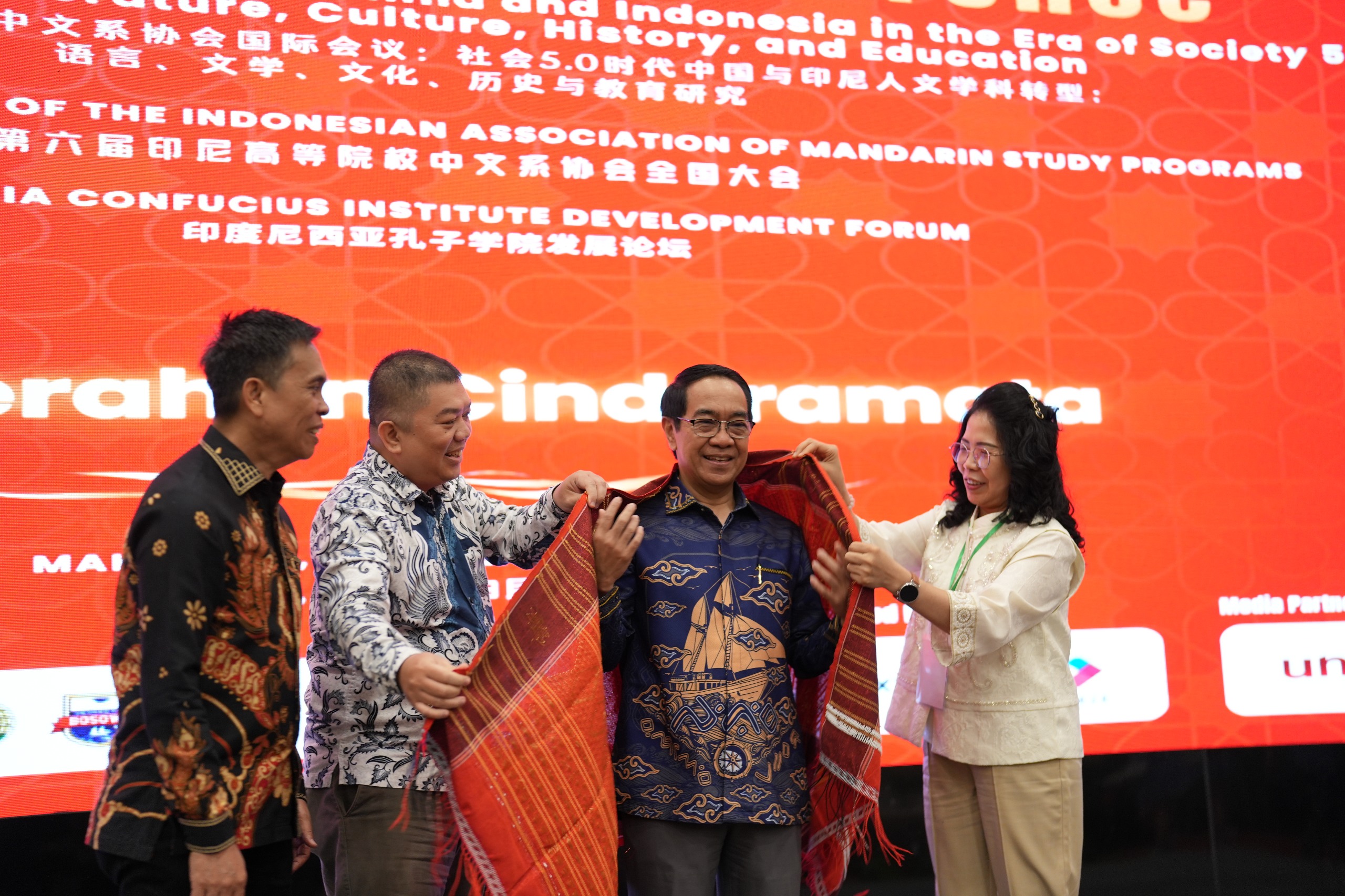
MAKASSAR — Technological development has changed how people learn, communicate, and interact across countries. Yet amid these changes, language, culture, history, and education continue to play an important role in building understanding between societies.
That perspective was discussed at the 8th International Conference of the Indonesian Association of Mandarin Study Programs (APSMI), organized by the Bachelor’s Program in Mandarin Language and Chinese Culture, Faculty of Cultural Sciences, Hasanuddin University (Unhas), at the Unhas Hotel and Convention on Wednesday (16 September 2026).
The conference carried the theme “Transformation of the Humanities in China and Indonesia in the Society 5.0 Era: Language, Literature, Culture, History, and Education.” The forum brought together academics, instructors, and Mandarin enthusiasts from various universities in Indonesia and several institutions abroad.
APSMI Chair Dr. Elly Romy, SE., B.A., M.CSCOL., said the conference is a space to broaden networks and strengthen cooperation in developing Mandarin language education.
“Through various forms of cooperation, we can build greater strength to improve the quality of Mandarin learning and development,” Dr. Elly said.
The conference featured speakers from Indonesia and abroad, namely:
1. Dr. Carmelea Ang See from De La Salle University, the Philippines;
2. Dr. Chan Ying Kit from the National University of Singapore, Singapore;
3. Prof. Dr. Akin Duli, MA from Hasanuddin University;
4. Prof. Dr. R. Tuty Nur Mutia, S.S., M.Hum from the University of Indonesia;
5. Dr. Xi Lei from Nanchang University, China;
6. Chen Yan from the Confucius Institute of Poitiers, France;
7. Assoc. Prof. Dr. Herman, B.Ed., M.TCSOL from Universal University, Indonesia;
8. Dr. Soen Ai Ling, MA from Darma Persada University, Indonesia.
Person in Charge of the Hasanuddin University Confucius Institute, Prof. Wu Xiao Ling, said in the report that the conference was also attended online by an education official from the Embassy of the Republic of Indonesia in China. Participants attending in person included the head of the Makassar City Education Office, sinologists from Singapore and the Philippines, academics from various universities in Indonesia, and chairs and representatives of lecturers of Chinese Language Study Programs from more than 30 universities.
Prof. Wu also welcomed three academics from Nanchang University, Jiangxi, China, namely Prof. Wang Shujun from the Faculty of Cultural Sciences, Dr. Xi Lei, and Dr. Zhang Lingmei from the Faculty of International Education.
The presence of academics from various countries broadened the space for knowledge exchange at the conference, while bringing together networks in Mandarin language education, China studies, and the humanities from various institutions.
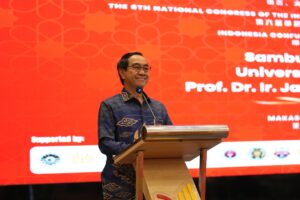
In remarks, Unhas Rector Prof. Dr. Ir. Jamaluddin Jompa, M.Sc., urged that the cooperation networks already built with various institutions in China continue to be developed through collaboration.
According to Prof. JJ, academic relations between Indonesia and China can be expanded across various fields, including language learning, history, and civilization. Understanding history, Prof. JJ said, can offer lessons for the present generation in viewing the development of a nation.
“By studying history, we can draw lessons and not repeat mistakes that have happened,” said Prof. JJ.
Prof. JJ also considers that mastery of Mandarin plays an important role in opening wider space for communication and cooperation between Indonesia and China.
Meanwhile, Education and Culture Attaché of the Indonesian Embassy in Beijing, Lestari Puspitaningsih, S.S., S.Sos., M.A., Ph.D., highlighted the position of the humanities amid technological development.
According to Lestari, technological and cultural development need to go hand in hand. The humanities remain necessary to ensure that people and humanistic values keep their place in society’s development in the Society 5.0 era.
The forum was also accompanied by the signing of MoUs or Cooperation Agreements between institutions. The signing is part of strengthening institutional relations and academic networks in developing language, education, and culture. (*/dhs)
Editor: Ishaq Rahman
This article is an English translation of the original Indonesian report.