

MAKASSAR – Indonesia is known as one of the world’s largest seaweed producers. Yet behind this great potential, most farmed seaweed is still sold as an industrial raw material. As a result, the added value enjoyed by coastal communities is relatively limited. Starting from this phenomenon, Dr. Kasmiati, STP., MP., a lecturer at the Faculty of Marine Science and Fisheries (FIKP) of Hasanuddin University, together with a team, developed a series of seaweed-based functional foods as an effort to downstream research results while raising the economic value of a local commodity.
For Kasmiati, seaweed holds potential not only as an export commodity. It is also a nutritious food source that can be processed into various products for public consumption. Farmed seaweed is expected to no longer stop at being a raw material, but to become value-added products that open new business opportunities for coastal communities.
“Seaweed is one of Indonesia’s flagship commodities, especially in South Sulawesi. We were motivated to develop various seaweed-based food products that have higher added value while also providing health benefits,” explained Dr. Kasmiati.
The biggest challenge in seaweed innovation is retaining bioactive content without sacrificing the flavor, texture, or appearance of the product so that it remains acceptable to consumers. Dr. Kasmiati began the research five years ago, from raw material characterization, formulation optimization, laboratory testing, and sensory evaluation to production process standardization, shelf-life testing, and food safety evaluation.
“This research also involved undergraduate students through their final projects and was implemented in various community service activities in coastal areas. Before the products were registered with BPOM, they were introduced to community groups through training and mentoring so that they could become a business alternative based on local resources in Unhas’s partner villages,” said Dr. Kasmiati.
The strength of the innovation lies in a formulation that produces food with better nutritional content without losing the sensory characteristics people like. The innovation yields functional foods that are easy for communities and business operators to adopt and develop.
After going through various stages of research and evaluation, the innovation finally received a distribution permit from the Food and Drug Authority (BPOM) of the Republic of Indonesia. For Dr. Kasmiati, this achievement proves that the research results meet standards of safety, quality, and excellence, making them ready for public use.
“In the future, we want to keep developing seaweed-based innovations that are not only competitive nationally but also able to break into international markets and bring credit to Unhas as a university that produces impactful innovations. For us, a study succeeds not only when it is published in a scientific journal, but when its results can truly be used by the community,” Dr. Kasmiati stressed.
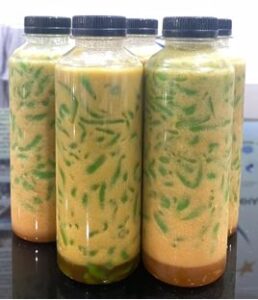
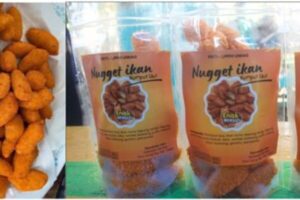
The BPOM distribution permit certificates were presented at the Academia, Business, Government (ABG) Collaboration Acceleration event organized by BPOM RI in cooperation with Unhas at the Claro Hotel Ballroom in Makassar on Saturday (11 July). The six products that received distribution permits are seaweed noodles, seaweed cendol, seaweed brownies, seaweed muffins, seaweed meatballs, and seaweed nuggets. (*/mir)
Editor: Ishaq Rahman
This article is an English translation of the original Indonesian report.