
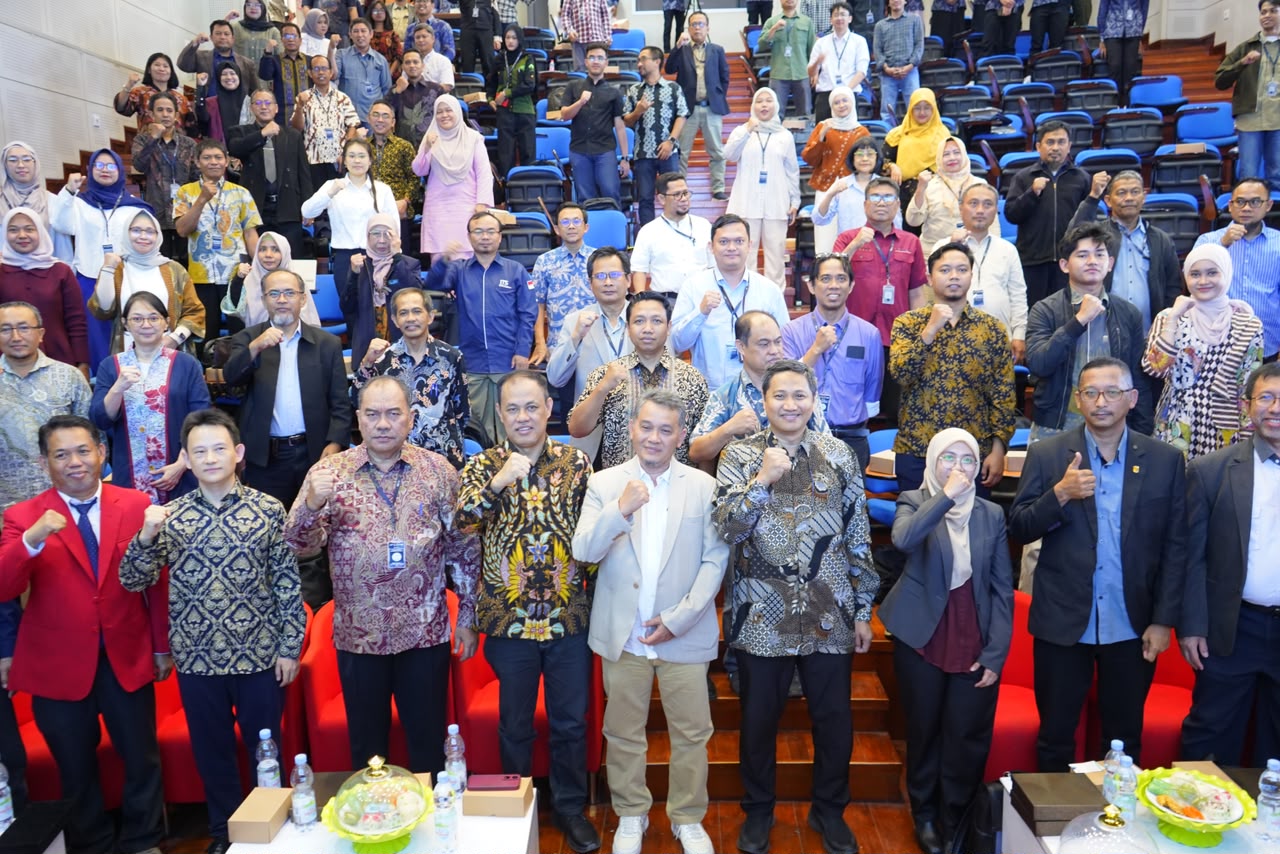
MAKASSAR — The Mechanical Engineering Study Program, Department of Mechanical Engineering, Faculty of Engineering (FT), Hasanuddin University, is expanding its research network and international collaboration through The 3rd International Conference on Energy, Manufacture, Advanced Material, and Mechatronics (IC-EMAMM) 2026.
The international event was held on Saturday (12 September 2026) at the Unhas Faculty of Engineering, Gowa Campus, together with the 18th National Seminar on Metallurgical and Materials Engineering (SENAMM XVIII) 2026.
IC-EMAMM 2026 carried the theme “Driving Impactful and Sustainable Innovations through Engineering and Technology for Global Development.” SENAMM XVIII, meanwhile, took the theme “Enhancing Technological Capability in Materials Science and Metallurgy through Indigenous Resource Utilization and Innovation.” Hundreds of academics, researchers, practitioners, and students attended, sharing knowledge and research results in energy, manufacturing, materials, and mechatronics.
Committee Chair Ir. Fauzan, S.T., M.T., Ph.D., explained that the conference brought in speakers from several countries as part of efforts to broaden knowledge exchange and open opportunities for research collaboration.
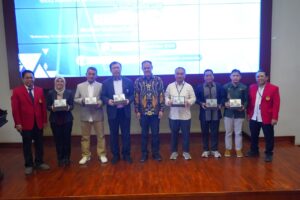
Five keynote speakers took part in the conference:
1. Adnan Ibrahim from Universiti Kebangsaan Malaysia, Malaysia;
2. Mehmet Ali Güler from American University of the Middle East, Kuwait;
3. Akbar Rhamdani from Swinburne University of Technology, Australia;
4. Reza R. Jazar from University of Toledo, United States;
5. Wei Linkui from Huayou Indonesia Regional Center.
Vice Dean for Partnerships, Research, Innovation, and Alumni Affairs of the Unhas Faculty of Engineering, Prof. Ir. Muhammad Bachtiar Nappu, S.T., M.T., M.Phil., Ph.D., said that engineering has a far broader scope than machines alone. The field plays a role in designing technological solutions while building a more sustainable future.
“This conference is important as a space that brings together expertise, research, industry, and global networks. This forum is not just a place to present research results, but also opens room to build connections and produce new collaborations,” said Prof. Bachtiar.
That need is increasingly relevant amid the energy transition toward net zero emission targets and the challenge of climate change. These issues call for innovation that has a real impact on society.
Prof. Bachtiar also encouraged young lecturers and students to take part in international forums to broaden their networks and find collaboration opportunities. Connections built through the conference can grow into research cooperation and the development of technological solutions in the future.
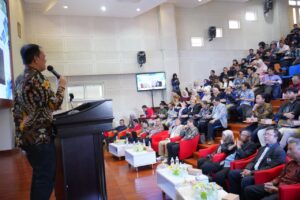
Support for strengthening research collaboration was voiced by Unhas Vice Rector for Partnerships, Internationalization, and Alumni Affairs, Prof. Ir. Suharman Hamzah, S.T., M.T., Ph.D., HSE. Prof. Suharman said Unhas currently supports more than 30 research consortia and has about 300 thematic research groups.
“The research ecosystem at Unhas can continue to be developed through collaboration with national and international partners, including in materials and metallurgy,” said Prof. Suharman.
Prof. Suharman also mentioned the development of Unhas’s Technology Research Group (TRG) related to materials and metallurgy as part of strengthening research capacity at the university.
Meanwhile, the Chair of the Cooperation Body for Metallurgy and Materials Education, Prof. Ir. Sungging Pintowantoro, S.T., M.T., Ph.D., Eng., IPU, highlighted the strategic position of materials science and metallurgy in modern technological development. Today, almost every sector needs materials and manufacturing technology, from transportation and electronics to various industrial needs.
“In the Indonesian context, this development is also closely tied to the country’s wealth of mineral resources. That potential needs to be accompanied by the development of technology and innovation so that available resources can generate greater added value,” said Prof. Sungging.
Materials development also needs to be guided by the principle of sustainability through collaboration among the various parties in the pentahelix ecosystem. With this approach, materials and metallurgy research is expected to meet industry needs while supporting sustainable development.(*/dhs)
Editor : Ishaq Rahman
This article is an English translation of the original Indonesian report.