
More than 70% of Unhas alumni find jobs within six months of completing their studies. This indicates the quality and competitiveness of Unhas graduates, as well as the relevance of the competencies gained during their education to the needs of the working world.
MAKASSAR – As universities are expected to produce graduates who are ever more relevant to the needs of the working world, alumni data has become an increasingly strategic source of information. It not only describes graduates’ transition into the professional world but also serves as a basis for evaluating the effectiveness of learning, the relevance of the curriculum, and the quality of the educational services a university provides.
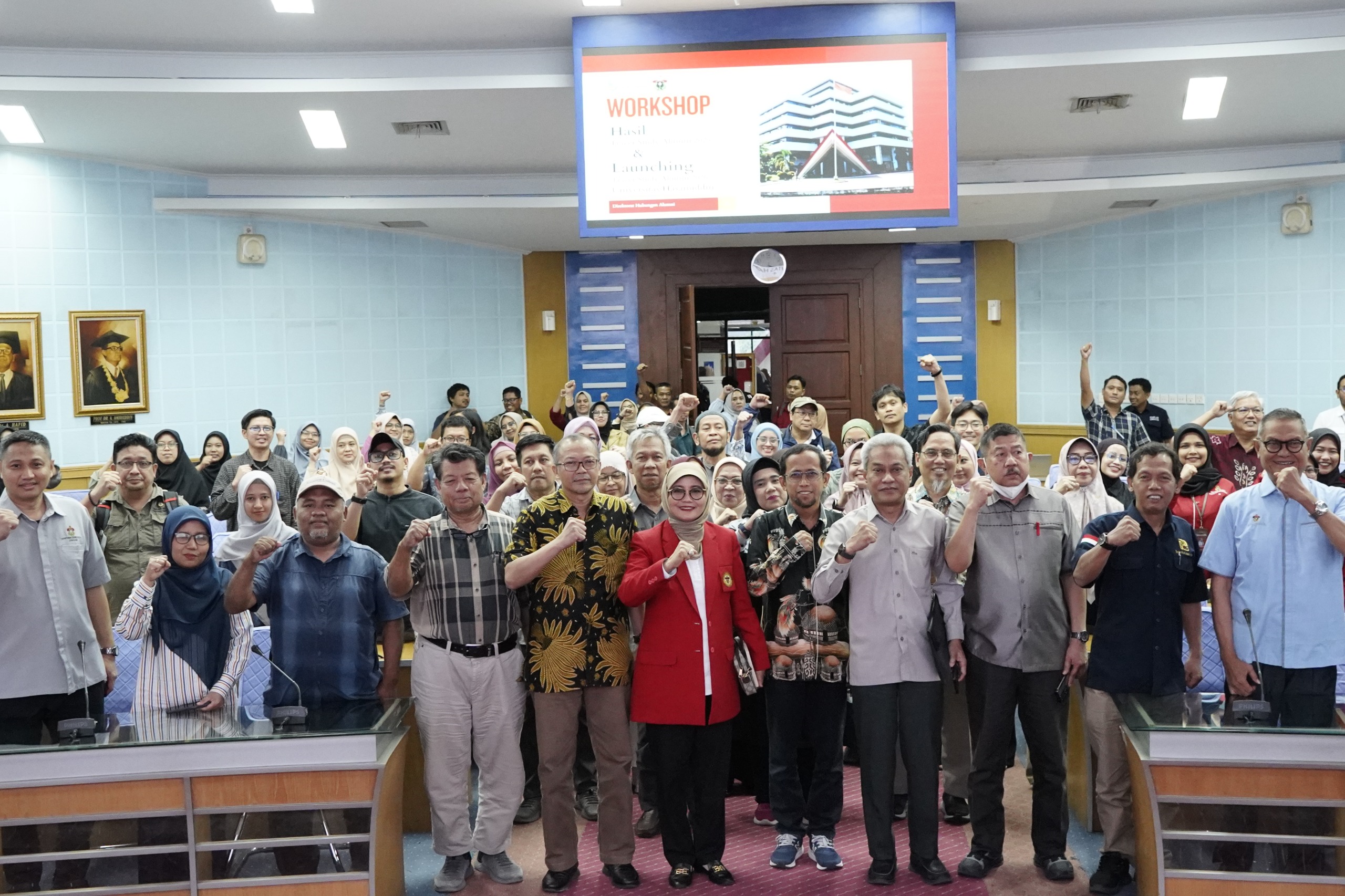
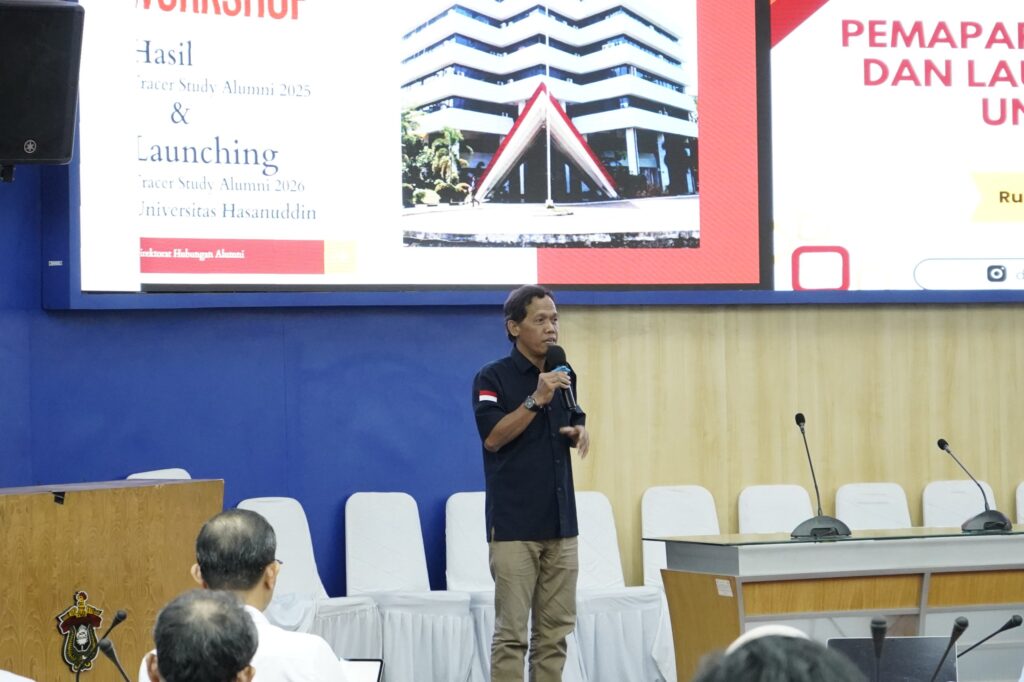
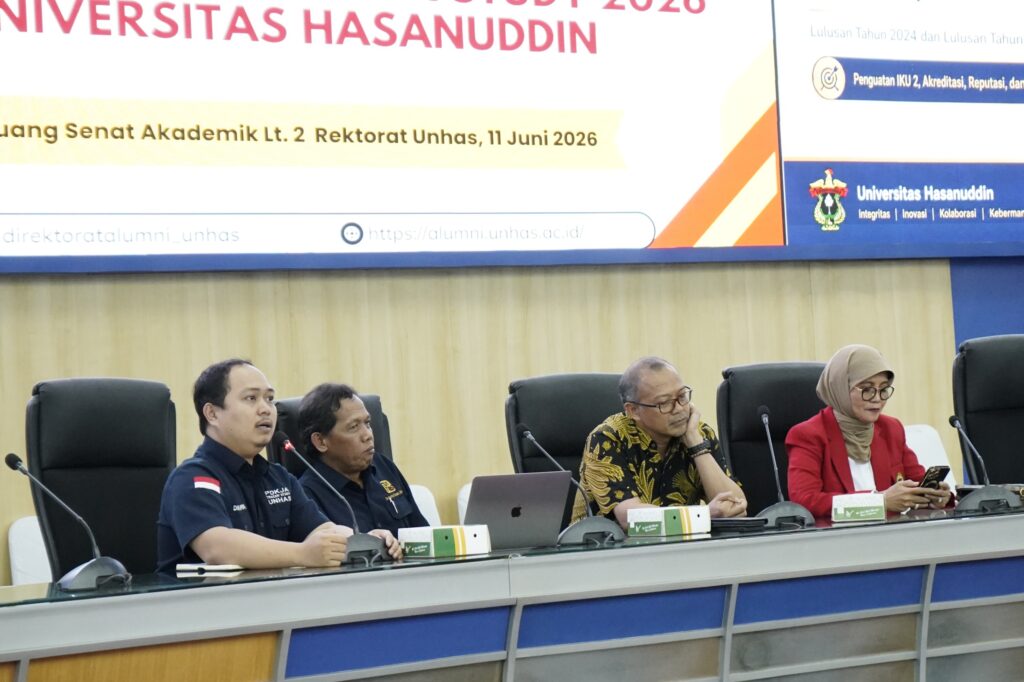
The commitment to strengthening the use of alumni data is one focus of Hasanuddin University (Unhas) through the Workshop on the Results of Tracer Study 2025 and the Launch of Tracer Study 2026, organized by the Directorate of Alumni Relations in the Senate Room, 2nd Floor of the Unhas Rectorate, on Thursday (11 June).
Unhas Director of Alumni Relations Prof. Ir. Muhammad Yusuf, S.Pt., Ph.D., explained that the results of Tracer Study 2025 provide a picture of graduates’ circumstances after completing their education. They also serve as a basis for evaluation to improve next year’s study. Data quality greatly determines the accuracy of strategies for developing education and improving institutional performance.
The results of the Hasanuddin University Tracer Study 2025 show encouraging achievements. The alumni participation rate (response rate) reached almost 97%, reflecting high alumni involvement in supporting the institution’s evaluation process. On Key Performance Indicator (IKU) 1, Unhas also recorded 88%, exceeding the ministry’s set standard of 80%.
“This achievement shows that alumni’s connection with their alma mater remains very strong. More importantly, the data collected gives a more accurate picture of graduates’ circumstances and will serve as a basis for evaluation to improve the conduct of the tracer study and the development of educational programs in the coming years,” explained Prof. Yusuf.
The tracer study results show that more than 70% of Unhas alumni found jobs within less than six months of completing their studies. This finding is a positive indicator that reflects graduates’ competitiveness and shows the relevance of the competencies gained during their education to the needs of the working world.
Vice Rector for Human Resources, Alumni, and Information Systems Prof. Dr. Farida Patittingi, S.H., M.Hum.,stressed that the success of the tracer study requires the commitment and cooperation of all faculties and study programs. Various efforts have been made, including roadshows to a number of study programs to obtain more comprehensive information as a basis for developing strategies to improve institutional performance.
“These tracer study results are also important feedback for study programs, including in supporting accreditation and re-accreditation processes,” explained Prof. Farida.
On the occasion, Prof. Farida officially launched Tracer Study 2026. Prof. Farida hopes that future tracer studies will become even more effective through structured governance, the support of faculty leaders, and the active participation of alumni, so that they can serve as a basis for strengthening education quality and improving the performance of study programs across Unhas.
Tracer study data plays a significant role in supporting the achievement of Key Performance Indicators (IKU), the accreditation process, improvement of institutional reputation, and the strengthening of the Impactful University program. Information obtained from graduates serves as a basis for evaluating learning quality and for measuring the university’s contribution to broader development.
Academically, the tracer study is an important instrument for assessing the effectiveness of the curriculum, graduate learning outcomes (CPL), and the implementation of Outcome-Based Education (OBE). Alumni feedback helps study programs ensure that the competencies built during education remain relevant to the needs of the working world and the times.
Preparation for Tracer Study 2026 is therefore an important step to ensure the availability of accurate, comprehensive, and representative data. Its successful implementation is expected to strengthen Unhas’s position as a higher education institution that not only produces quality graduates but can also demonstrate real impact on society, the economy, and sustainable development. (*/mir)
Editor : Ishaq Rahman
This article is an English translation of the original Indonesian report.