
Seaweed holds great potential for the future of Indonesia’s maritime economy. From coastal areas, this commodity can create jobs, strengthen the food industry, and spur innovation based on marine resources. This potential is one reason cross-border collaboration is important to accelerate its development.
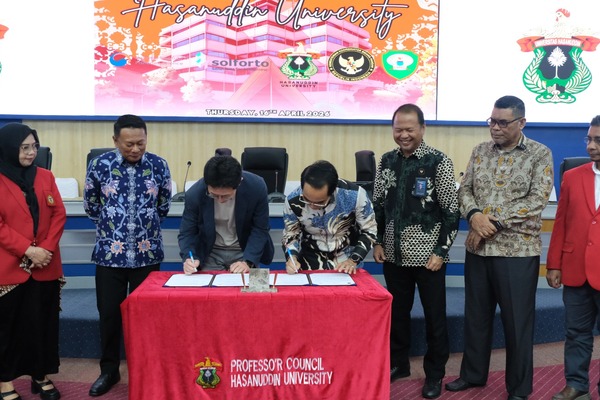
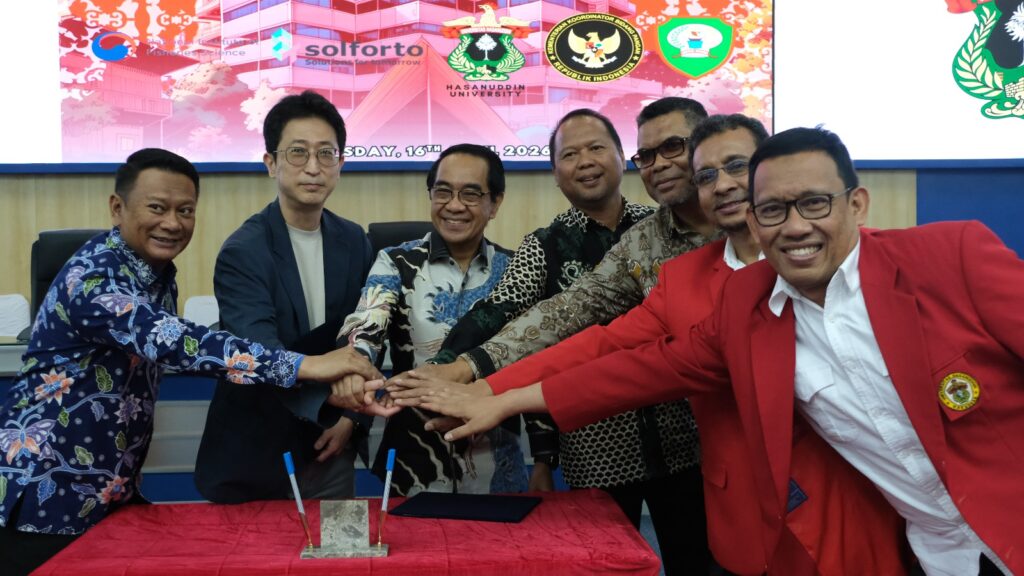
In that spirit, Hasanuddin University has formally entered a strategic partnership with the South Korean company Solforto Co., Ltd., through the signing of a memorandum of understanding (MoU) held in the Senate Room on the 2nd floor of the Unhas Rectorate Building on Thursday (16 April).
The cooperation focuses on strengthening aquaculture, especially seaweed. The signing was carried out by Unhas Rector Prof. Dr. Ir. Jamaluddin Jompa, M.Sc., together with Bongsoo Lim, Ph.D., a delegate of Solforto Co., Ltd.
The partnership is built within the framework of strengthening the Tridharma of Higher Education (teaching, research, and community service) through applied research, human resource capacity building, and the downstreaming of innovation based on industry needs. The collaboration focuses on strategic sectors with a direct impact on food security and the national blue economy.
Unhas Rector Prof. Dr. Ir. Jamaluddin Jompa, M.Sc. stressed that seaweed is a strategic commodity with a major role in strengthening the national economy, driving maritime-based industry, and improving the welfare of coastal communities. Developing this sector requires collaboration among universities, government, and industry so that it can grow in a more innovative and competitive way.
“Seaweed has great potential for Indonesia’s future. Through this cooperation, we want to deliver research, innovation, and technology that bring real benefits to society while strengthening Indonesia’s position as one of the world’s centers of seaweed development,” said Prof. JJ.
The main areas of cooperation include sustainable seaweed development, aquaculture science, and marine biotechnology. These areas are seen as having great prospects for increasing productivity, the quality of aquaculture output, and the optimal use of marine resources.
The cooperation also opens broad opportunities for students, lecturers, and researchers through academic mobility programs. The planned schemes include student exchanges for internships and research training, as well as exchanges of experts to strengthen the scientific capacity of both institutions.
On the same occasion, the Solforto representative said that Indonesia and South Korea have long had close relations in supporting the development of the fisheries sector through facility modernization and infrastructure strengthening. The Solforto representative hopes the resulting synergy will improve the competitiveness of Indonesia’s seaweed industry globally.
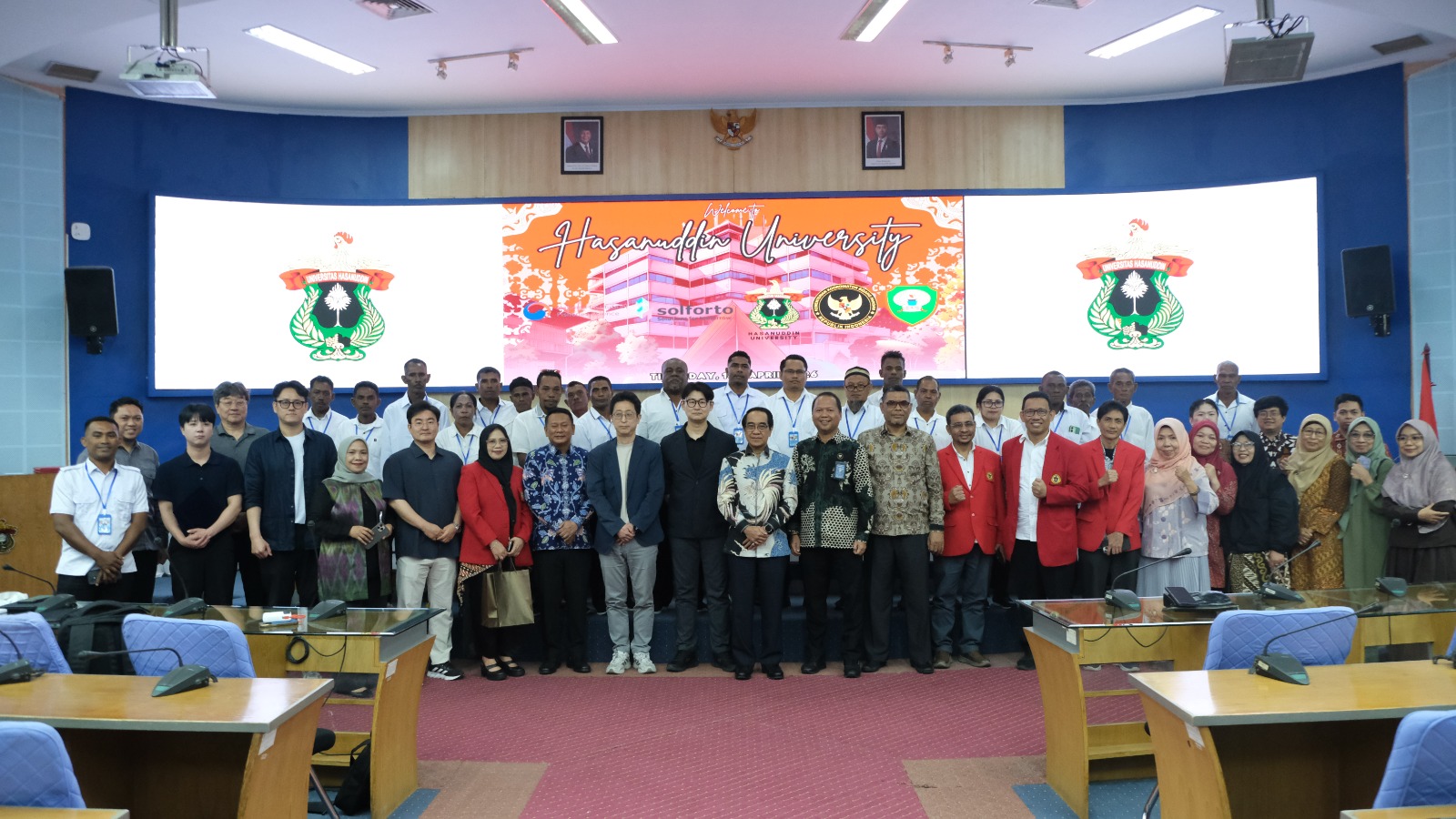
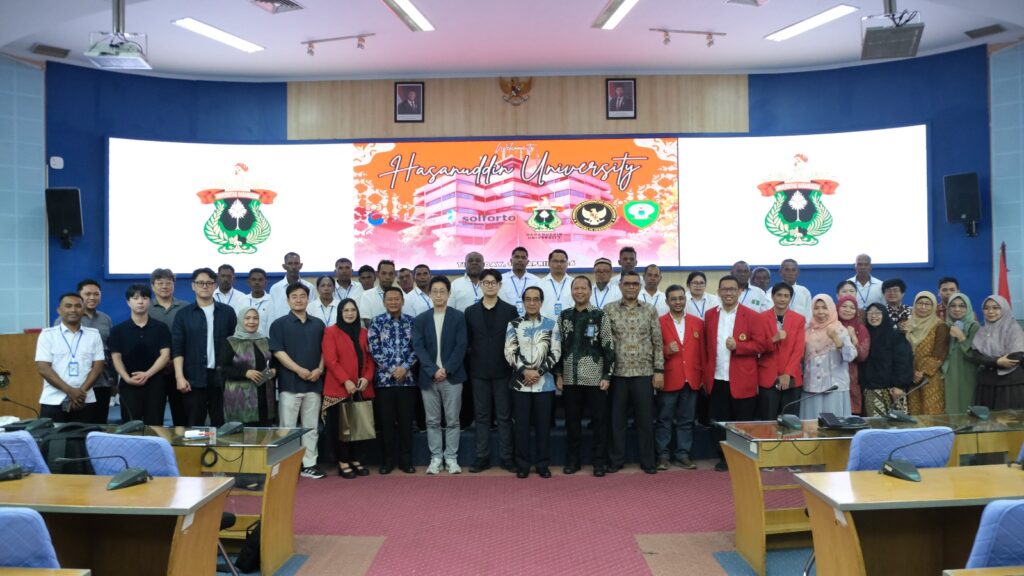
Besides the MoU signing, Unhas also received a visit from Korea’s National Institute of Fisheries Science (NIFS) under the Southeast Maluku Seaweed Farmer Facilitation Program. The program is part of Indonesia–Korea cooperation under the Official Development Assistance (ODA) scheme.
The activities are held in Makassar City and Takalar Regency. Unhas itself is one of the locations chosen for learning about seaweed development based on research, technological innovation, and community empowerment. (*/mir)
Editor : Ishaq Rahman
This article is an English translation of the original Indonesian report.