
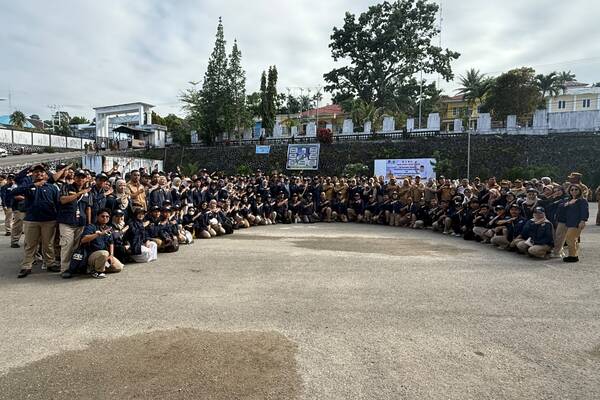
FAKFAK – Development solutions cannot be designed on assumptions. Every region has different social, economic, cultural, and resource characteristics, so an approach must begin with an understanding of conditions on the ground. This principle underpins the 2026 Hasanuddin University (Unhas) Patriot Expedition Team (TEP) as it begins its service in Fakfak Regency, West Papua.
Over the next four months, 120 Unhas Patriots will assist communities in Weri and Saharey villages, East Fakfak District. Activities begin with identifying the community’s potential and needs, followed by drafting and carrying out various mentoring and empowerment programs tailored to the characteristics of the area.
Unhas TEP Chair Abdullah Sanusi, S.E., MBA., Ph.D., who is also Director of Strategic Partnerships, explained that the Patriots’ service does not start from assumptions. This approach is an important part of ensuring that every program has a strong foundation, is relevant to community needs, and can deliver sustainable impact.
“The Patriots will first understand the community’s conditions and existing potential. We want to make sure every program truly starts from the community’s needs and can provide benefits,” Abdullah said.
The aspects to be addressed include the community’s economic potential, the region’s leading commodities, education, health, strengthening of economic institutions, use of appropriate technology, and improved market access. All recommendations will be drawn up based on the results of the needs identification during the assignment period.
This approach is in line with the aim of the 2026 Patriot Expedition Team Program, initiated by the Ministry of Transmigration, which is to encourage universities to contribute to the transformation of transmigration areas.
For Unhas, the expedition is also a learning space that brings academic knowledge together with the community’s experience and local wisdom. This process will enrich the Patriots’ perspectives in designing development solutions.
“This expedition is not only about what can be brought from the campus to the community. The Patriots will also learn from the knowledge, experience, and potential of the people of Fakfak,” Abdullah added.
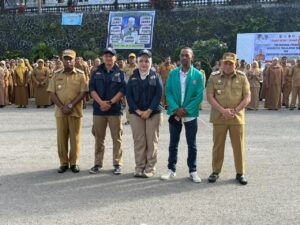
The Fakfak Regency Government welcomed the involvement of universities in supporting regional development. Fakfak Regent Samaun Dahlan, S.Sos., M.Ap., hopes the Patriots’ presence can help the government identify both the potential and the various challenges faced by the community.
“The regional government will certainly support the programs so that they run well and benefit the villages and the community,” Samaun said.
After arriving in Fakfak, the Patriots immediately joined a coordination meeting with the Fakfak Regency Government and the Padjadjaran University (Unpad) Patriot Expedition Team. The meeting discussed readiness for the welcoming ceremony and an initial synchronization of the program with the regional government.
The Patriots then took part in a welcoming ceremony led by the Fakfak Regent together with regional apparatus organizations (OPD). After the ceremony, the team will discuss with relevant OPD to align work plans before being sent off to Weri and Saharey villages, the service locations.
A total of 120 members of the Hasanuddin University Patriot Expedition Team, divided into 20 teams, arrived in Fakfak Regency, West Papua, on Sunday (2 August). The group was welcomed by Fakfak Regent Samaun Dahlan, S.Sos., M.Ap., Acting Head of the Fakfak Regency Office of Transmigration and Manpower Lud Kamudi, and the community through a traditional dance procession at Siboru Airport in Fakfak, as a symbol of welcome and the start of collaboration.
Through an approach based on science and collaboration with the regional government and the community, the Hasanuddin University Patriot Expedition is expected to contribute to achieving the Sustainable Development Goals (SDGs), particularly SDG 17 (Partnerships for the Goals). The program also supports SDG 8 (Decent Work and Economic Growth) and SDG 10 (Reduced Inequalities) by promoting more inclusive and sustainable development of transmigration areas. (*/tep/mir)
Editor: Ishaq Rahman
This article is an English translation of the original Indonesian report.