
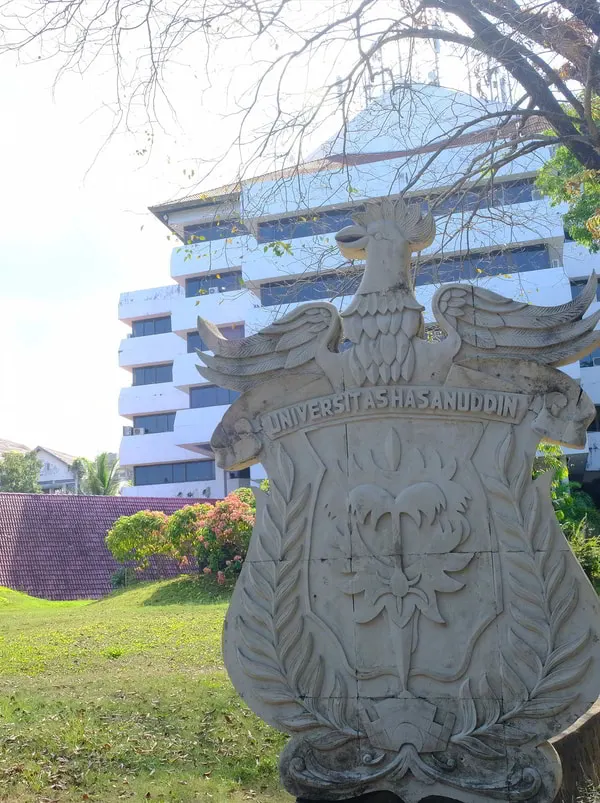
Hasanuddin University (Unhas) is finalizing plans to open seven new study programs (prodi) that are targeted to start admitting new students (MABA) in the 2026 academic year. The move is part of the institution’s strategy to respond to changing human resource needs in various strategic sectors.
Unhas Vice Rector for Academic and Student Affairs Muhammad Ruslin explained that the development of new programs goes through rigorous stages, from internal deliberation to national registration.
“Opening these programs is not just following a trend but is based on the real needs of society and the development of science. We want to ensure that Unhas graduates are relevant to the needs of the working world,” Prof. Ruslin said.
Several of the proposed programs are still at the deliberation stage at the Academic Senate and related units. They include the Bachelor of Midwifery, the Bachelor of Artificial Intelligence, and the Bachelor of Smart Agriculture, which are being processed by the Academic Senate Working Group Team. Meanwhile, the Bachelor of Chemical Engineering is under deliberation at the Institute for Quality Assurance and Education Development (LPMPP).
Several other programs have moved to later stages. The Medical Physicist Professional Program, for example, is currently being registered with the Higher Education Database (PDDIKTI) and is planned to be able to admit students through the independent admission track in 2026.
The same applies to the Bachelor of Railway Engineering, which is already registered in PDDIKTI and is ready to open admission of new students through the independent track in the same year. The program is considered important given the growing need for experts in rail-based transportation.
The D4/Applied Bachelor’s Program in Drug and Food Control is still at the stage of meeting the minimum standards for opening a study program. The process is being carried out through cooperation between Unhas and the National Agency of Drug and Food Control (BPOM) in the form of a joint task force.
According to Prof. Ruslin, opening these new programs also reflects Unhas’s effort to integrate local potential with global developments. Fields such as artificial intelligence, smart agriculture, and drug and food control are considered to have great prospects at both the national and international levels.
“South Sulawesi has great potential in the agriculture and industry sectors. At the same time, technological development demands a workforce that is ready and adaptive. This is where the role of universities becomes crucial,” Prof. Ruslin said.
Prof. Ruslin added that the entire process of opening programs is carried out in line with applicable quality standards and regulations, including internal evaluation and approval from the relevant ministry through the PDDIKTI system.
With this plan, Unhas hopes to expand access to higher education while strengthening its contribution to producing graduates who are competent, innovative, and able to compete globally.
The following are the new study programs being opened at Unhas as of 30 April 2026:
- Bachelor of Midwifery, Faculty of Nursing (being processed by the Academic Senate Working Group Team)
- Medical Physicist Professional Program, Faculty of Mathematics and Natural Sciences (MIPA) (being registered in PDDIKTI; can already admit students through the 2026 independent track).
- Bachelor of Artificial Intelligence, Faculty of Engineering (being processed by the Academic Senate Working Group Team)
- Bachelor of Chemical Engineering, Faculty of Mathematics and Natural Sciences (MIPA) (being processed by the Institute for Quality Assurance and Education Development, LPMPP).
- Bachelor of Railway Engineering, Faculty of Engineering (already registered in PDDIKTI; can already admit students through the 2026 independent track).
- D4/Applied Bachelor’s Program in Drug and Food Control, Faculty of Vocational Studies (meeting minimum standards for opening a study program; Unhas-BPOM Task Force).
- Bachelor of Smart Agriculture, Faculty of Agricultural Technology (being processed by the Academic Senate Working Group Team).(*/ir)
Editor : Ishaq Rahman
This article is an English translation of the original Indonesian report.