
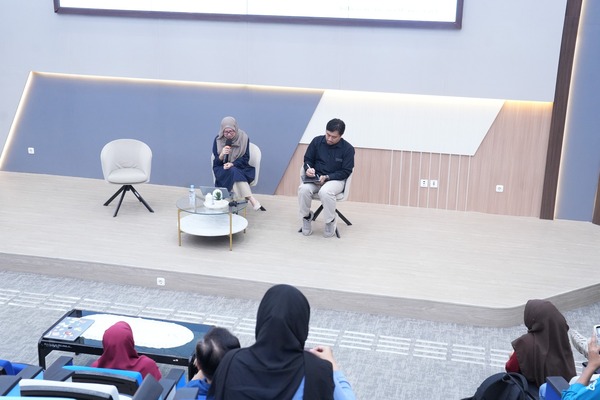
Farah Akbar, Ph.D: “Power relations in traditional research can create distance between researchers and the social realities they study.”
The academic world today faces the challenge of bridging the gap between researchers and the social realities they study. The complexity of social issues demands research approaches that are not only methodologically accurate but also sensitive to context and human experience.
Farah Akbar, B.Ed., MA., Ph.D (The University of Edinburgh) introduced a transformative approach in a public lecture titled “Creative and Participatory Research Methods.” This approach promotes a paradigm shift in research, from a process of extracting data to a collaborative practice that builds knowledge inclusively.
Farah Akbar said that conventional research has long been criticized for treating participants as objects of study. This can overlook the human dimension and complex lived experiences, especially of marginalized groups whose voices are often unrepresented. Power relations in traditional research can create distance between researchers and the social realities they study.
“Traditional research often speaks about other people, not with them. Creative approaches are introduced to capture the deeper meaning behind the data,” explained Farah Akbar.
This method opens space for participants to express their experiences through a variety of more flexible media. The instruments used include visual approaches such as drawing and photography, performative approaches such as drama and role-playing, and digital approaches through blogs and social media.
This range of methods allows emotions, memories, and culture to be explored more comprehensively. Creative approaches are considered effective in exploring sensitive issues because they give participants a safer space for expression.
“Not all experiences can be put into words; sometimes visuals and body expression are actually more honest,” Farah Akbar added.
Beyond creativity, the participatory principle is the main foundation of this approach. Participants are no longer positioned as objects but as co-researchers who are actively involved in all stages of the research. The concept of lived experience as expertise affirms that lived experience is a legitimate form of knowledge.
“Lived experience is expertise that cannot be replaced by observation alone,” Farah Akbar stressed.
Although it offers a more inclusive and humane approach, this method has challenges, such as a need for more intensive time and dependence on context. Therefore, the choice of method must consider ethics, relevance, and research objectives in order to produce meaningful and just knowledge.
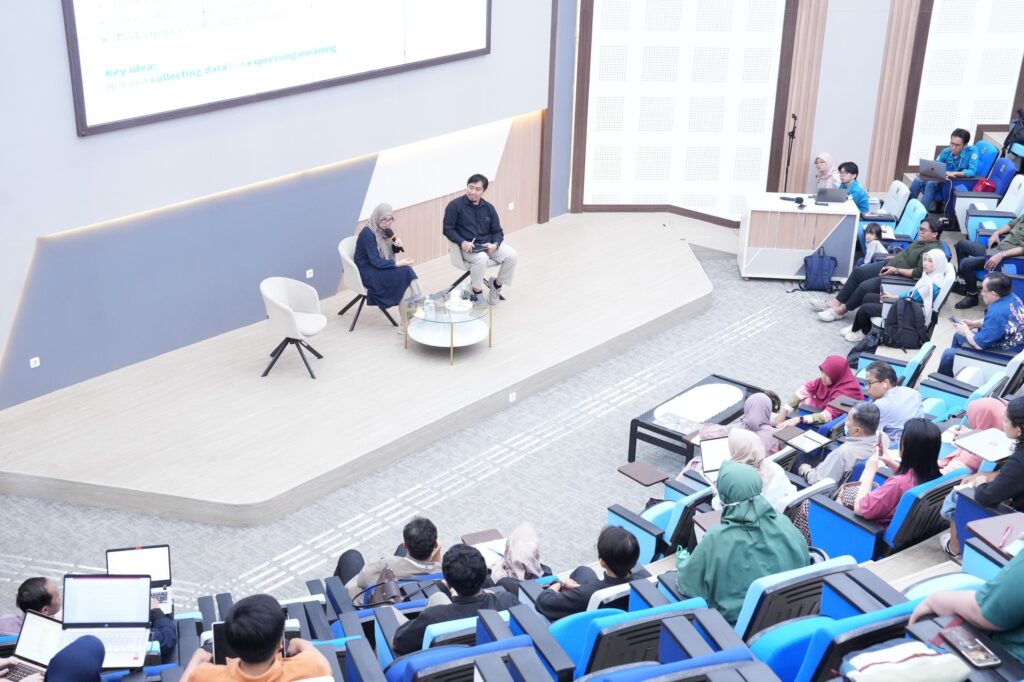
The material was delivered by Farah Akbar as the resource person at a public lecture organized by the International Affairs Office (KUI) of Hasanuddin University at the Arsjad Rasyid Hall, Tamalanrea Campus, on Wednesday (15 April).
The event was officially opened by the Head of the International Affairs Office, Andi Masyitha Irwan, S.Kep., Ns., Ph.D., who in the opening remarks expressed hope that forums like this can strengthen an academic culture that is adaptive and responsive to developments in science.
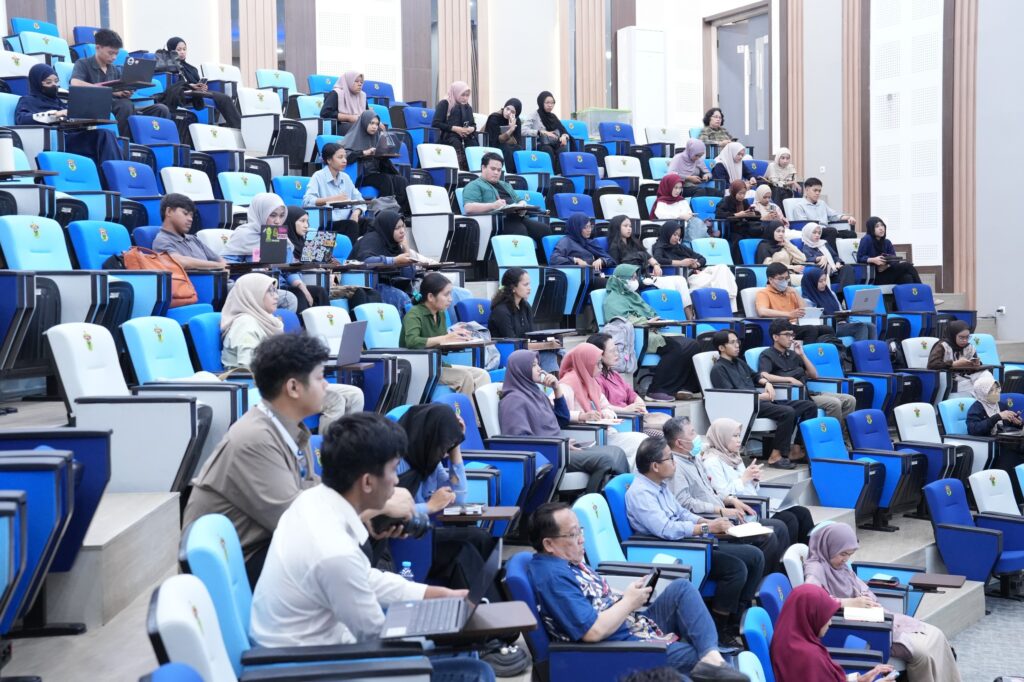
The event, attended by students from undergraduate to doctoral levels as well as lecturers, ran smoothly and interactively. After the resource person’s presentation, it continued with a question-and-answer and discussion session that gave participants room to deepen their understanding of the topic. (*/mir)
Editor: Ishaq Rahman
This article is an English translation of the original Indonesian report.