

MAKASSAR – Food security is determined not only by the availability of land and feed but also by the quality of livestock genetic resources. Amid rising national demand for animal protein, developing more productive superior breeds has become an important strategy for strengthening Indonesia’s food system. Guided by this need, Hasanuddin University (Unhas) continues to develop Alope-1 chicken, a superior native chicken line produced through genetic breeding and projected to become part of a national strategic program in food security.
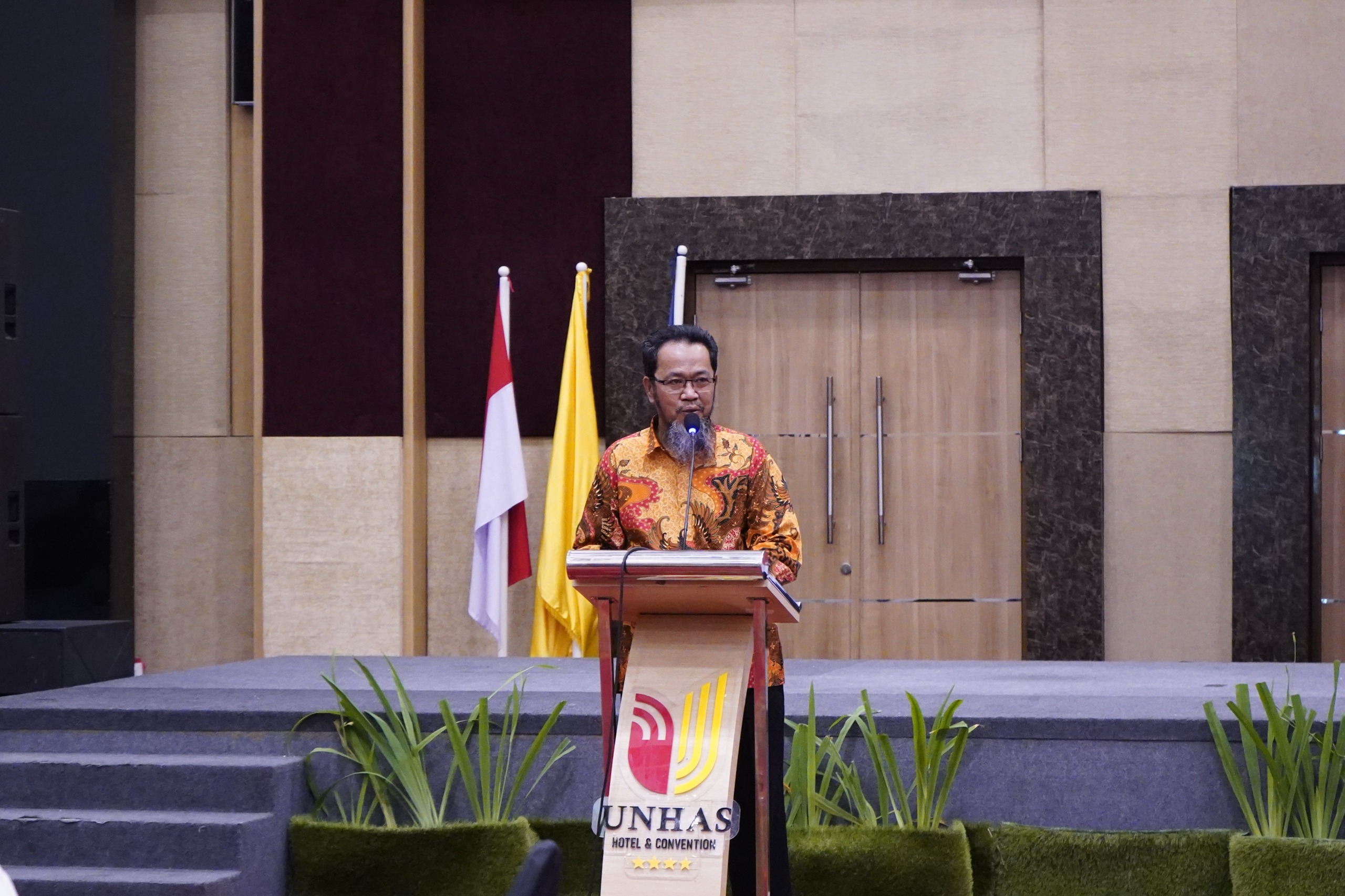
This commitment was discussed at the Focus Group Discussion (FGD) on the Integrated and Sustainable Development of Alope Unhas-1 Chicken, held in the Ballroom of the Unhas Hotel & Convention on Friday (17 July). The forum brought together academics, government, and strategic partners to draft a roadmap for developing Alope chicken, from basic research and breeding stock production to downstreaming so that it can be widely used by the public.
Addressing the Productivity Challenge of Native Chickens
Native chickens (ayam kampung) have high economic and cultural value in Indonesia. Demand continues to rise because of the flavor of their meat, but their productivity is relatively low compared with commercial breeds. Slow growth, suboptimal feed efficiency, and limited supplies of superior breeding stock are the main challenges in meeting market demand.
Unhas’s Faculty of Animal Science developed Alope chicken in response to this problem through a genetic breeding approach. The process involves selecting the best individuals over several generations to obtain a line with faster growth, better feed conversion efficiency, and the ability to adapt to tropical environments.
With these characteristics, Alope chicken is expected to raise the productivity of smallholder livestock farming without losing the native chicken traits that consumers prefer. The innovation also has the potential to strengthen the national supply of animal protein while increasing farmers’ incomes.
Interestingly, the development of Alope chicken began with student research, which was then continued and refined by lecturers and researchers at Unhas’s Faculty of Animal Science. This journey shows how research in a university setting can grow from the laboratory into an innovation with the potential for economic and social impact.
Unhas’s Downstreaming Strategy
The Rector of Hasanuddin University, Prof. Dr. Ir. Jamaluddin Jompa, M.Sc., stressed that the success of research does not end with scientific publications but must take the form of innovations that meet community needs.
“Research results must be downstreamed, applied, and deliver real benefits. Alope chicken shows that campus innovation can grow into a solution that supports food security while improving farmers’ welfare,” said Prof. JJ.
According to Prof. JJ, the development of Alope chicken will be strengthened through collaboration with regional governments and various stakeholders so that superior breeding stock can reach more areas. This approach is part of the research downstreaming strategy that Unhas has continued to strengthen.
In the innovation ecosystem, downstreaming is an important stage that connects research results with implementation in the field. Through this process, technology develops into products or systems that deliver real benefits.
Collaboration to Strengthen Impact
The Dean of Unhas’s Faculty of Animal Science, Prof. Dr. Syahdar Baba, S.Pt., M.Si., explained that improving genetic quality, strengthening breeding stock production, and expanding partnerships will be the main focus of Alope chicken development going forward.
“For Alope chicken to be widely used by the public, the next steps are to develop its genetic quality, breeding stock production, and collaboration with regional governments,” Prof. Syahdar explained.
Besides providing superior breeding stock, Unhas is also preparing technical assistance for farmers so that the technology it has developed can be applied effectively. For Unhas, Alope chicken is an example of how research can produce innovations that answer development challenges. Together with other innovations such as Jagung Jago, the development of Alope chicken is part of Unhas’s commitment to strengthening food security through science, technology, collaboration, and downstreaming. (*/aya)
Editor: Ishaq Rahman


This article is an English translation of the original Indonesian report.