
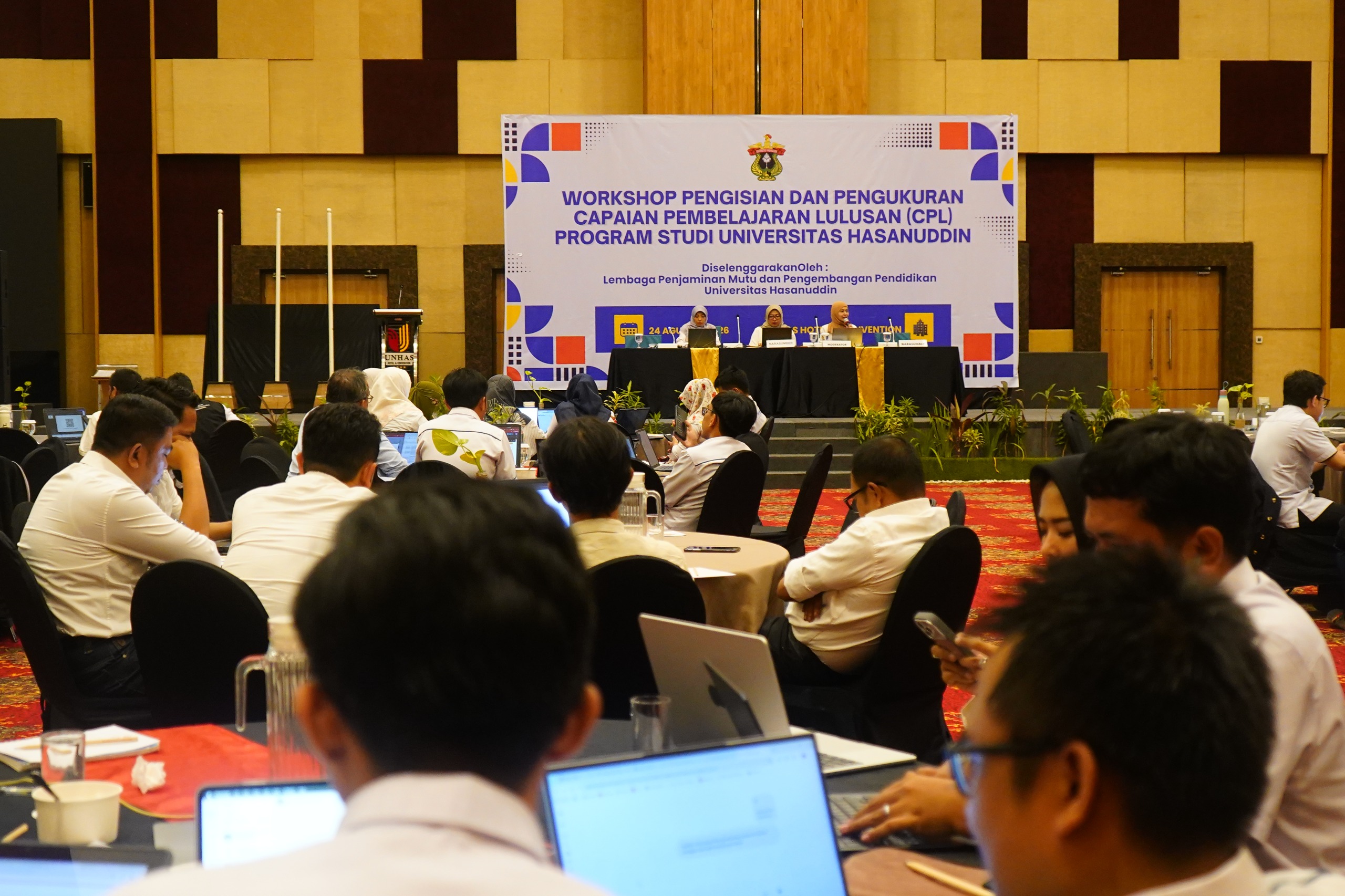
MAKASSAR – Measuring Graduate Learning Outcomes (CPL) is an important part of ensuring that the learning process runs in line with the competencies that have been set. Through the Outcome-Based Education (OBE) approach, student achievement data can be used to evaluate the learning process while strengthening academic quality control.
To strengthen this practice, Hasanuddin University, through the Institute for Quality Assurance and Education Development (LPMPP), held the 2026 Workshop on Completing and Measuring Graduate Learning Outcomes (CPL) for Study Programs. The activity was aimed at improving technical understanding of CPL measurement, mapping the sources of learning outcome data, and strengthening the integration of various academic activities into study programs’ CPL measurement systems.
LPMPP Unhas Head Prof. Rini Rachmawaty, S.Kep., Ns., MN., Ph.D., said CPL measurement plays a role in maintaining a culture of academic quality. Learning outcome data can show how far students have achieved the competencies, support evaluation of the learning process, and provide the information needed to develop study program quality.
“CPL data gives a picture of how far students have achieved the competencies, which can be used to evaluate and improve learning. This data is also important as evidence in the accreditation process, so measurement needs to be done consistently and in an integrated way,” explained Prof. Rini.
According to Prof. Rini, academic data integration is needed so that learning outcome information can be used consistently for quality evaluation and accreditation. Data that is currently scattered across several systems needs to be linked so that study programs can obtain a fuller picture of learning outcomes.
“We need to make sure that data from various learning activities can be connected and read within a single CPL measurement framework. Well-managed data will greatly help us carry out academic quality assurance,” added Prof. Rini.
The workshop aims to strengthen technical understanding of OBE-based CPL measurement through the Unhas CPL measurement application. Participants were also guided to map sources of learning outcome data from SIPAKAMASE, SIPANTAU, SIKOLA, and related academic systems.
This mapping is needed to link learning data with the CPL set by each study program. With a clearer data flow, study programs can obtain more measurable information about students’ competency achievement.
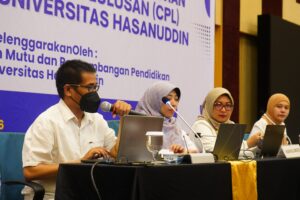
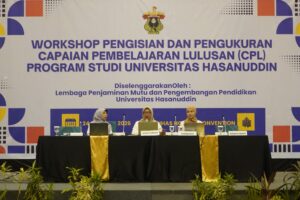
To support the activity’s intended outputs, the workshop featured three qualified speakers in education development and academic quality assurance at Unhas: Prof. Dr. Yusring Sanusi B, S.S., M.App.Ling. (Head of the Center for Education Studies and Development, LPMPP Unhas), Dr. Hendra, S.Si., M.Kom. (Application Programmer), and Rahmatullah, SIP., M.Si. (Head of the Subdirectorate for Joint Course Coordination).
The three speakers discussed the technical and strategic aspects of OBE-based CPL measurement. The material covered using the SIPAKAMASE application to map CPL–CPMK–courses, entering data, measuring CPL attainment, and interpreting the results.
Strengthening the OBE-based CPL measurement system is expected to support study programs in conducting data-based learning evaluation. The measurement results can also be used for quality control and for monitoring the learning process, and to support accreditation needs.
The 2026 Workshop on Completing and Measuring CPL for Study Programs was attended by representatives from all Unhas study programs. The event took place in the Unhas Hotel Ballroom on Monday (24 August) and was scheduled to run until 17:00 WITA (Central Indonesia Time). (*/mir)
Editor: Ishaq Rahman
This article is an English translation of the original Indonesian report.