
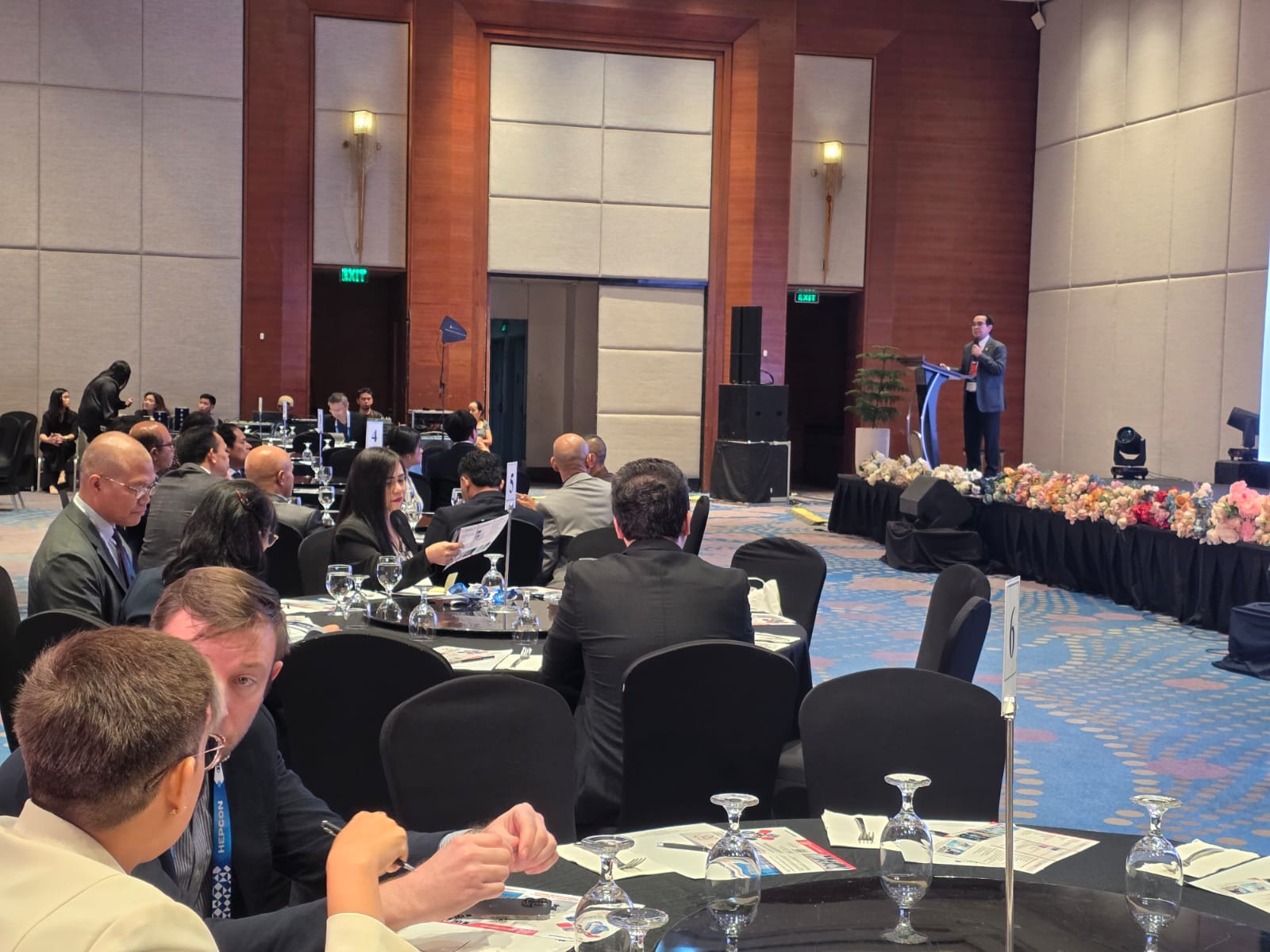
CEBU, PHILIPPINES — Strengthening collaboration among universities and expanding international partnerships were the agenda brought by the Rector of Hasanuddin University, Prof. Dr. Ir. Jamaluddin Jompa, M.Sc., to the Higher Education Partnerships Conference (HEPCON) 2026 in Cebu, Philippines, on 1–3 October 2026. At the forum, Prof. JJ presented the perspective of the Council of Rectors of Indonesian State Universities (MRPTNI) on the importance of building global networks and widening collaboration among campuses to support capacity building at state universities in Indonesia.
HEPCON is a forum that facilitates international collaboration and partnerships between Indonesian universities and universities from various countries. The event is a space for dialogue, networking, and knowledge sharing between representatives of Indonesian universities and higher education partners from around the world.
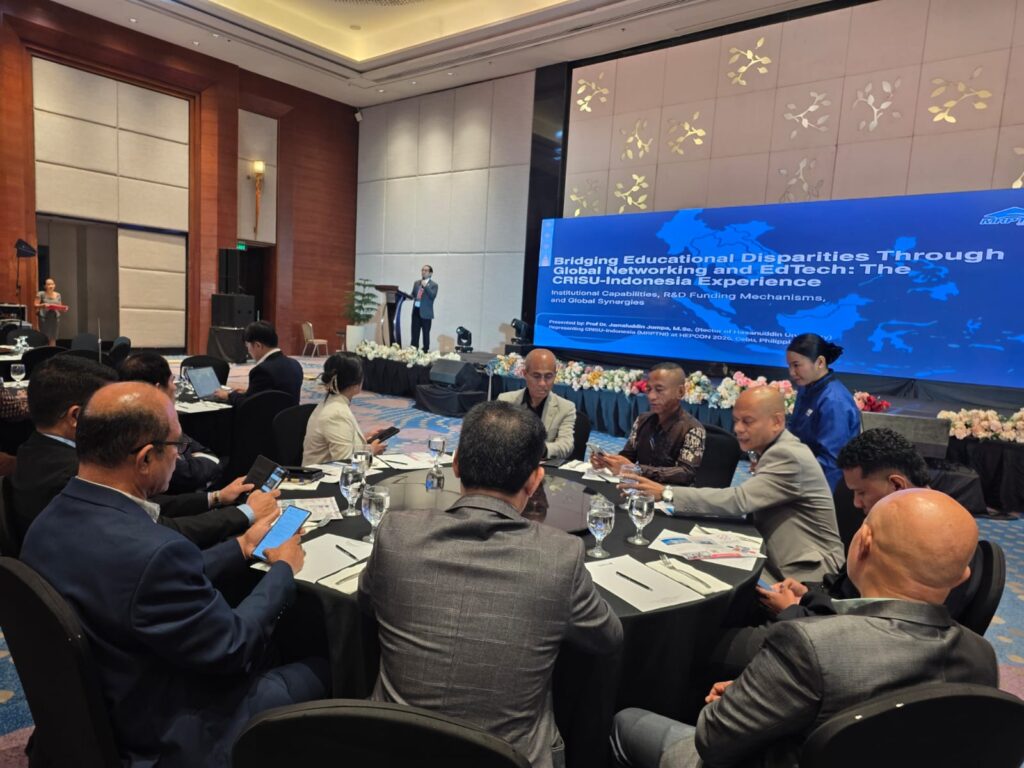
In the presentation titled “Bridging Educational Disparities Through Global Networking and EdTech: The CRISU-Indonesia Experience,” Prof. JJ discussed efforts to narrow gaps in higher education capacity through global networks and the use of educational technology. The presentation covered institutional capacity, research and development funding mechanisms, and opportunities to build synergy with global partners.
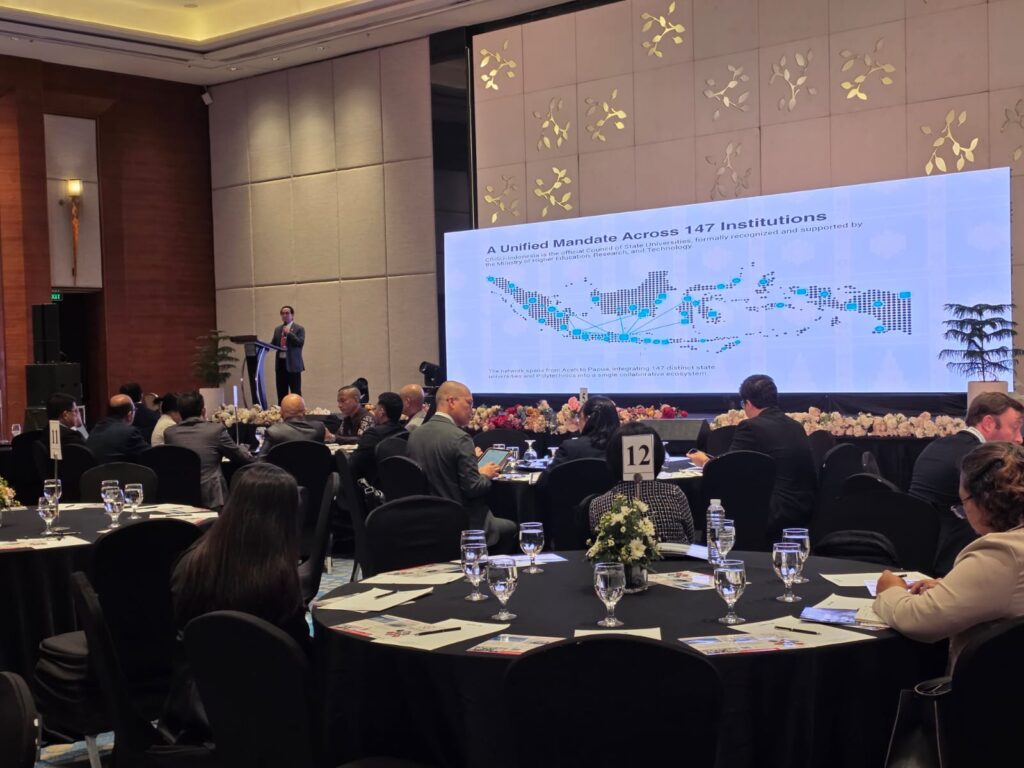
Prof. JJ explained that CRISU-Indonesia, or MRPTNI, oversees 147 state universities and polytechnics spread from Aceh to Papua. The organization is the official body of state universities, formally recognized and supported by the Ministry of Higher Education, Science, and Technology.
The diversity of these 147 institutions is an important context for the CRISU-Indonesia agenda. Each university has different characteristics, capacities, and levels of development. For this reason, networks among universities are seen as important for expanding the exchange of knowledge, experience, technology, and good practices.
For Prof. JJ, strengthening networks needs to be placed within a framework of equalizing capacity. Cooperation among campuses opens room for universities to share resources, experience, and expertise according to their respective characteristics.
“The main mission of CRISU-Indonesia (MRPTNI) is to reduce disparities in quality among universities in Indonesia by encouraging them to cooperate with one another, so as to support faster progress and a better reputation for Indonesian state universities,” said Prof. JJ.
These efforts are backed by CRISU-Indonesia’s track record of collaboration with international networks. Since 2023, CRISU-Indonesia has collaborated on HEPCON and the EduTech Solution Summit through a program partnership with MSW Global Indonesia. Both events regularly bring university policymakers together with developers of digital learning technology from various countries.
At this year’s event, MRPTNI also brought speakers from several state universities, including ITS, ITB, UI, UGM, Unhas, UNAIR, and IPB. The academics and experts shared experiences on developments in educational technology, the digitalization of learning, and the use of technology in university management.
According to Prof. JJ, these experiences show that international networks can be developed from forums for meeting and sharing knowledge into more concrete cooperation. One opportunity that can be developed is research and development collaboration between universities and the educational technology industry.
“CRISU-Indonesia or MRPTNI is always open to building cooperation networks with industry developers of technology and learning digitalization through joint research at universities, under matching fund or sharing fund schemes,” Prof. JJ explained.
Through such schemes, universities are placed not merely as users of technology, but also as partners in producing and developing innovation. Joint research collaboration can bring together universities’ academic capacity and industry experience in technology development and user needs.
Prof. JJ views joint funding mechanisms as one instrument that can drive such innovation. Matching funds and sharing funds can be used to support joint research involving universities and industry, particularly in developing learning technology and the digitalization of education.
The involvement of Indonesian state universities in HEPCON and the EduTech Solution Summit also widens networks with global universities and industry. These networks can be developed through knowledge exchange, academic collaboration, development of learning technology, and research cooperation.
For Prof. JJ, expanding international networks must be followed by sustained relationships and concrete collaboration. With wider networks, Indonesian state universities have room to learn from the experience of universities in other countries while presenting Indonesia’s academic, research, and innovation capacity.
Prof. JJ hopes HEPCON and the EduTech Solution Summit can continue to expand their networks by involving more globally reputable universities. This expansion is expected to open more collaboration opportunities for universities in Indonesia and the ASEAN region, while supporting the strengthening of universities’ capacity and reputation at the international level. (*/dhs)
Editor : Ishaq Rahman
This article is an English translation of the original Indonesian report.