
MAKASSAR – Service transformation in higher education no longer rests only on administrative speed, but also on the ability of human resources to build communication and empathy and to adapt to developments in digital technology.
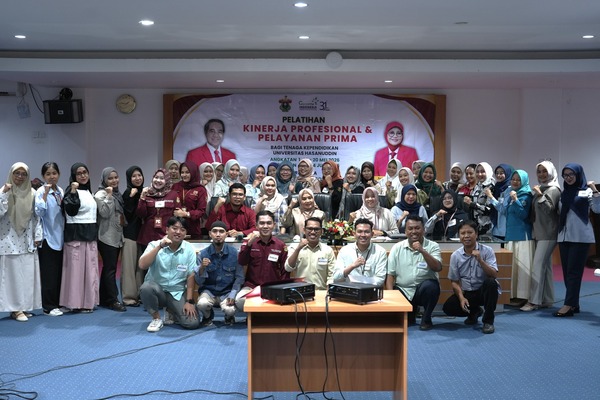
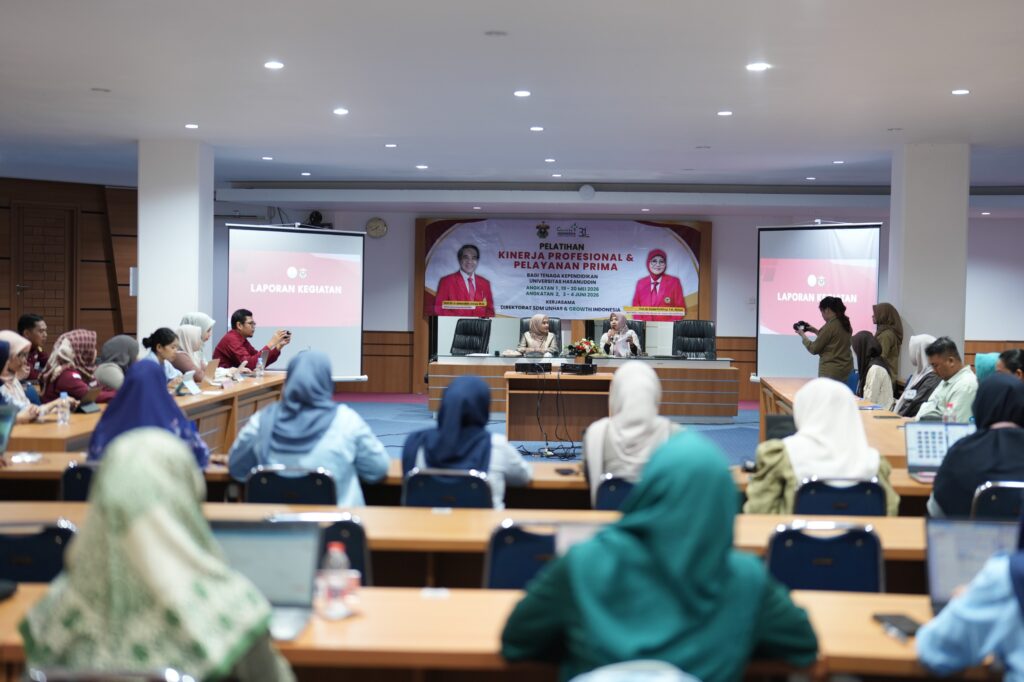
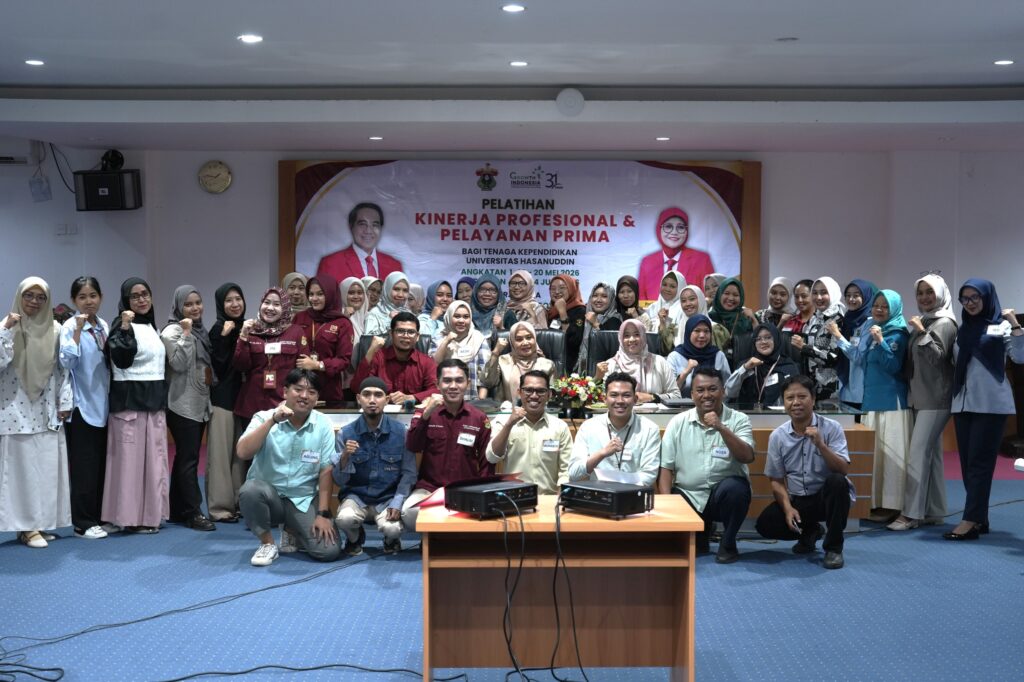
To meet this challenge, Hasanuddin University (Unhas) held the “Professional Performance and Service Excellence Training for Education Staff within Hasanuddin University, Batch I,” which began on Monday (19 May) at the LPMPP Hall of Unhas, Tamalanrea Campus.
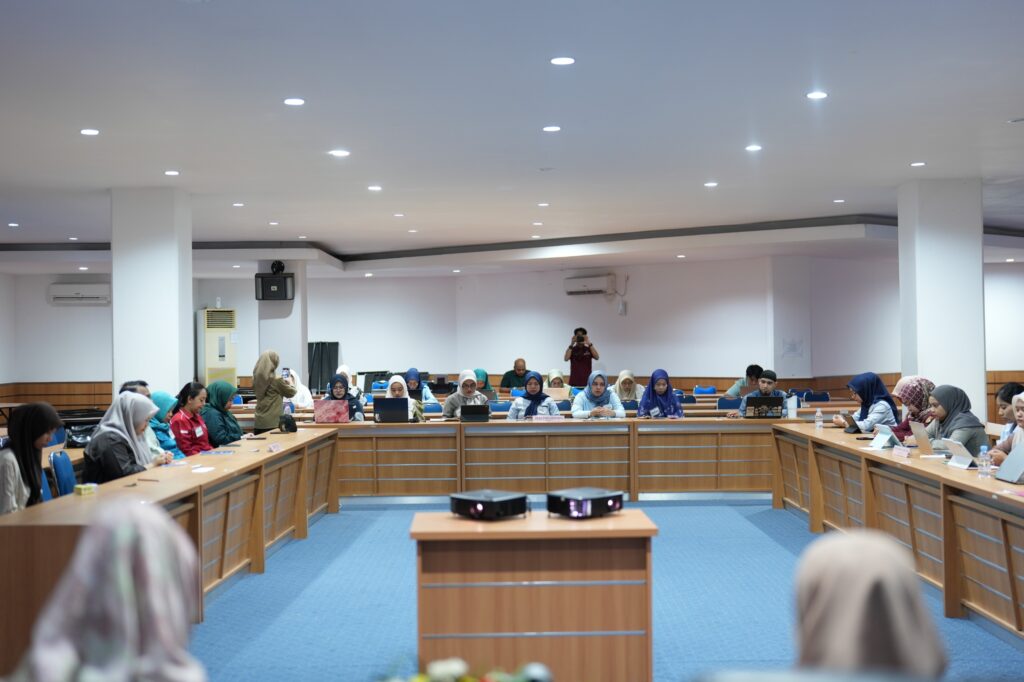
A total of 45 employees representing units at the rectorate and faculties took part in the training, which focused on strengthening service competencies, work professionalism, and the use of artificial intelligence (AI)-based technology to support the effectiveness of institutional services.
Amid rising demands for the quality of public services, education staff play an important role as the front line of the institution’s interaction with students, lecturers, partners, and the public. For this reason, service today requires not only administrative ability, but also interpersonal skills, emotion management, and the ability to adapt to digital transformation.
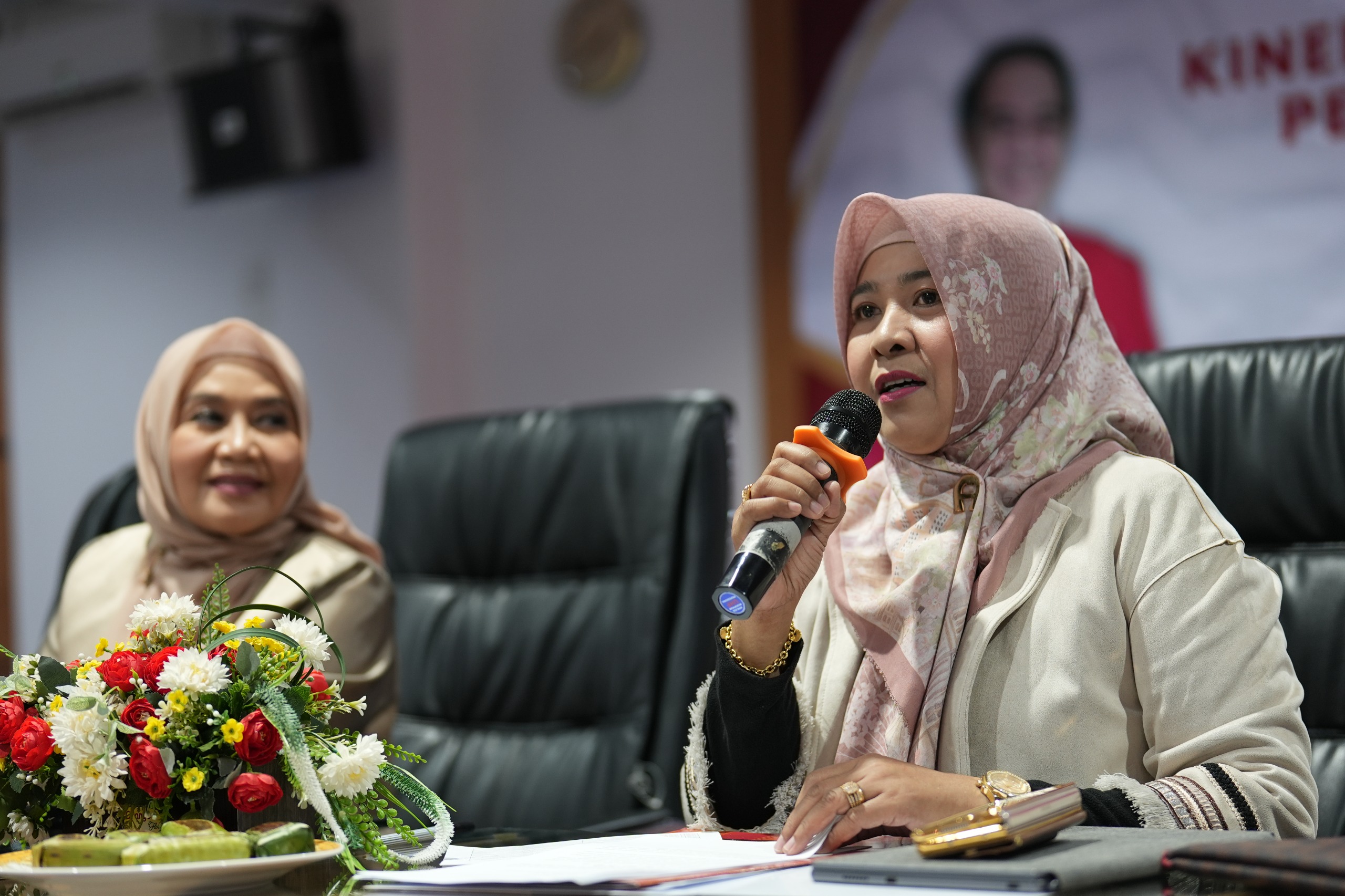
Head of the Staffing Subdirectorate at the Unhas Directorate of Human Resources (SDM), Saharia, said that service excellence is not only about completing administrative tasks, but also about professional conduct, discipline, integrity, and the ability to build good communication.
“Participants are expected to be able to build a professional mindset at work and to apply effective and responsive service in their daily duties,” Saharia said.
Besides strengthening employee ethics and professionalism, the training also covered the use of AI technology to support service effectiveness, professional handling of complaints, and the strengthening of collaborative teamwork.
The material included Employee Ethics and Professionalism, Professional Performance and Service Excellence, Service Behavior Transformation, Professional Grooming, Effective Communication Service, and AI-Based Digital Service Transformation. The program was also complemented by focus group discussions (FGD), role play, and service practice.
Batch I was attended by 45 leadership secretaries from various work units. Batch II is scheduled for 3–4 June 2026 and will be attended by about 60 participants from the Academic and Student Affairs division, the Planning and Resources division, and the Partnerships, Research, Innovation, and Alumni division.
Through this training, Hasanuddin University is encouraging the creation of a work culture that is professional, adaptive, and oriented toward service quality. (*/dhs)
Editor: Ishaq Rahman
This article is an English translation of the original Indonesian report.