
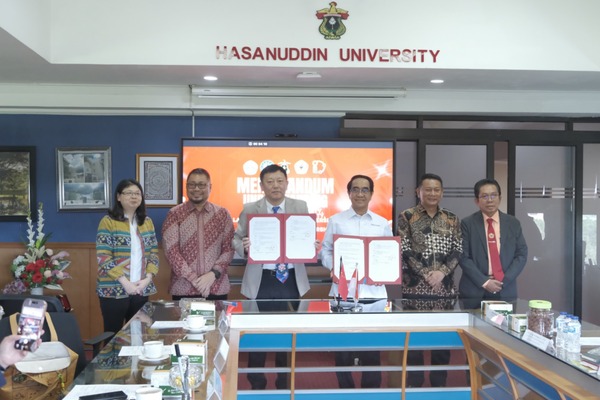
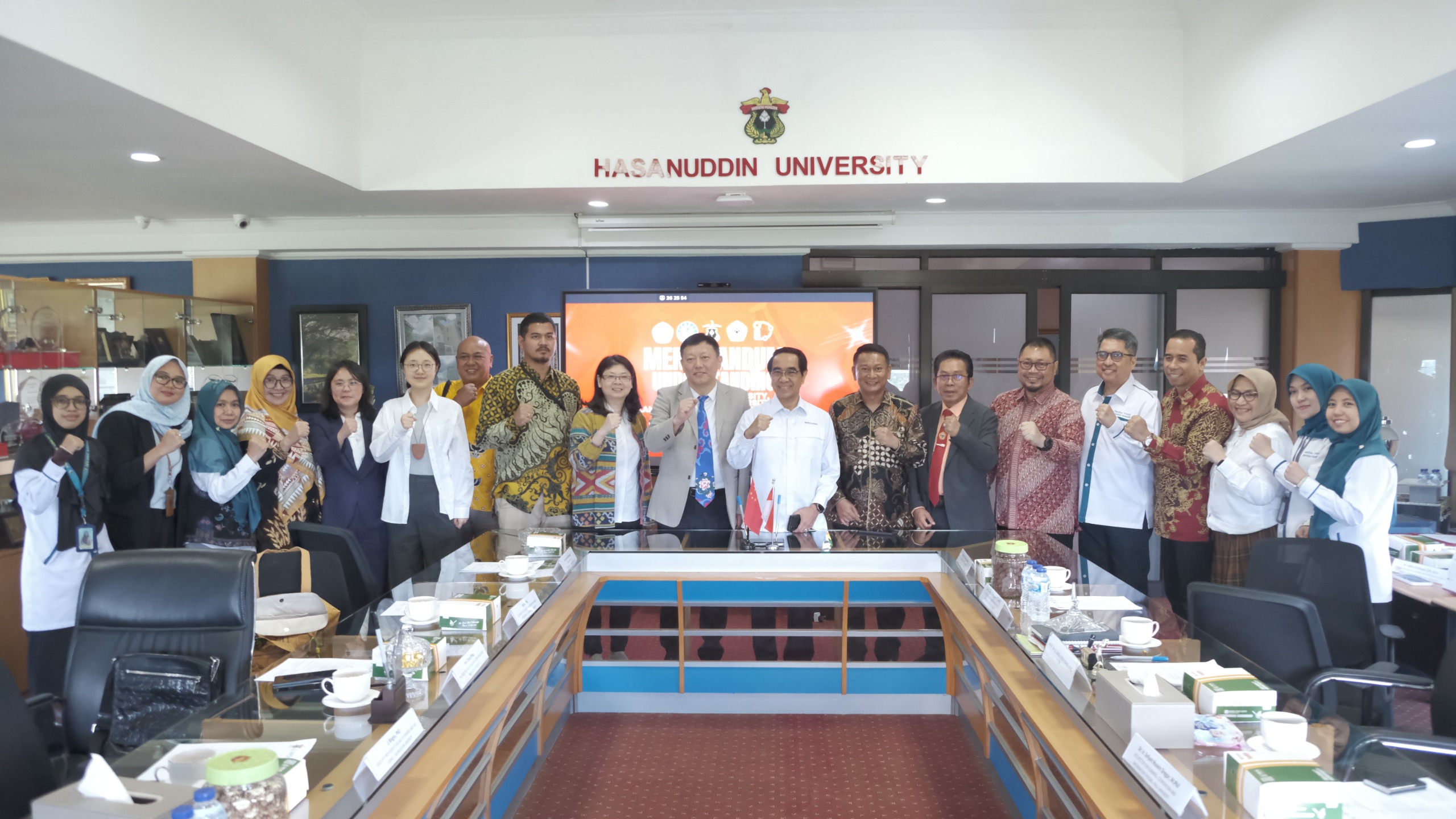
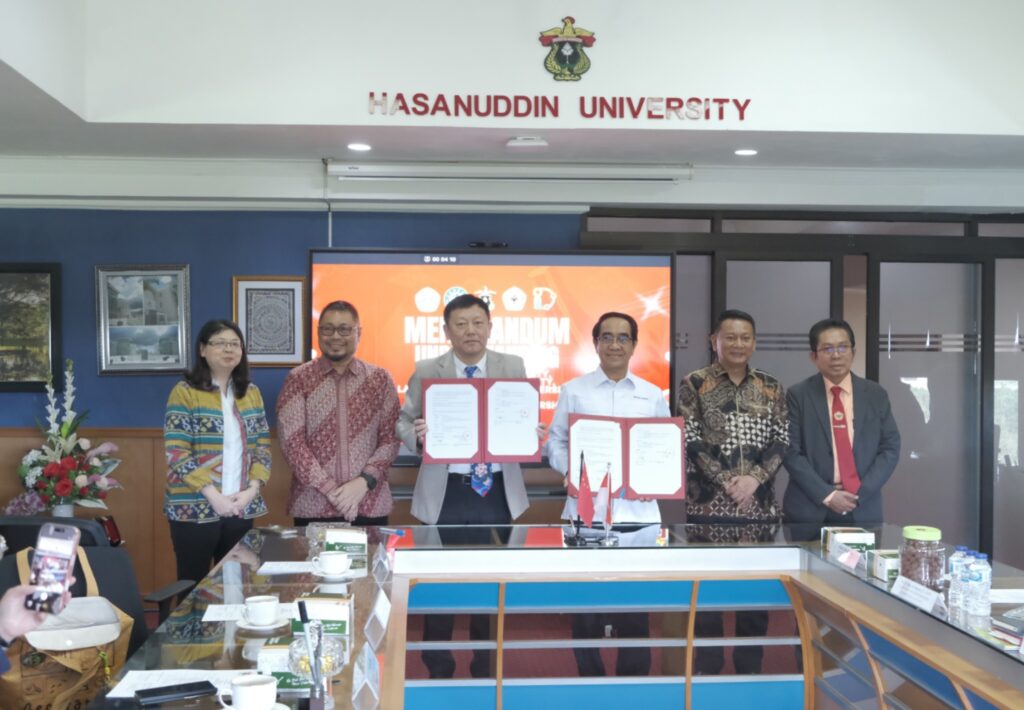
A collaborative approach based on digital transformation and internationalization is the main focus of a partnership involving Dalian Ocean University, Hasanuddin University, Universitas Riau, Universitas Lambung Mangkurat, and the Indonesia Digital Leadership Association. The agreement was marked by an MoU Signing Ceremony held in the Rector’s Meeting Room on the 8th floor of the Unhas Rectorate Building on Monday (13 April).
The event not only marked an administrative agreement between institutions but also reflected efforts to develop a strategic collaboration model oriented toward institutional capacity building, knowledge exchange, and the integration of digital-based education systems.
Dalian Ocean University is a leading marine university in China that focuses on developing fisheries and marine science, with a strong reputation in research, international education, and contributions to the global maritime industry.
Unhas Rector Prof. Dr. Ir. Jamaluddin Jompa, M.Sc., stressed the importance of real implementation of the partnership that has been built. According to the Rector, the effectiveness of a partnership is measured not by the number of documents signed, but by the extent to which the resulting programs deliver concrete impact.
“This cooperation is expected to be translated into measurable and sustainable strategic programs, so that it contributes tangibly to the development of the tridharma of higher education,” the Rector said.
The Dalian Ocean University delegation was led by Prof. Zheng Peng, Professor at School of Economics and Management. Universitas Riau was represented by Dr. Ir. Sofyan Husein Siregar, M.Phil., Universitas Lambung Mangkurat by Dr. Ir. Yusuf Azis, M.Sc., and the Indonesia Digital Leadership Association by Grace Heny Mardjianto, SE.
Also present was a representative of the Coordinating Ministry for Infrastructure and Regional Development of the Republic of Indonesia, Ronaldo Aditya.
Unhas Vice Rector for Partnerships, Innovation, Entrepreneurship, and Business, Prof. Dr. Eng. Adi Maulana, S.T., M.Phil., explained that the cooperation is designed to strengthen two main aspects: digital transformation and increased international exposure.
According to Prof. Adi, one indicator of the collaboration’s success is increased academic mobility among both students and lecturers. Student exchange programs to China are one strategic instrument for increasing international exposure, while also strengthening Unhas’s position in the global education ecosystem.
“Increased mobility of students and lecturers will contribute to strengthening academic capacity and expanding international networks. This is part of a systematic effort to enhance the university’s global reputation,” Prof. Adi explained.
Unhas aims to increase the number of international students to around 800 in the next few years. This target is supported by the accelerated digital transformation that has taken place over the past three years.
Various academic and administrative service systems are now digitally integrated, so this integration of information systems is considered capable of improving the institution’s efficiency, transparency, and service quality.
From a broader perspective, this cross-institutional collaboration reflects a paradigm shift in university cooperation, from merely symbolic exchanges toward partnerships based on outputs and impact.
Accordingly, the cooperation serves not only as an instrument of academic diplomacy but also as a mechanism for accelerating sustainable institutional transformation. (*/dhs)
Editor: Ishaq Rahman
This article is an English translation of the original Indonesian report.