

MAROS – Tilapia farming requires careful control of various biological factors, such as water quality, fish mortality, and feed efficiency. Changes in these factors can affect fish growth, raise production costs, and reduce farmers’ profits.
For this reason, tilapia farm management increasingly relies on data as the basis for decision-making to improve productivity and business efficiency. Management based on scientific indicators helps farmers anticipate various risks before they grow into larger losses.
Responding to that need, the Hasanuddin University Community Service Team introduced a science-based approach to tilapia farming to the managers of the Village-Owned Enterprise (BUMDes) of Benteng Gajah Village, Maros Regency. Through technical guidance, participants learned farming techniques as well as the use of data to improve productivity and support business sustainability.
Team Leader Dr. Alpiani, S.Pi., M.Si., explained that by understanding technical parameters, farmers can make faster and more accurate decisions when conditions in the field change. Until now, many farmers have relied only on experience and habit.
“Experience is certainly a very valuable asset, but it is far more effective when combined with data. By monitoring indicators such as water quality, Survival Rate, and Feed Conversion Ratio, farmers can learn about pond conditions earlier so that decisions are more accurate and the risk of loss can be minimized,” Dr. Alpiani explained.
The Unhas community service team also encouraged the use of local potential as part of sustainable farming innovation. One example is bioslurry, a residue from biogas installations that still contains nutrients and beneficial microorganisms. Bioslurry has the potential to increase the productivity of natural feed in ponds while reducing dependence on commercial feed, so operating costs can be reduced.
Benteng Gajah Village has the potential to become an example of innovation-based tilapia farming development because it is supported by local resources that can be integrated with modern farming technology.
“We hope the BUMDes will not only be able to develop a productive tilapia farming business but also become a learning center for village communities,” Dr. Alpiani said.
In this activity, the Unhas community service team brought in tilapia farming practitioner Syamsuddin, S.Pi., as a resource person. The material covered business planning, calculating pond capacity, determining seed stocking density, and estimating productivity and harvest yields based on farming conditions.
Participants also received training on water quality management through pH and temperature monitoring, water quality sampling techniques, the use of probiotics, the application of biofloc systems, and strategies for preventing fish disease. Controlling these parameters is important because changes in water quality can stress fish, lower their immunity, and increase the risk of disease outbreaks that affect farm productivity.
Participants’ enthusiasm was evident throughout the discussion sessions. The dialogue showed that the need for science-based mentoring remains very large, especially among fisheries business operators at the village level.
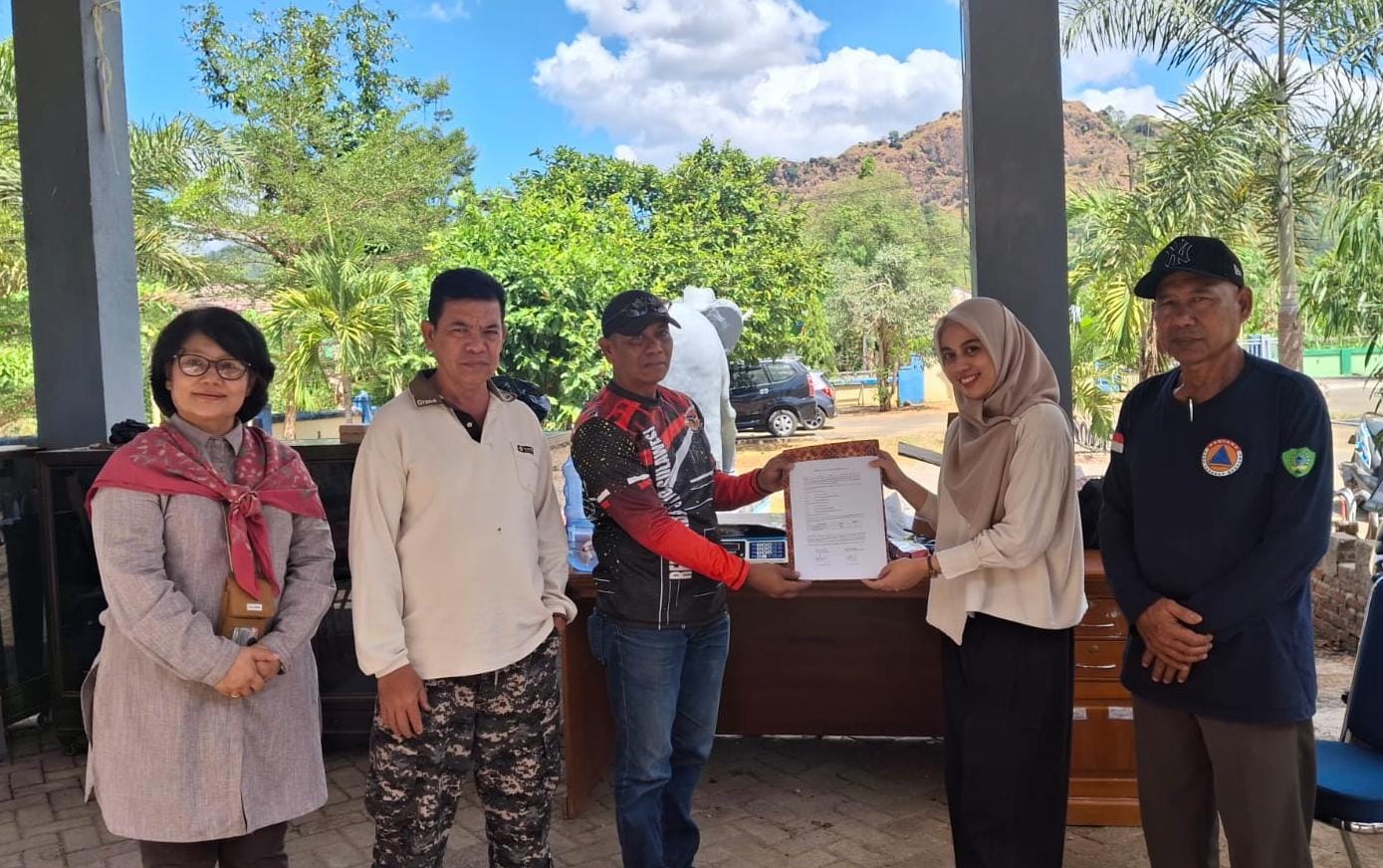
In support of putting the technical guidance results into practice, the Unhas Community Service Team also handed over a number of farming equipment items to the managers of the Benteng Gajah Village BUMDes. The assistance is expected to be used to support the application of data-based farming techniques and the development of a more productive and sustainable fisheries business.
The program also supports the achievement of the Sustainable Development Goals (SDGs), particularly SDG 2 (Zero Hunger) through increased food production and SDG 8 (Decent Work and Economic Growth) through strengthening village economic enterprises.
The technical guidance is part of the Community Service Program funded by the Directorate of Research and Community Service (DPPM), Ministry of Higher Education, Science, and Technology, for Fiscal Year 2026. The activity was held in Benteng Gajah Village, Maros Regency, on Sunday, 26 July, and was attended by the Village Head, the Chair of the Village Consultative Body (BPD), the BUMDes director and members, and students involved in the program.
The Community Service Team consists of:
Leader: Dr. Alpiani, S.Pi., M.Si
Members:
1. Dr. Esther Sanda Manapa
2. Prof. Mardiana E. Fachry. (*/rls/mir)
Editor: Ishaq Rahman


This article is an English translation of the original Indonesian report.