
MAROS – Public information disclosure is often seen as an administrative obligation, synonymous with providing documents or posting on social media. Yet in modern governance, information disclosure is the basis for accountable public services, data-driven decision-making, and public participation. The biggest challenges are often found at the level of government closest to citizens, namely villages and urban wards (kelurahan).
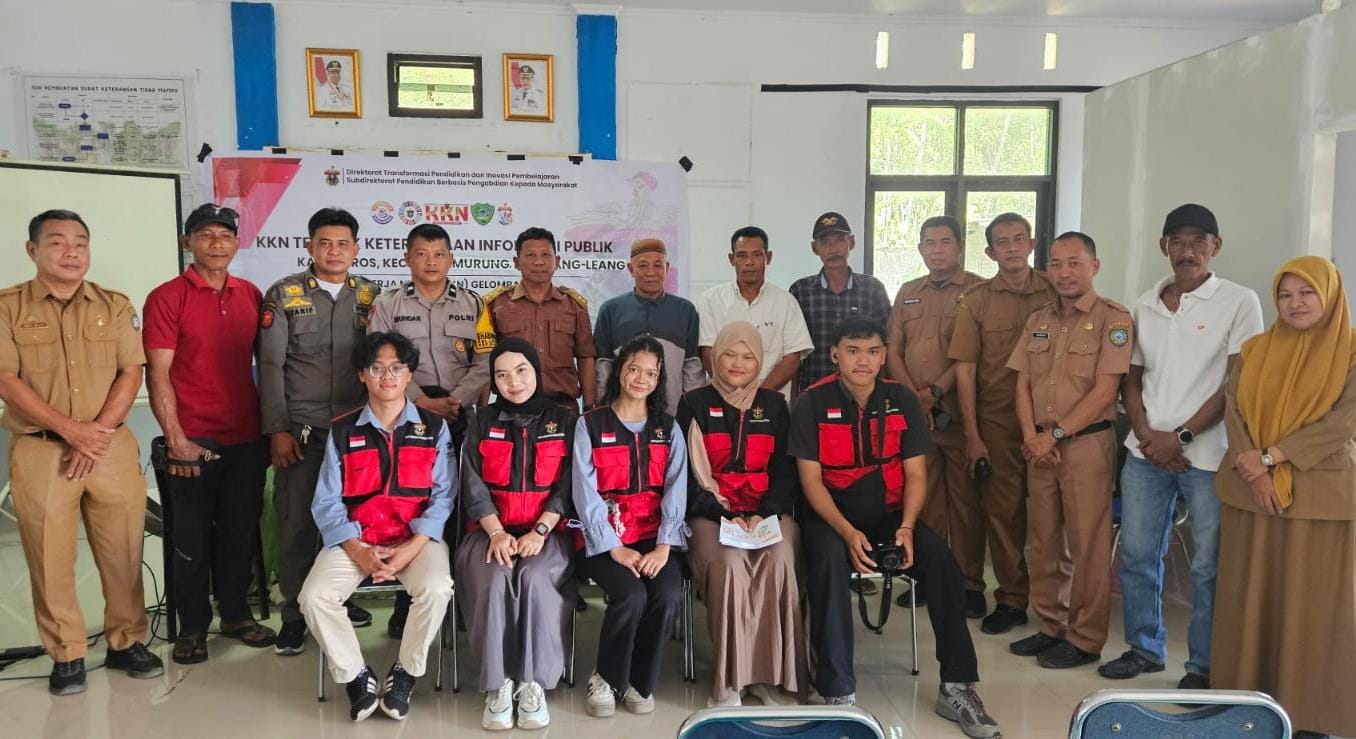
This perspective underlay the Seminar on the Work Programs of Hasanuddin University’s KKN Wave 116 Students, themed Public Information Disclosure (KIP), in Leang-Leang Urban Ward, Bantimurung District, Maros Regency, on Monday (13 July 2026).
The seminar was attended by Hermawan, Head of the Economy and People’s Welfare Section of Bantimurung District; Syaharuddin, Head of Leang-Leang Urban Ward; Ishaq Rahman, the Unhas KKN supervising lecturer (DPK); ward officials; village security and development non-commissioned officers (Babinsa); neighborhood heads (RT and RW); and community representatives.
Unhas KKN Ward Coordinator Admiral Zuhdi explained that the work programs were drawn up from field observations and therefore start from the community’s real needs.
“This approach is important because solutions to information disclosure problems cannot be built uniformly; they must fit the conditions of each area,” said Zuhdi.
Implementing information disclosure still faces challenges in data organization, integrated documentation, access to publication media, and public literacy about the right to obtain information. Public services often depend on the knowledge of individual officials rather than on a well-documented information system.
Ishaq Rahman, the Unhas KKN supervising lecturer, said that information disclosure is an obligation of all public bodies, from the central government down to villages and urban wards. The presence of KKN students is a contribution by the university to strengthening local government capacity on this issue.
“Students can take part in helping organize data, document public information, develop communication media, and educate the public about the right to information,” said Ishaq.
Meanwhile, Leang-Leang Urban Ward Head Syaharuddin said that organizing data is the first step toward improving the quality of public services at the ward level. The ward office acknowledged that updates to demographic data, for example, were last carried out several years ago.
Along the same lines, Hermawan, who represented the Head of Bantimurung District, hoped the KKN students could help strengthen data readiness while learning together with the community during their service.
“We, as the government of Bantimurung District, strongly support this program and hope there will be benefits we can all feel, whether the KKN students, the ward officials, or the community,” said Suherman.(*/)
Editor: Ishaq Rahman


This article is an English translation of the original Indonesian report.