
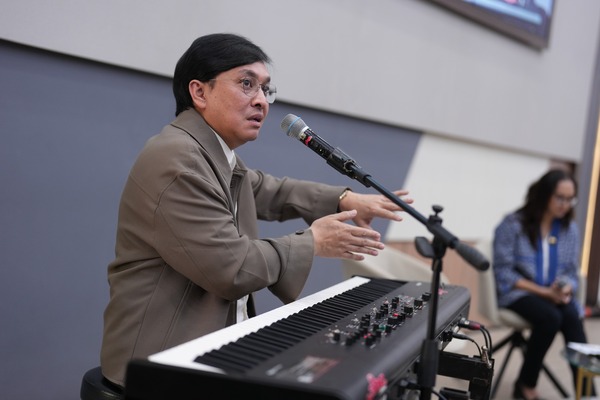
A work can now be created by artificial intelligence in a matter of minutes, a strong sign that the global landscape of creativity is changing fundamentally. Amid this acceleration, humans are called on to reaffirm their role, not merely as creators but as givers of meaning in every creative process.
This perspective emerged at a public lecture featuring Yovie Widianto (Special Staff to the President for the Creative Economy) as the resource person at Hasanuddin University. Under the theme “Creative Generation: Turning Ideas, Culture, and Creativity into Global IP,” the forum discussed creativity not only as an artistic process but as a strategic force in building national competitiveness.
In the presentation, Yovie stressed that ideas are born from sensitivity in reading context, discipline in processing experience, and the courage to try new things. Yovie emphasized that the creative process is a long journey that cannot be reduced to an instant result.
“Innovation does not always have to be spectacular. Rather, the ability to think adaptively, find solutions, and deliver added value is an important foundation for building a sustainable creative economy ecosystem,” Yovie explained.
Yovie also put forward the view that creativity is the most relevant way to care for cultural heritage. According to Yovie, traditions must not be frozen but need to be brought back to life through creative approaches that answer the needs of the times.
In that context, innovation rooted in culture is key. Yovie likened this process to rearranging an old work into a fresher, more contextual new form. This approach allows culture to stay alive while also being globally competitive.
“Technology then emerges as a new stage for Indonesian cultural stories. Through branding, storytelling, and digital distribution strategies, local values can cross geographic boundaries and reach international markets,” Yovie added.
However, Yovie did not turn a blind eye to the major challenges posed by artificial intelligence (AI). Yovie recounted a phenomenon in the music industry, where AI can produce a work in just minutes, a condition that has prompted deep reflection on the role of humans in the creative process.
According to Yovie, this phenomenon is not only about efficiency but also touches on existential questions. Many creative professionals have begun to question the meaning of the long journey they have traveled, when machines can produce similar output in a short time.
Yovie affirmed that the relationship between humans and technology should be collaborative. Creativity remains the primary domain of humans, while AI serves as a partner that speeds up the process without replacing the essence of creation.
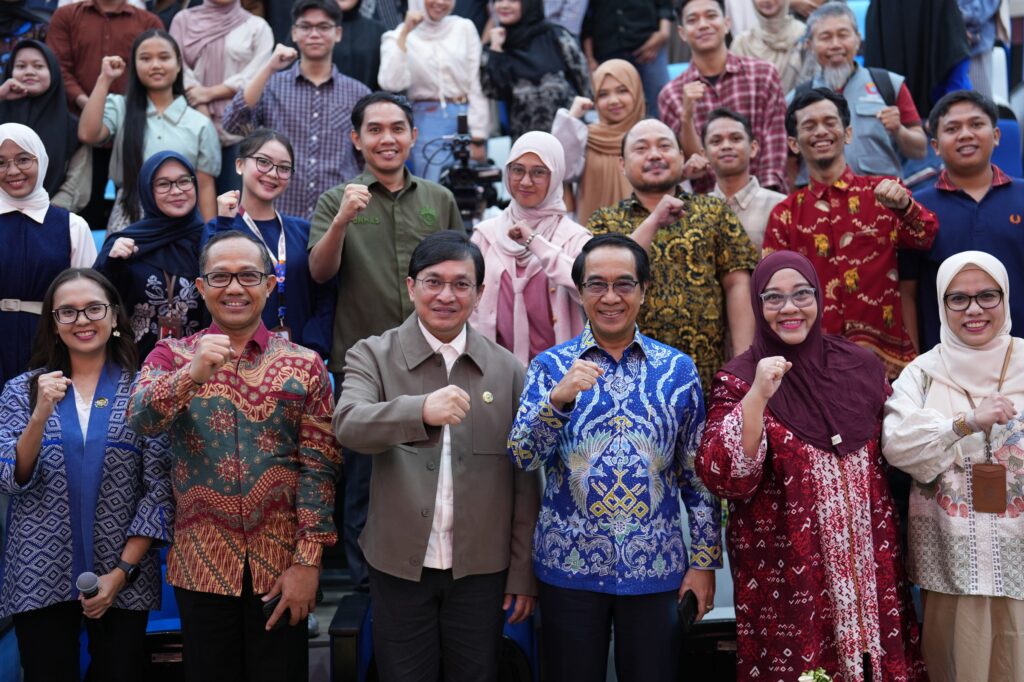
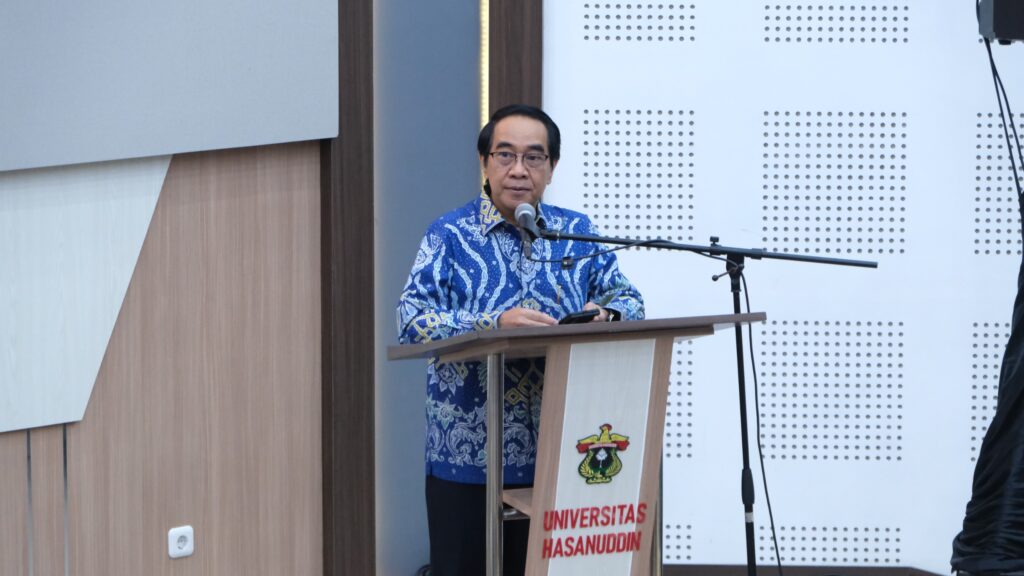
On the occasion, Unhas Rector Prof. Dr. Ir. Jamaluddin Jompa, M.Sc., said that Unhas students have extraordinary creative potential, not only in producing works but also in narrating more beautiful meanings from every creative process.
“They are able to narrate more beautiful things in every work they produce. Through solidarity, Unhas is ready to take part in building the nation. From Unhas, we navigate the world,” explained Prof. JJ.
The public lecture took place at the Arsjad Rasjid Lecture Theater, Tamalanrea Campus, on Thursday (23 April). Through this forum, Yovie emphasized that Indonesia’s challenge is not merely adopting technology but ensuring that innovation remains rooted in culture and strengthens the nation’s identity at the global level. (*/mir)
Editor: Ishaq Rahman
This article is an English translation of the original Indonesian report.