
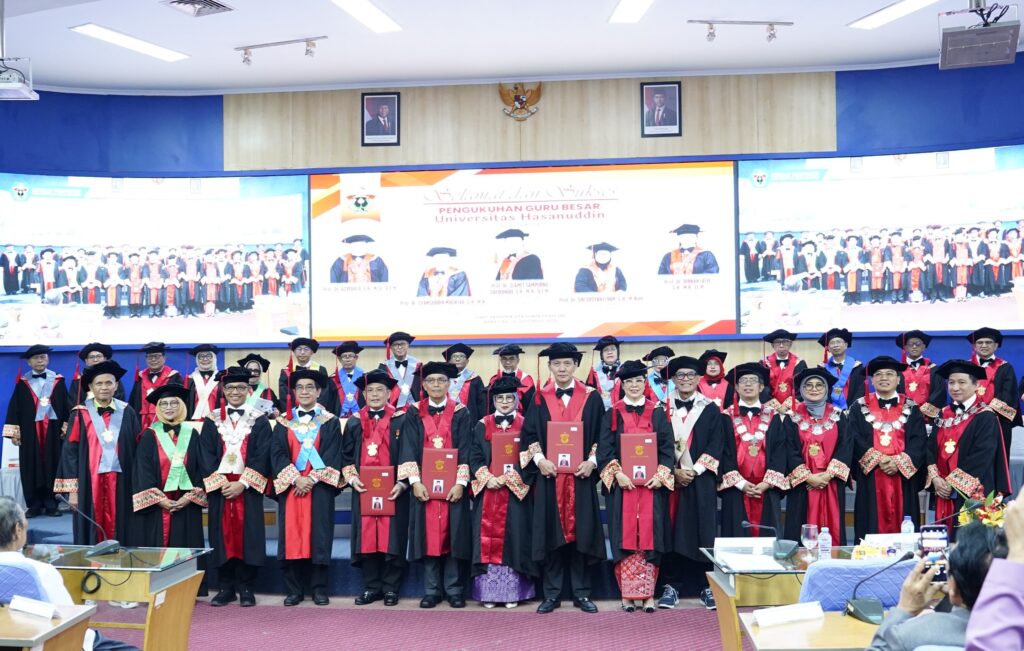
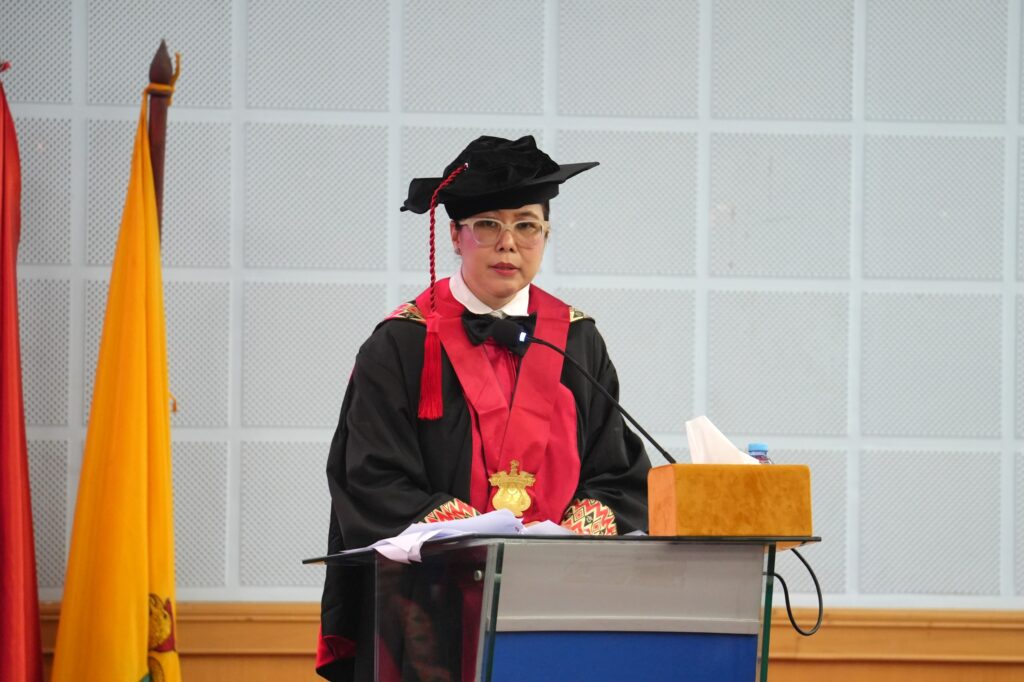
MAKASSAR – Hasanuddin University (Unhas) once again held a ceremony admitting five professors from various fields of expertise as members of the Council of Professors. Each professor delivered an acceptance speech outlining their research journey and innovative ideas for addressing health, environmental, and humanitarian challenges.
A variety of strategic issues were raised, ranging from corruption crimes and human rights, and the protection of children in conflict with the law, to land management, health law, and sustainable development.
The event took place on Monday (28 September) in the Senate Room, 2nd Floor, Rectorate Building, Unhas Tamalanrea Campus. The five professors who delivered their inaugural speeches were:
The following is a summary of each professor’s inaugural speech.
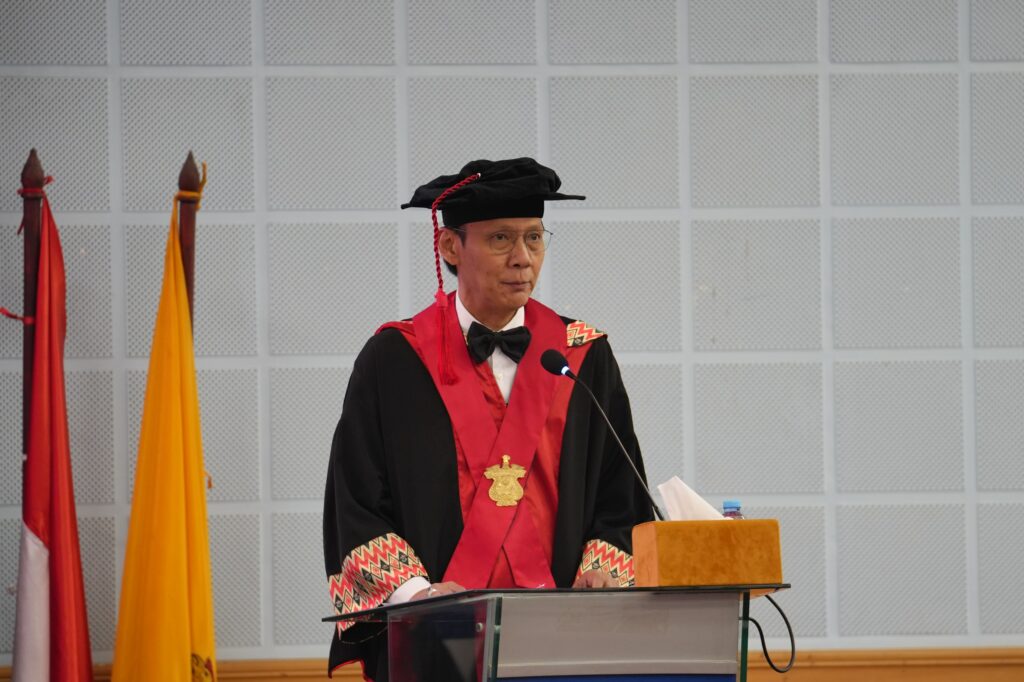
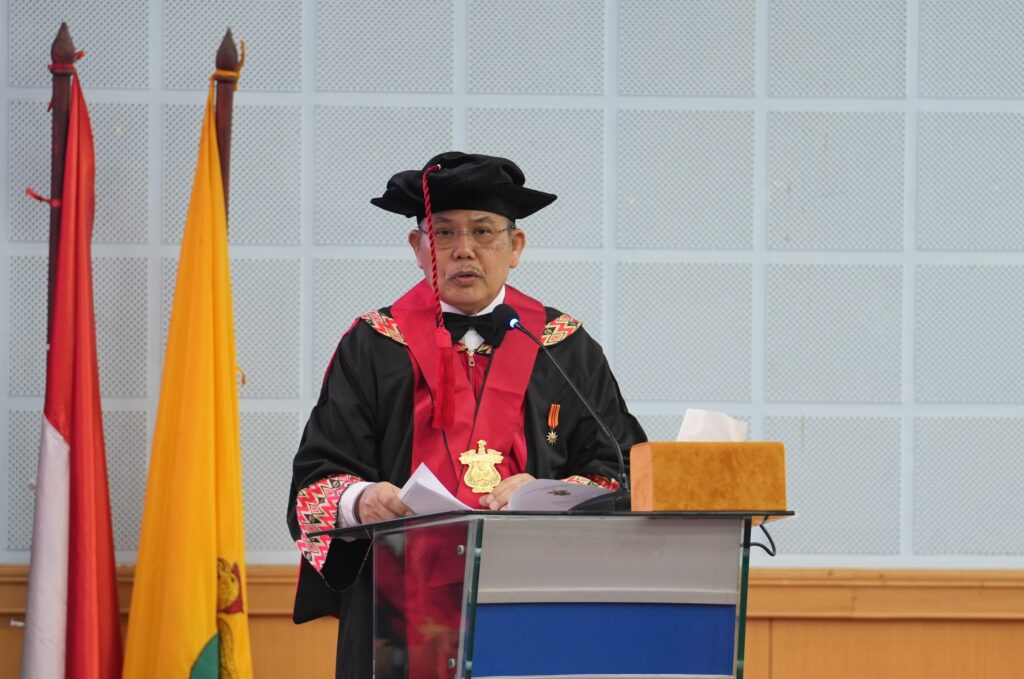
Prof. Dr. Aswanto, S.H., M.Si., D.F.M.
The Professor of Criminal Law and Human Rights delivered an acceptance speech titled “The Crime of Corruption as a Violation of Human Rights.”
Prof. Aswanto explained that criminal law has the character of a double-edged sword. On the one hand, criminal law protects society and creates a deterrent effect. On the other hand, however, the extensive repressive authority it gives the state means that criminal law must be placed within a framework of human rights protection so that it does not turn into an instrument of oppression and arbitrariness.
The study of criminal law and human rights becomes all the more urgent in light of how crime has developed in Indonesia. Corruption, for example, can no longer be viewed merely as the theft of state money, but rather as an extraordinary crime whose destructive power extends across many pillars of national life.
“Corruption has an impact on development, democracy, and above all the poor. In the economic sector, corrupt practices can distort public policy, raise economic costs, and hijack budgets that should be used to alleviate poverty,” said Prof. Aswanto.
From a sociological perspective, corruption also has the potential to change and deconstruct public morality. Gratuity practices and various forms of fraud can become normalized when law enforcement does not work effectively.
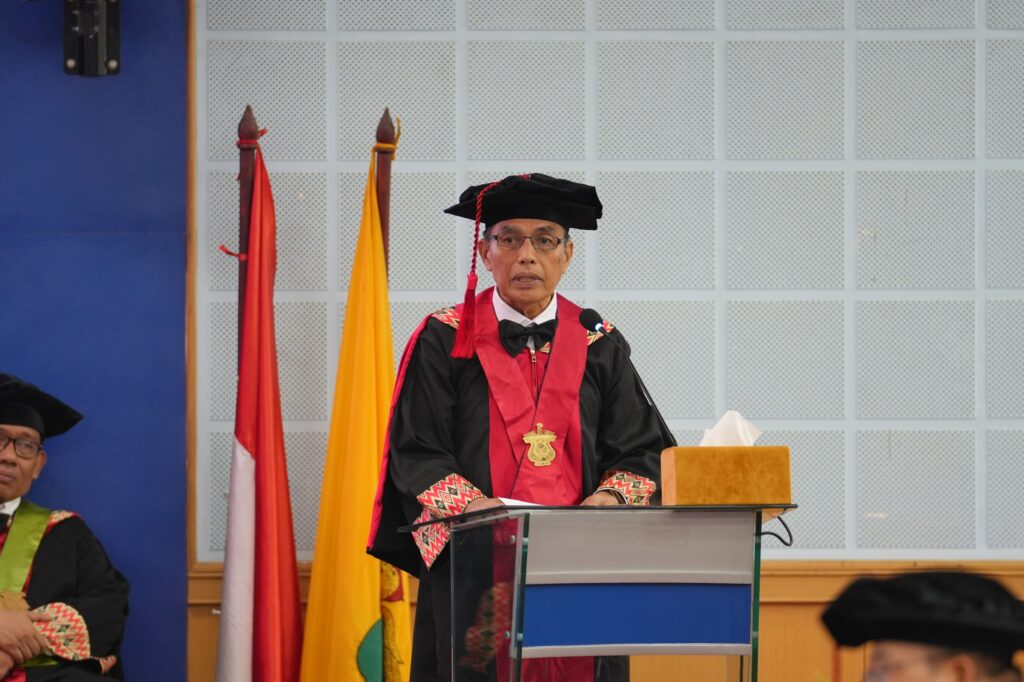
Prof. Dr. Syamsuddin Muchtar, S.H., M.H.
The Professor of Child Protection Criminal Law delivered an acceptance speech titled “Reformulating the Diversion Threshold as a Form of Legal Protection for Children in Conflict with the Law.”
Prof. Syamsuddin stressed that legal protection for children is not merely a form of compliance with international treaties, but a constitutional mandate. Article 28B paragraph (2) of the 1945 Constitution of the Republic of Indonesia affirms the right of every child to live, grow and develop, and to be protected from violence and discrimination.
“From the perspective of criminal law and criminology, imprisoning children has serious consequences. The prison environment can, in fact, become a space that introduces children to criminal behavior. In addition, being labeled a criminal can create a stigma that the child then internalizes while growing into adulthood,” said Prof. Syamsuddin.
Prof. Syamsuddin further stated that children cannot be treated the same as adults in the criminal justice system. Children are still in the process of growing up and have not yet reached the maturity of adults, so they need a legal approach that protects them while also taking their future into account.
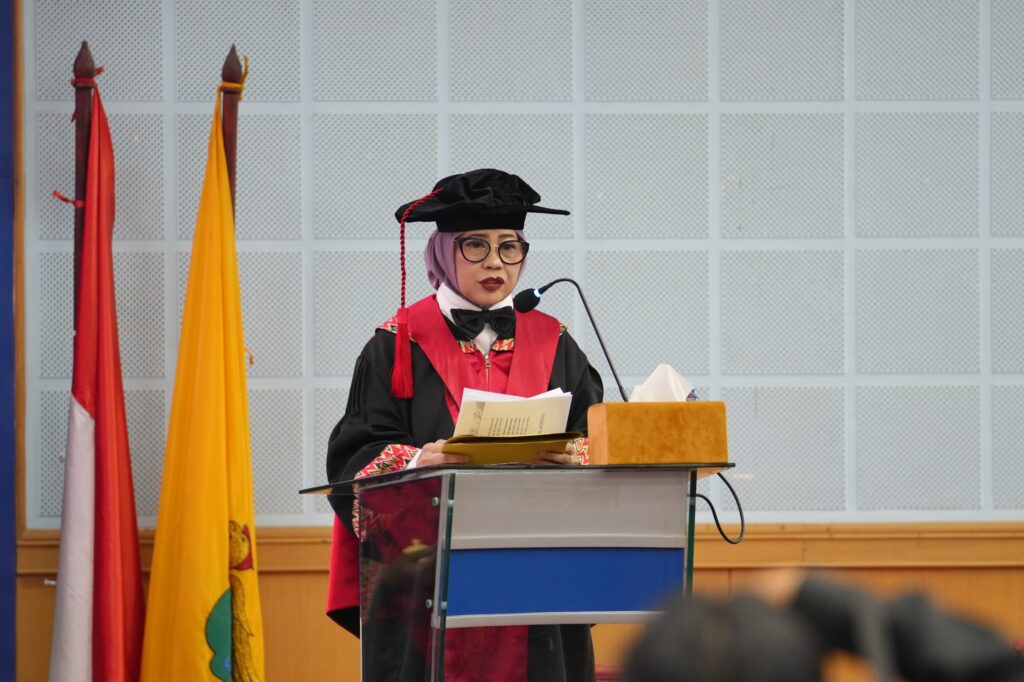
Prof. Dr. Sri Susyanti Nur, S.H., M.Hum.
The Professor of Land Bank Law presented an acceptance speech titled “The Urgency of the Land Bank in Guaranteeing Land Availability for Sustainable Development Grounded in Agrarian Justice.”
Prof. Sri Susyanti asserted that justice in matters of land cannot be achieved simply by drafting ever more detailed regulations. Justice requires moral steadfastness in its implementation, as well as transparent and accountable land governance.
Drawing on her research findings, Prof. Sri Susyanti went on to propose a number of strategic steps, including strengthening regulations based on the principles of agrarian justice, developing a land information system based on digital technology, effective public oversight, and integrating Land Bank policy with the agendas of agrarian reform, food security, and sustainable development.
“Land is not merely a matter of land administration. The way a nation manages land, distributes it, and safeguards it for future generations is part of the picture of justice, and at the same time determines the direction of the civilization it wishes to pass on,” said Prof. Sri.
Prof. Dr. Slamet Sampurno Soewondo, S.H., M.H., D.F.M.
The Professor of Health Law presented an acceptance speech titled “The Development of Knowledge on Foreign Doctors in Indonesia.”
Prof. Slamet highlighted developments in health law in dealing with the presence of foreign doctors in Indonesia. In his view, the health law system must ensure that both local and foreign doctors are subject to the same moral standards and fall under a fair system of oversight.
“Such governance must prioritize patient safety and the public interest. In this way, the development of health law as a discipline does not stop at the theoretical level, but can become a practical guide for formulating policies that have a direct impact on strengthening the national health system,” said Prof. Slamet.
Health law, he said, has the opportunity to develop into a field of legal study that is increasingly relevant to the needs of contemporary society, because health is a universal need that touches all levels of society.
Prof. Dr. Birkah Latif, S.H., M.H., LL.M.
The Professor of International Law presented an acceptance speech titled “International Economic and Environmental Law: The Transformation of Sustainable Development.”
Prof. Birkah explained that the right to development always goes hand in hand with the obligation to preserve the environment. Economic development and the environment should not be framed as two mutually exclusive interests. Natural wealth needs to be managed to generate long-term prosperity while ensuring that future generations still have room to determine their own development choices.
Prof. Birkah also highlighted the concept of permanent sovereignty over natural resources as one of the key foundations for developing countries. This sovereignty needs to be exercised in the interest of national development and the welfare of the people.
“In this context, the public trust doctrine is considered to remain relevant and worth developing. The state is positioned not as the absolute owner of natural resources, but as a trustee obliged to manage resources that are public in character,” said Prof. Birkah.
This view frames sustainable development as an intergenerational responsibility. The Earth and its natural resources are not regarded merely as the property of the present generation, but as a trust that must be managed so that they continue to benefit the generations that follow. (*/ams)
Editor: Ishaq Rahman
This article is an English translation of the original Indonesian report.