
The Department of International Relations, Faculty of Social and Political Sciences at Hasanuddin University (UNHAS), in collaboration with the Center for Peace, Conflict and Democracy (CPCD), hosted a guest lecture titled “Peace, Peacebuilding, and Japan’s Cooperation in Peacebuilding” on Wednesday, 2 September 2026. Held at the Prof. Syukur Abdullah Hall, the lecture featured Prof. Ako Muto, Ph.D., Specially Appointed Professor at the Graduate School of Social Design Studies, Rikkyo University, Japan. The session was attended by International Relations students enrolled in the course on Japan’s Political System and Foreign Policy.
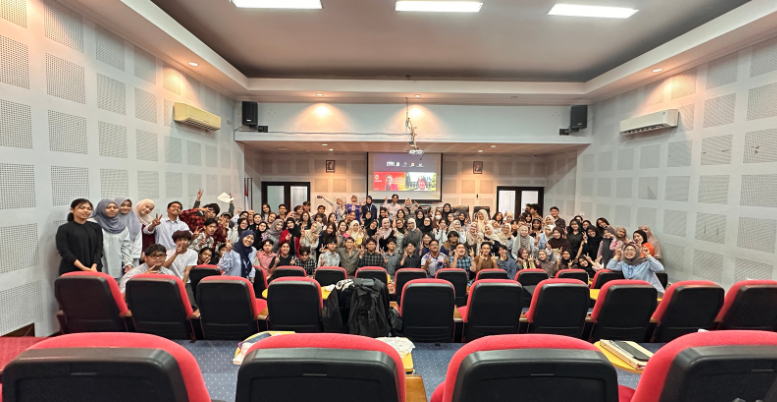
Prof. Muto introduced key perspectives from Peace Studies and Conflict Resolution Studies, including Johan Galtung’s distinction between negative peace and positive peace. She explained that ending violence does not necessarily create sustainable peace, as long-term stability also requires addressing inequality, structural violence, governance challenges, and other underlying causes of conflict. The discussion also covered approaches ranging from liberal and critical peacebuilding to local ownership, hybrid peacebuilding, and adaptive peacebuilding. Prof. Muto emphasized that there is no single formula for resolving conflict and that peacebuilding strategies must respond to local conditions, institutional capacity, and community needs.
Drawing on international experience, she highlighted Japan’s contribution to peacebuilding through humanitarian assistance, capacity building, infrastructure development, and institutional support, including initiatives in Cambodia, South Sudan, Jordan, and Mindanao in the Philippines. The lecture also explored Indonesia’s role in international peace efforts through the Garuda Contingent in United Nations peacekeeping operations, diplomacy, mediation, civilian protection, community empowerment, and regional cooperation through ASEAN.
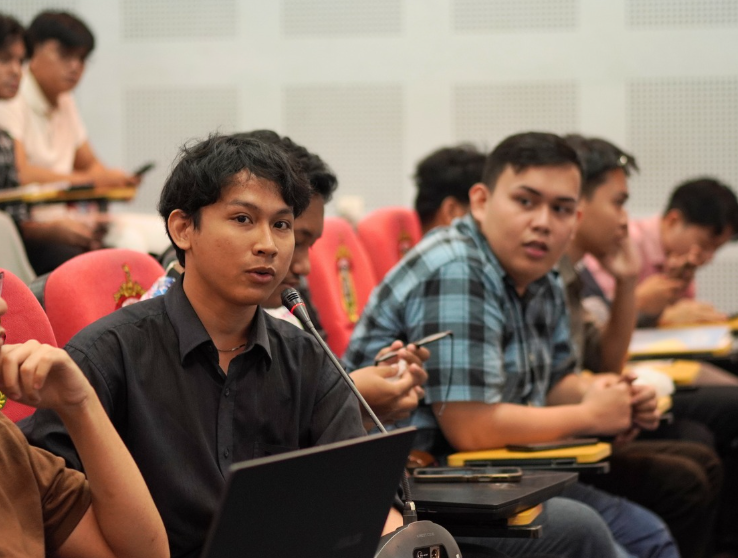
Students actively participated in discussions on the challenges of peacebuilding, the importance of local ownership, the effectiveness of international assistance, and opportunities for Indonesia and Japan to strengthen cooperation as middle powers. The discussion highlighted the complementary strengths of Japan in development cooperation and technology and Indonesia in diplomacy, mediation, peacekeeping, and regional engagement. Closing the session, Andi Ahmad Yani, M.Si., MPA., M.Sc., Researcher at CPCD UNHAS, described the lecture as a starting point for broader academic engagement. “This is not the end of our discussion,” he said. “I would say this is the beginning of further collaboration and discussion regarding peace and peacebuilding.”
Through the guest lecture, students gained both conceptual and practical perspectives on how peace is built and sustained. The session also opened opportunities for further academic dialogue and collaboration between UNHAS and international partners on peace, conflict resolution, and peacebuilding.