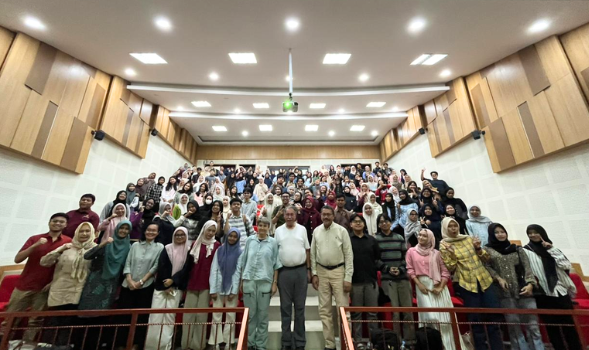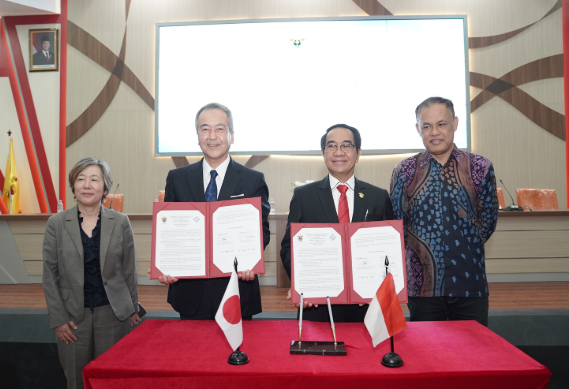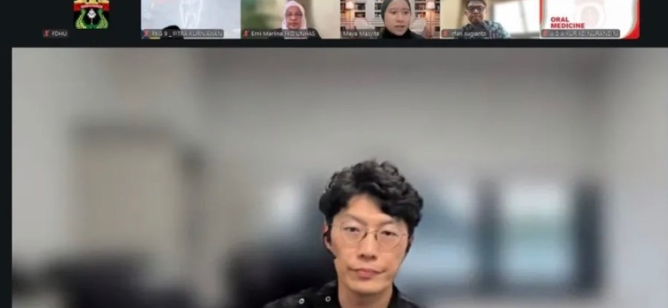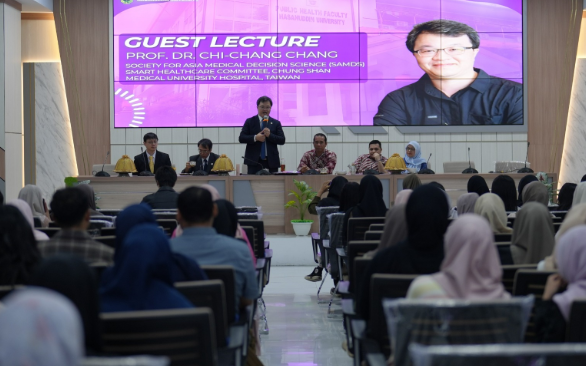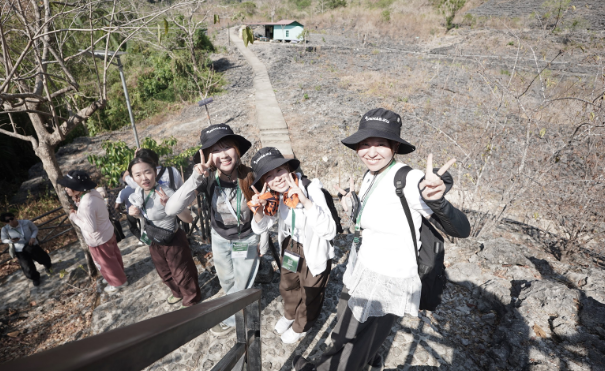
Hasanuddin University (UNHAS) brought climate science into focus through a guest lecture by Professor Masayuki Kondo of Hiroshima University, Japan, who discussed greenhouse gas dynamics, carbon sources and sinks, and the role of mangrove ecosystems in addressing climate change in Southeast Asia.
Hosted by the Faculty of Marine Science and Fisheries on 26 August 2026, the lecture was held under the theme “Estimating Greenhouse Gas Emissions and Absorption in Mangrove Forests.” The session provided students and academics with insight into how human activities and natural ecosystems interact to shape regional greenhouse gas balances, with particular attention to coastal and mangrove environments.
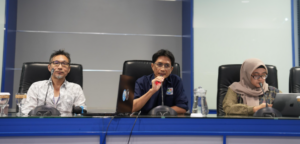
Prof. Kondo, whose research focuses on climate change, biogeochemistry, carbon cycles, and Southeast Asia, explained that rising atmospheric carbon dioxide (CO₂) concentrations are closely linked to human activities, including fossil fuel consumption, land-use change, forest and peatland fires, and agricultural activities. “Global warming is currently occurring very rapidly compared with changes in the past,” Prof. Kondo said. “This is a serious concern because humans and ecosystems do not have enough time to adapt.”
During the lecture, Prof. Kondo highlighted the important role of terrestrial and marine ecosystems in removing carbon from the atmosphere. Forests, wetlands, oceans, and other natural systems can absorb substantial amounts of CO₂, although increasing emissions from human activities continue to raise overall greenhouse gas concentrations. This issue is particularly relevant to Southeast Asia, where forests, peatlands, mangroves, agricultural landscapes, and marine ecosystems interact with rapid economic development and changing patterns of land use.
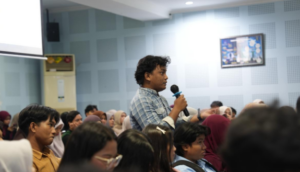
Prof. Kondo also introduced the concept of a greenhouse gas budget, an approach that accounts for both greenhouse gas emissions and their removal from the atmosphere. By assessing these different components, researchers can determine whether a particular region functions as a net source, releasing more greenhouse gases than it absorbs, or a net sink, removing more than it emits.
Such assessments are important for identifying major emission sources, evaluating the capacity of natural ecosystems to absorb greenhouse gases, and determining where climate mitigation efforts should be prioritized.
A central focus of the lecture was the role of mangrove forests in the greenhouse gas balance of coastal ecosystems. Mangroves are increasingly important in climate research because they can store substantial amounts of carbon in their vegetation and soils. At the same time, accurately estimating their contribution to climate mitigation requires researchers to understand both greenhouse gas absorption and emissions occurring within these ecosystems.
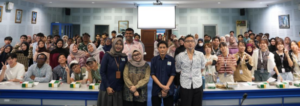
Prof. Kondo explained how research on mangrove greenhouse gas dynamics can help scientists better understand the contribution of coastal ecosystems to broader carbon budgets. Variations in environmental conditions, ecosystem processes, and land-use pressures can influence whether mangrove areas function as effective carbon sinks.
Understanding these processes is particularly relevant for Indonesia and Southeast Asia, where extensive mangrove ecosystems provide an important setting for studying the relationship between coastal environments, carbon storage, and climate change. Calling for Collaborative Climate Research, Prof. Kondo emphasized that effective climate responses require a comprehensive understanding of greenhouse gas sources and sinks across the region.
“We need to understand all sources and sinks of greenhouse gases comprehensively,” he said. “By doing so, climate change mitigation strategies can be developed more appropriately.”
His call for further research highlights the importance of integrating studies of forests, peatlands, mangroves, oceans, agriculture, and human activities when developing regional greenhouse gas assessments. For UNHAS, the discussion also creates opportunities to connect the university’s strengths in marine and coastal research with wider international scientific efforts on carbon cycles and climate change.
The guest lecture reflects the growing academic relationship between UNHAS and Hiroshima University, providing students and researchers with direct access to international expertise while opening opportunities for future collaborative research on mangrove ecosystems, greenhouse gas dynamics, carbon cycles, blue carbon, and climate change in Southeast Asia. Through continued academic exchange, both institutions have the potential to contribute research that strengthens understanding of coastal carbon processes and supports more effective climate mitigation strategies across the region.