
Hasanuddin University (UNHAS) hosted an international visiting lecture featuring Emma Novak from the School of Biological Sciences at Victoria University of Wellington, New Zealand, on August 10, 2026. Organized by the Department of Marine Science, Faculty of Marine Science and Fisheries, the lecture examined the ecological role of sponges in marine food webs and their contribution to the movement of nutrients and energy through ocean ecosystems.
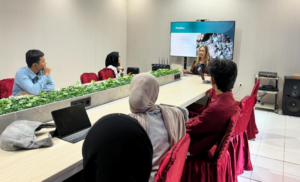
Held in Meeting Room B of the Department of Marine Science, the lecture was titled “From Sponges to Sharks? The Trophic Contribution of Sponges.” The event was officially opened by Prof. Dr. Mukti Zainuddin, S.Pi., M.Si., Vice Dean for Partnerships, Research, Innovation, and Alumni, and attended by undergraduate and master’s students in Marine Science.
Novak discussed how marine sponges function within food-web processes. Although widely known as filter feeders, sponges also contribute to the recycling and transfer of organic matter and nutrients, potentially making resources available to organisms at higher trophic levels.
A central concept was the sponge loop, through which dissolved organic matter can be recycled within marine ecosystems rather than lost from the food web.
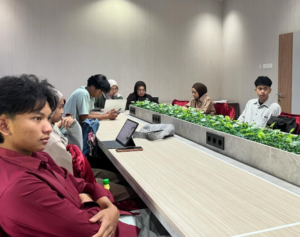
uring the interactive discussion, students raised questions about sponge ecology, trophic interactions, and potential directions for future marine research. The session offered direct exposure to current international scientific thinking and encouraged students to connect fundamental ecological concepts with broader questions about marine ecosystem function.
Beyond introducing students to an emerging area of marine ecology, the lecture demonstrated the value of connecting classroom learning with active international research. A stronger understanding of how nutrients and energy move through marine ecosystems provides an important scientific basis for interpreting ecosystem change and informing the long-term stewardship of ocean biodiversity.