
Hasanuddin University (UNHAS) continued its research collaboration with Technische Universität Wien (TU Wien), Austria, through a visiting research program undertaken by Dr. Februadi Bastian of the Faculty of Agricultural Technology from July 11 to August 4, 2026.
Conducted at the Institute of Chemical, Environmental and Bioscience Engineering, Faculty of Technical Chemistry, TU Wien, the research focused on developing natural pigments as more sustainable alternatives for textile applications.
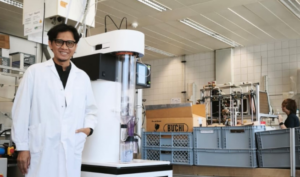
During the program, Dr. Bastian investigated the extraction of anthocyanins from butterfly pea flowers (Clitoria ternatea) for potential use as natural textile dyes. The pigments responsible for the flowers’ distinctive color offer potential as renewable alternatives to synthetic dyes.
The research examined both anthocyanin extraction and the optimization of spray-drying conditions to produce a stable natural dye powder with high yield and greater potential for practical application.
The experiments identified optimized conditions for extraction and spray-dryer operation, contributing to the development of more efficient natural-pigment production processes based on biological resources. The work builds on the continuing UNHAS–TU Wien research partnership in natural pigments and sustainable materials.
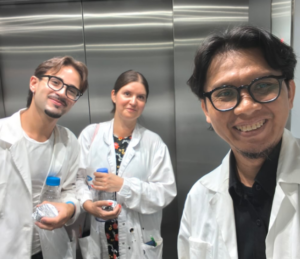
Dr. Bastian’s visit is also part of a broader pattern of researcher mobility between the two institutions. Previous researchers from the Faculty of Agricultural Technology, including Dr. Olly Sanny Hutabarat, Dr. Gemala Hardinasinta, and Febriana Intan Permata Hati, M.Sc., have undertaken research activities at TU Wien through the same collaborative framework.
The research illustrates how international mobility can contribute directly to technological development. By exploring renewable biological materials and improving processing efficiency, the collaboration links laboratory research with the broader need for cleaner production methods and more responsible use of natural resources, while building research capacity across both institutions.