
The Faculty of Agriculture and the Faculty of Agricultural Technology of Hasanuddin University (UNHAS) are actively supporting the development of garlic production centers in South Sulawesi. As part of this initiative, an UNHAS delegation led by Prof. Rinaldi Sjahril, Vice Dean for Student Affairs, Alumni, and Partnerships of the Faculty of Agriculture, accompanied PT Firmansyah Khatulistiwa Group, in partnership with China-based Jingxin Agricultural Group, on a working visit to Bantaeng and Sinjai Regencies. “We accompanied the visit to several sites designated as demonstration plots for garlic development,” said Prof. Rinaldi during the visit in Bantaeng on Tuesday, 28 July 2026.
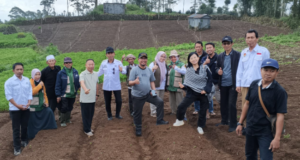
Accompanied by Muh. Faried, M.Si., and Faculty of Agricultural Technology Vice Dean III Prof. Iqbal, Prof. Rinaldi highlighted that the involvement of both faculties reflects the commitment of UNHAS to provide science-based support, ranging from cultivation practices to postharvest technology, in order to promote sustainable garlic development. The working visit was part of an effort to strengthen collaboration among universities, local governments, businesses, and international partners in developing garlic as one of South Sulawesi’s strategic horticultural commodities.
The agenda began with a meeting at the Bantaeng Regent’s Office, where the delegation was received by Bantaeng Vice Regent Sahabuddin. During the meeting, Sahabuddin expressed his appreciation for the initiative to explore opportunities for garlic development in the region. The area’s agroclimatic potential and land availability were identified as important assets for developing this high-value horticultural commodity. Following the meeting, the delegation visited a garlic demonstration plot in Uluere Village, Bonto Marannu District, Bantaeng Regency, to evaluate crop conditions and identify technical aspects requiring improvement to increase cultivation productivity. Bantaeng Regent Muhammad Fathul Fauzy Nurdin also accompanied the delegation in surveying several other locations considered suitable for garlic cultivation as part of the land identification process for developing a garlic production program in Bantaeng.
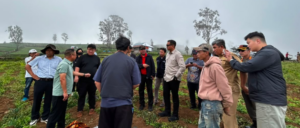
The delegation then continued its visit to Sinjai Regency. On Tuesday evening (28 July 2026), representatives of UNHAS, PT Firmansyah Khatulistiwa Group, Jingxin Agricultural Group, and the Head of the Tana Toraja Agriculture Office held a discussion with Sinjai Regent Hj. Ratnawati Arif at the Sinjai Regent’s Official Residence. The meeting discussed opportunities to develop garlic as a new flagship commodity in Sinjai, as well as the importance of synergy among local government, universities, businesses, and international partners in advancing an innovation- and technology-based agricultural sector. As a follow-up, the delegation conducted a field survey in Gunung Perak Village, West Sinjai District, on Wednesday 29 July 2026 to assess land suitability, agroclimatic conditions, and the readiness of the area to support the development of a garlic production center in Sinjai.
This initiative aligns with several United Nations Sustainable Development Goals (SDGs). By advancing sustainable cultivation practices, technological innovation, and local farmer capacity building to boost domestic food production, the initiative supports SDG 2: Zero Hunger. The multi-sectoral collaboration between UNHAS, local municipal governments, private industry, and international agricultural enterprises directly embodies SDG 17: Partnerships for the Goals.
Through this initiative, UNHAS continues to strengthen its role as an academic institution that facilitates and bridges collaboration among government, industry, and international partners in supporting agricultural development in Indonesia. The collaboration is expected not only to increase national garlic productivity but also to accelerate research downstreaming, cultivation technology transfer, and farmer capacity building, contributing to a modern, adaptive, and sustainable agricultural system.