
Public complaints play an important role in improving the quality of public services, including in universities. Through complaints, service providers (in this case, campus management) receive direct input on various obstacles, dissatisfaction, and even alleged irregularities in services. This information becomes the basis for evaluating and improving systems, procedures, and staff performance.
In addition, complaints also function as a social control mechanism that encourages transparency and accountability. Complaints that are followed up seriously will increase public trust in the institution. Therefore, responsive and open complaint management is key to achieving public services that are effective, fair, and oriented toward the needs of the public.
To achieve this, Hasanuddin University is committed to building a public complaint system and governance that is easily accessible to both internal and external publics. As the largest university in Eastern Indonesia, Unhas has nearly fifty thousand students, about four thousand lecturers and teaching staff, and about two thousand employees.
The size of this internal constituency requires public complaint governance that is decentralized to various work units, yet responsive and solution-oriented in addressing the obstacles faced by service recipients.
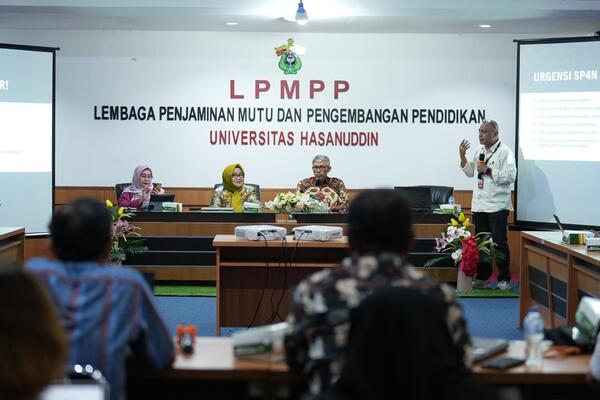
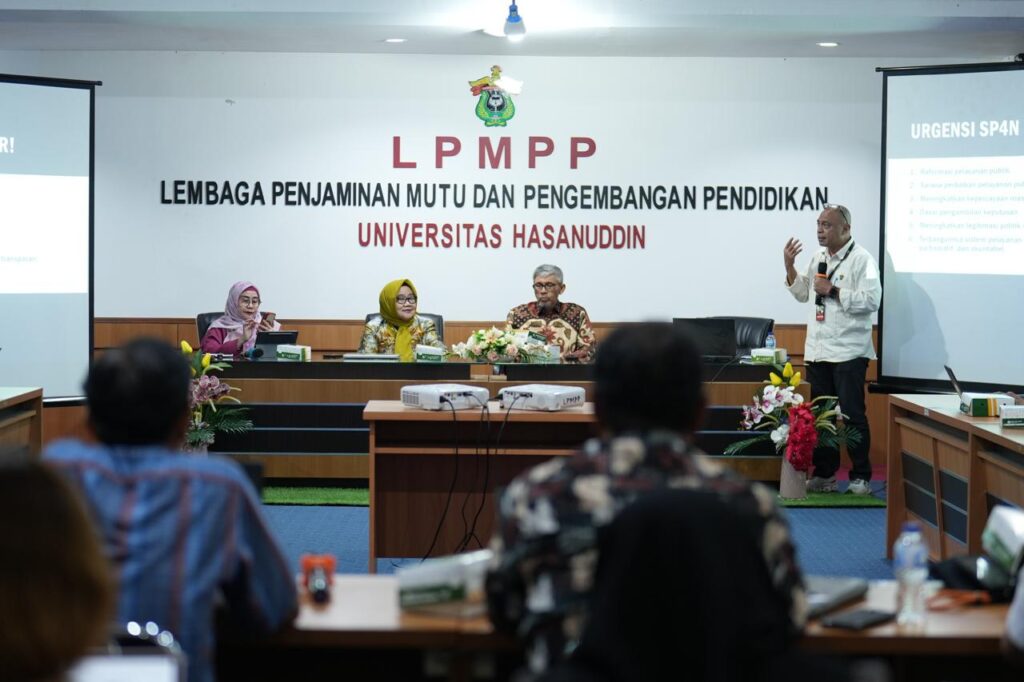
Unhas held a Technical Guidance session on Public Complaint Management through the Lapor Application and the Whistleblowing System on Wednesday, 8 April 2026, starting at 09:00 WITA (Central Indonesia Time) at the LPMPP Hall of Unhas.
The event was attended by SP4N LAPOR administrators of work units, the Heads of Administration of faculties, hospitals, and schools, and the faculty Integrity Zone administrators.
University Secretary, Prof. Dr. Ir. Sumbangan Baja, M.Phil, said that there are currently several complaint channels available to the public and service recipients. Besides the internal complaint channel through the Whistleblowing System managed at the university level, there are also complaint channels in each faculty and work unit.
“Complaint management is one of the important elements in making Unhas an integrity zone, namely an area free from corruption, collusion, and nepotism, and an institution that provides excellent public service,” said Prof. Sumbangan.
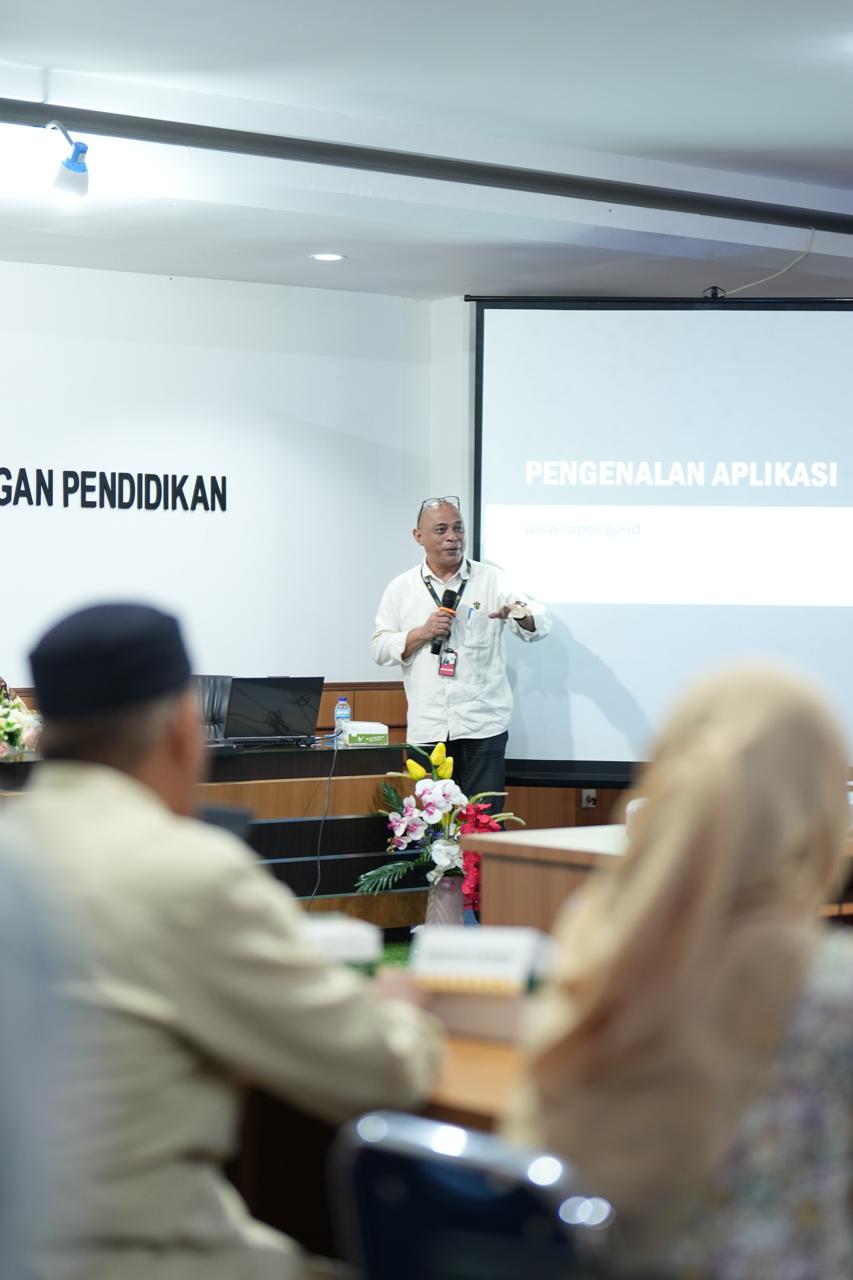
The technical guidance session featured two resource persons: Ishaq Rahman, S.IP, M.Si (Head of Public Relations and also a member of the Unhas Bureaucratic Reform Team), and Prof. Dr. Andi Kusumawati, SE.Ak (Head of the Unhas Internal Audit Unit).
In the presentation, Ishaq Rahman explained the public complaint mechanism through the National Public Service Complaint Management System (SP4N) Online People’s Aspiration and Complaint Service (LAPOR). The platform, managed by the Ministry of Administrative and Bureaucratic Reform (Kementerian PAN-RB), integrates various complaint services, consisting of submitting complaints, submitting aspirations, and requesting information.
“Unhas has now assigned a LAPOR administrator in each faculty. These administrators are not the ones who handle complaints; rather, they are officers who channel complaints, so that every public complaint can be resolved by the relevant unit,” said Ishaq.
Meanwhile, Prof. Andi Kusumawati explained the mechanism and system for internal complaints within Unhas. With the Whistleblowing System being developed, Unhas hopes that its internal public can submit every complaint on the basis of evidence.
“We have a standard operating procedure on how to handle complaints, whether complaints about public services, complaints about violence, or irregularities found in public services. Whistleblowers will also be protected,” said Prof. Kusumawati.
The technical guidance is expected to increase the capacity of Unhas complaint administrators and managers to maximize public services in building Unhas’s integrity zone.(*/ir)
Editor: Ishaq Rahman
This article is an English translation of the original Indonesian report.