
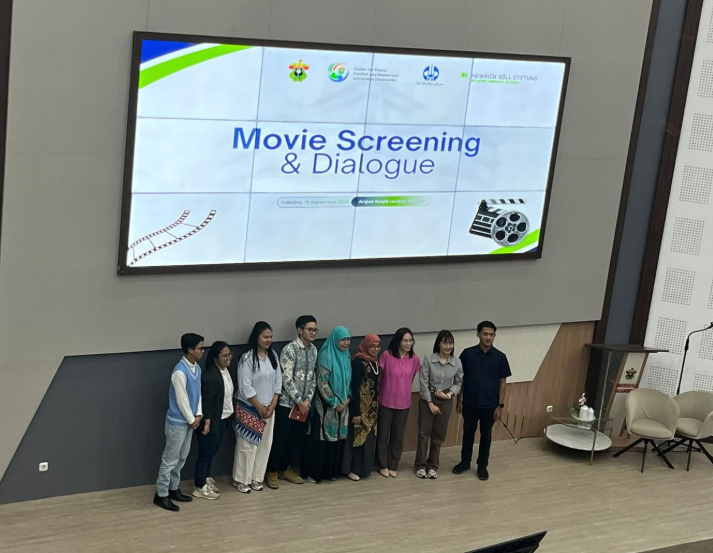
Hasanuddin University (UNHAS) hosted a Movie Screening & Dialogue titled “Borrowed Futures: Intergenerational Justice, Youth Leadership and Climate Responsibility in ASEAN” at the Arsjad Rasjid Lecture Theater on Tuesday, 15 September 2026. The event provided a platform for participants to explore intergenerational justice, youth leadership, and shared responsibility in addressing climate change across ASEAN.
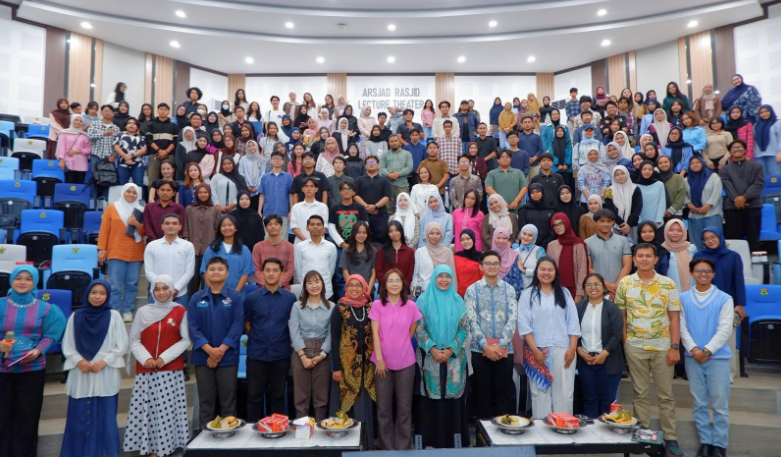
The program opened with remarks from Andi Ahmad Yani, S.Sos., M.Si., MPA., M.Sc., representing the Center for Peace, Conflict and Democracy (CPCD) of UNHAS, and Julia Novrita, Ph.D., representing The Habibie Center. Their remarks highlighted the importance of youth participation in responding to environmental and climate-related challenges. The dialogue session featured Dr. Busakorn Suriyasarn as speaker and Rizky Liberty Siajaya as moderator, creating an interactive space for participants to exchange perspectives on climate responsibility and the role of younger generations in shaping ASEAN’s future.
The event screened six films addressing environmental and climate issues from different perspectives: Pad Thai (ผัดไทย), Tutu Teno: The Song for the Bees, I Was Just a Child, Maxi Out
(ศึกสุดท้ายก่อนโลกสุก), The Edge of the Sea, and My Plastic Mother (Anak Macan). Following the screenings, participants shared reflections on the messages presented in the films. Ahmad Majidi, an International Relations student, emphasized the importance of preventive policies and disaster preparedness rather than focusing only on responses after disasters occur.
Reflecting on Maxi Out, Haikal highlighted how the film used accessible visual storytelling to criticize human behavior that harms nature. Meanwhile, Mohamad Sunarik noted that Pad Thai effectively connected climate change with everyday life through food, making a complex global issue easier for wider audiences to understand.
While, Agnes Leroyenia reflected on My Plastic Mother, emphasizing that environmental challenges cannot be addressed solely through individual actions but must also consider large-scale production and waste generation. Stanley, another International Relations student, stressed that youth-led environmental initiatives should develop beyond short-term campaigns into sustainable actions within universities, schools, communities, and public spaces. Through film and dialogue, the event encouraged participants to examine climate change from multiple perspectives while reinforcing the importance of youth participation, collective responsibility, and long-term action in building a more sustainable future for ASEAN.