
Hasanuddin University (UNHAS) and the Embassy of the Kingdom of the Netherlands in Indonesia brought global diplomacy into focus through a public lecture examining how Indonesia, the Netherlands, and the European Union can maintain stable and reliable partnerships amid growing geopolitical uncertainty. The lecture, “Indonesia, the Netherlands and the EU: Stable, Reliable and Predictable Partnerships in Turbulent Times,” was held at the Arsjad Rasjid Lecture Theater, UNHAS, on 19 August 2026, featuring Adriaan Palm, Deputy Head of Mission at the Embassy of the Kingdom of the Netherlands in Jakarta, as the keynote speaker.
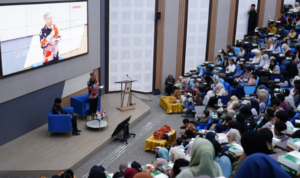
The discussion addressed how international diplomacy and multilateral cooperation are evolving in response to global challenges, ranging from the long-term impacts of the COVID-19 pandemic to geopolitical tensions, technological change, and increasingly complex relations among countries. Opening the event, Rakhmat Nurul Prima Nugraha, S.E., M.Sc., Head of the Subdirectorate for Information Management and Monitoring at UNHAS, emphasized the importance of strong and adaptive partnerships in responding to an increasingly uncertain international environment.
For UNHAS academic community, he noted that understanding these global developments is important not only for broadening international perspectives but also for strengthening preparedness to navigate future challenges. Diplomacy in a Changing Global Environment. In his lecture, Palm reflected on how the practice of diplomacy has changed since the 1990s. Advances in information technology and the rise of social media, he explained, have transformed diplomacy from a process that traditionally took place largely behind closed doors into one that increasingly unfolds in public and requires faster responses from governments and institutions.
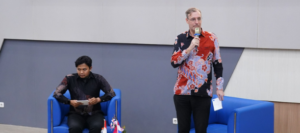
At the same time, he cautioned that the demand for pragmatic and rapid responses should not come at the expense of established principles of international law. Palm also emphasized the need to revitalize multilateral systems so they remain capable of bridging different national interests and responding effectively to contemporary global challenges. “The key is to build bridges for dialogue between the Global North and South, as well as West and East,” Palm said. “We need to consistently strengthen cooperation in areas where we share common interests.”
His remarks highlighted dialogue and gradual confidence-building as important foundations for international cooperation, particularly at a time when geopolitical competition can make consensus among countries increasingly difficult. Bringing Global Diplomacy into the University, the lecture continued with an interactive discussion and question-and-answer session, allowing UNHAS students and academics to engage directly with Palm on international relations, diplomacy, and the future of multilateral cooperation.
Beyond providing insight into current geopolitical developments, the forum connected the university community with diplomatic perspectives on how countries and regional institutions can sustain cooperation amid political and economic uncertainty. Additionally the engagement also contributes to UNHAS’s broader internationalization efforts by strengthening interaction with diplomatic partners and creating opportunities for its academic community to engage with contemporary global issues beyond the classroom. Through the dialogue with the Embassy of the Kingdom of the Netherlands, UNHAS continues to expand its international networks while providing students and academics with greater exposure to discussions shaping diplomacy, multilateralism, and international cooperation today.