
As a means of harnessing economic activity and improving community welfare, the Faculty of Forestry at Hasanuddin University (Unhas) has set up Kampung Rimba, an innovation center for non-timber forest products (HHBK).
The Unhas Faculty of Forestry is developing a variety of potential HHBK to be cultivated as innovative products. Non-timber forest products (HHBK) are a natural resource that is highly abundant in Indonesia.
HHBK are biological forest products, both plant and animal, together with their derivative and cultivated products, other than timber, that come from forests. They are generally by-products of a tree, such as sap, leaves, bark or fruit, or take the form of plants with special properties, such as rattan, bamboo and the like.
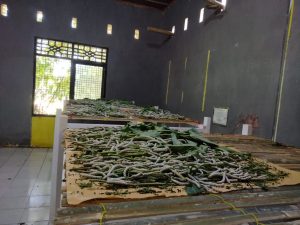
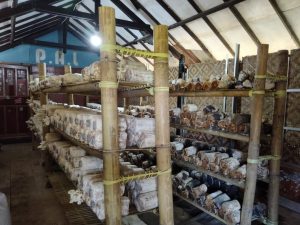
The Unhas Faculty of Forestry is working on various potential areas that can be developed, including mushroom cultivation, silkworm rearing, honeybee farming, the planting of cajeput oil trees and agroforestry development.
The development of non-timber forest product innovation is managed by several lecturers, including Dr. Ir. Baharuddin, MP (Coordinator), Dr. Ir. Syamsuddin Millang, M.S, Ira Taskirawati, S.Hut., M.Si., Ph.D., Ir. Budiaman, M.P and Dr. Ir. Sitti Nuraeni, M.P.
Dr. Baharuddin explained that the HHBK development initiative was established at the end of 2020. It was set up because the Faculty of Forestry had a building and vacant land that had not yet been put to use.
“HHBK began attracting attention from various parties in 1980, with a growing number of studies and articles in reputable scientific journals, such as those indexed in Scopus. Since then, timber from forests has increasingly been restricted and has become scarce, amid environmental issues related to global warming,” said Dr. Baharuddin.
The development of HHBK innovation is one of the efforts to reduce forest damage, since the collection and processing of non-timber forest products have only a small impact on the environment. In addition, the development of these innovations can serve as a safety net during the COVID-19 pandemic crisis.
Dr. Baharuddin added that the development of HHBK innovation also benefits students by improving their knowledge and skills related to HHBK theory directly in the field.
Students carry out innovations in cultivation and harvesting, post-harvest processing and a variety of products, which can involve collaboration with the fields of food processing technology, nutrition at the Faculty of Public Health (FKM) and pharmacy. These innovations are, of course, based on research by Faculty of Forestry lecturers involving students.
“Students are also taught how to run a business using the output of this innovation development, such as silk and mushroom products. In this way, through the innovations it develops, the Faculty of Forestry will become better known to the wider public,” said Dr. Baharuddin.
HHBK are well worth developing because they can help reduce carbon emissions. Developing HHBK is also highly strategic for improving the economic welfare of communities, as the market value of HHBK is fairly high, for example that of silkworm, mushroom, honeybee, agarwood and essential oil products.
In addition, the Unhas Faculty of Forestry will also develop HHBK fiber from forest food plants other than mushrooms and honey, as well as bioenergy and vinegar products from lignocellulosic materials. (*/dhs)
Editor: Ishaq Rahman, AMIPR
This article is an English translation of the original Indonesian report.